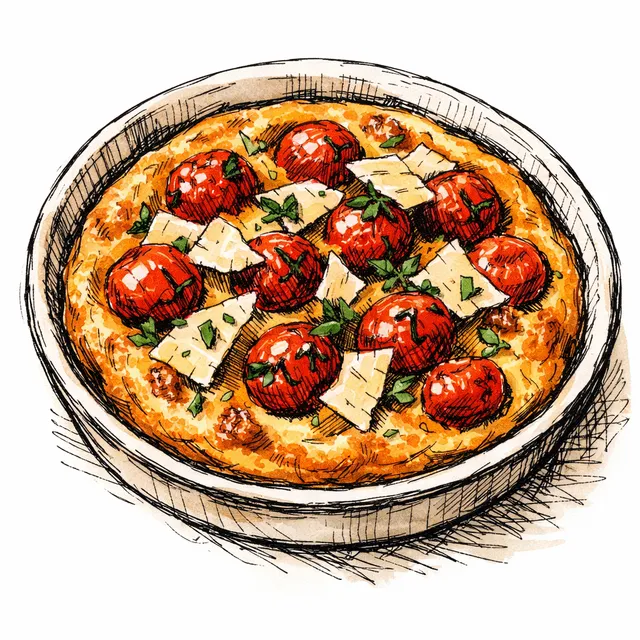
Blistered Cherry Tomato & Parmigiano Savory Clafoutis
Growing up in Paris, sweet cherry clafoutis was our weekend default. But a savory version? That is a Tuesday lunch revelation born from a near-empty fridge in my Bay Area kitchen. We are not suffering for brunch, or lunch for that matter. This savory bake in a smoking hot cast-iron skillet gives you maximum crust-to-crumb ratio with zero fuss. We blister the cherry tomatoes first. Why? So their juices concentrate instead of turning the batter to mush. The batter itself is blender-quick: eggs, milk, flour, and a heavy hand of Parmigiano. Pour it over the blistered tomatoes, bake until deeply bronzed and puffed with a slight wobble in the center, and call it a café-level meal. What makes this special is the sheer speed. You get a custardy, savory bake that feels like an hour of work but takes ten minutes. Make it your own by swapping the parmesan for a sharp Gruyère or tossing in fresh thyme. Cami's shortcut note: Use a blender for the batter to aerate the eggs for a lighter lift. Don't skip this: Preheating your cast-iron skillet. Hitting a cold pan makes the texture tight like a bad alibi; a hot pan guarantees those crispy, lacy edges.
Featured Recipe
Blistered Cherry Tomato & Parmigiano Savory Clafoutis
A sweet clafoutis is nice, but a savory one baked in a smoking hot cast-iron skillet is a Tuesday lunch revelation. We blister the tomatoes first so their juices concentrate instead of turning the batter to mush. Pour over a blender-quick parmesan batter, bake until puffed and deeply bronzed, and call it a café-level lunch.
Save a copy to your collection for editing
Timeline
Ingredients
- 1 pint cherry tomatoes(washed and dried well)
- 1 tbsp olive oil(for blistering)
- 1 tbsp cultured butter(for the pan edge)
- 3 large eggs(room temperature)
- 1 cup whole milk
- 1/2 cup all-purpose flour
- 1/2 cup Parmigiano-Reggiano(finely grated, plus extra for top)
- 1 tsp Dijon mustard
- 1/2 tsp kosher salt
- 1/4 tsp black pepper(freshly ground)
- 2 tbsp fresh basil leaves(torn)
- 1 big pinch flaky sea salt(for finishing)
Instructions
- 1
Place a 10-inch cast-iron skillet in your cold oven and preheat to 425F (220C). We want a crust, and a cold pan means a tight, pale bottom. Leave the skillet in while the oven heats up.
15 min
Tip: Cami's shortcut note: heating the skillet alongside the oven saves you 15 minutes of dead time.
- 2
While the pan heats, throw 3 large eggs, 1 cup whole milk, 1/2 cup all-purpose flour, 1/2 cup grated Parmigiano-Reggiano, 1 tsp Dijon mustard, 1/2 tsp kosher salt, and 1/4 tsp black pepper into a blender. Blitz for 15 seconds until perfectly smooth. Leave it in the blender to rest.
5 min
Tip: Let time do the work. Resting hydrates the flour so the crumb stays lacy, not tight like a bad alibi.
- 3
Carefully pull the screaming-hot skillet from the oven. Toss in 1 tbsp olive oil and 1 pint cherry tomatoes. Shake to coat. Return to the oven for 8 minutes until the skins blister, split, and char slightly.
8 min
Tip: Don't skip this. We blister first so they don't weep water into our batter. Watery tomatoes will ruin your bake.
- 4
Pull the skillet out again. Drop in 1 tbsp cultured butter. It will foam and sizzle aggressively against the cast iron. Immediately pour the resting batter directly over the hot tomatoes. Bake for 22 minutes until puffed, golden, and set in the center.
22 min
Tip: The butter foaming is the lacy edge being born. The center wobble should be firm, not liquid.
- 5
Remove from the oven. It will puff like a soufflé and fall just as fast; that is exactly what a clafoutis is supposed to do. Scatter with 2 tbsp torn fresh basil leaves and finish with 1 big pinch flaky sea salt. Serve warm directly from the pan.
5 min
Tip: We are not suffering for a Tuesday lunch. Cut it into big wedges and eat immediately.
Chef's Notes
Butter is not a garnish, except when it is. Dropping that knob of cultured butter into the hot skillet right before the batter goes in gives you a fried-crisp edge that makes this dish. Don't skip the blender for the batter either—it aerates the eggs and ensures zero dry flour pockets.

Camille Roux
Café-level bakes, weeknight methods, zero compromise.
Camille “Cami” Roux was born in Paris with flour in her hair and a healthy skepticism of culinary dogma. She grew up around neighborhood boulangeries that treated crust and crumb like religion—but what stuck with her wasn’t rigid tradition. It was the quiet precision: good butter that actually tastes like milk, patient fermentation that builds flavor for free, and desserts that know when to stop before they get cloying. After moving to the Bay Area, Cami trained in a bread-and-pastry scene obsessed with texture, naturally leavened doughs, and seasonal fruit—Tartine energy, minus the martyrdom. She became known for loaves that sing when they cool, jammy tarts with clean edges, and “how is this so good?” weeknight pastries made with a few smart shortcuts. Her motto is high impact, low fuss: splurge where it counts (butter, salt, time), streamline the rest (sheet pans, one bowl, cold-proofing). If it doesn’t improve flavor or structure, it doesn’t earn a step.