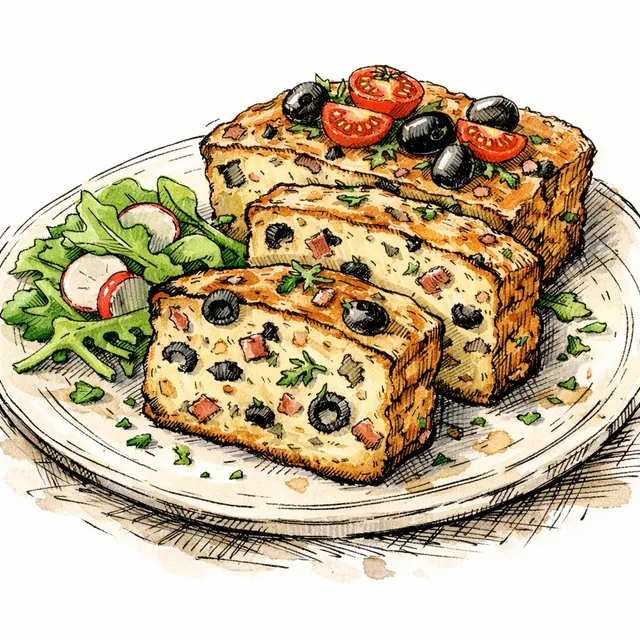
Café-Style Niçoise Olive & Pancetta Slab Cake Salé
Growing up in Paris, the cake salé (savory cake) was the ultimate bakery flex for a quick lunch. But traditional loaf pans take an hour to bake, and the center is often tight like a bad alibi.\n\nWhen I moved to the Bay Area and started baking between shifts, I needed a shortcut. Enter the slab format. By baking this Niçoise olive and pancetta batter in a quarter sheet pan, we cut the bake time in half and maximize the golden crust-to-crumb ratio. It’s high impact, low fuss.\n\nYou get salty, oil-cured Niçoise olives, crisp pancetta, and sharp cheddar suspended in a lacy, olive oil-rich crumb. The oil keeps it moist for days—because butter is not a garnish, but olive oil is a structural powerhouse here. To make it your own, swap the pancetta for roasted fennel or the cheddar for Gruyère. Just don't skimp on the olives.\n\nCami’s shortcut note: Whisk your wet ingredients vigorously before folding in the dry. This simple emulsion is the secret to a wobble-light texture. Don't skip this.\n\nWe’re not suffering for brunch, and we certainly aren’t settling for a sad desk lunch.
Featured Recipe
Café-Style Niçoise Olive & Pancetta Slab Cake Salé
The French café secret to a proper desk lunch is the cake salé—a savory cake that eats like a meal. By baking it as a slab, we maximize the golden crust-to-crumb ratio and cut the typical hour-long bake time in half. Salty Niçoise olives, crisp pancetta, and sharp cheddar suspended in a lacy, olive oil-rich crumb.
Save a copy to your collection for editing
Timeline
Ingredients
- 150 g cubed pancetta(about 1 heaping cup)
- 100 g pitted Niçoise olives(roughly chopped (about 3/4 cup))
- 120 g sharp white cheddar(coarsely grated)
- 1 tbsp fresh thyme(leaves stripped and chopped)
- 200 g all-purpose flour(about 1.5 cups)
- 1 tbsp baking powder(make sure it's fresh for optimal lift)
- 1 tsp freshly ground black pepper(plus extra to taste)
- 3 large eggs(room temperature)
- 120 ml whole milk(about 1/2 cup)
- 80 ml extra-virgin olive oil(plus extra if not enough pancetta fat renders)
- 1 tbsp Dijon mustard(adds sharpness to the crumb)
- 1 pinch flaky sea salt(for finishing the crust)
Instructions
- 1
Set your oven to 400°F (200°C). Line a 9x13-inch quarter sheet pan with parchment paper. We are baking this in a slab format because it guarantees maximum crust, structural integrity for lunchboxes, and slashes the bake time.
5 min
Tip: Leave a little parchment overhang on the sides so you can lift the slab out easily later.
- 2
Place a skillet over medium heat. Toss in 150g cubed pancetta and cook until crisp and the fat has completely rendered. We want that liquid gold to flavor the crust.
8 min
Tip: Don't rush the rendering. Low and slow gets you crisp meat without burning the fat.
- 3
While the pancetta renders, roughly chop 100g pitted Niçoise olives, grate 120g sharp white cheddar, and strip 1 tbsp fresh thyme from the stems.
5 min
Tip: Pit your own olives if you can. Pre-pitted ones often sit in brine too long and get mushy.
- 4
Remove the pancetta with a slotted spoon to a paper towel. Brush your parchment-lined sheet pan with a spoonful of the rendered pancetta fat. Do not skip this; it fries the bottom crust of the cake.
2 min
Tip: If your pancetta was lean and didn't yield much fat, add a splash of olive oil to the pan.
- 5
In a large bowl, whisk together 200g all-purpose flour, 1 tbsp baking powder, and 1 tsp freshly ground black pepper. Dump in the cooled pancetta, the chopped olives, the grated cheese, and the thyme. Toss them until completely coated in flour.
2 min
Tip: Cami's shortcut note: Coating the heavy mix-ins in the dry flour before the wet goes in stops them from sinking to the bottom of the pan.
- 6
In a separate bowl, whisk 3 large eggs, 120ml whole milk, 80ml extra-virgin olive oil, and 1 tbsp Dijon mustard. You want this aggressively emulsified—frothy and pale.
3 min
Tip: Room temperature eggs and milk emulsify with the oil much faster.
- 7
Pour the wet egg mixture into the dry flour bowl. Fold everything together gently with a spatula. Stop the absolute second the dry flour disappears. Overmixing develops gluten and gives you a crumb that's tight like a bad alibi.
2 min
Tip: A few small lumps of flour are totally fine. Let the oven do the rest.
- 8
Scrape the batter into your prepared sheet pan, nudging it into the corners with your spatula. Scatter 1 pinch flaky sea salt over the top. Bake for 22-25 minutes.
25 min
Tip: You are looking for a deeply golden top that springs back slightly when poked.
- 9
Remove from the oven and let it cool in the pan for 10 minutes. Lift it out using the parchment overhang and cut into hefty squares. Serve warm or at room temperature.
10 min
Tip: Slicing too hot will squish the crumb. Patience.
Chef's Notes
Butter is not a garnish, but olive oil makes a significantly better savory crumb here, offering a subtle fruitiness that plays beautifully with the Niçoise olives. I developed this for those days when you need a civilized lunch but only have 45 minutes from start to first bite. Serve with a fiercely acidic little mustard-greens salad. Leftovers hold beautifully in the fridge—just flash them in a hot oven to crisp the edges before eating.

Camille Roux
Café-level bakes, weeknight methods, zero compromise.
Camille “Cami” Roux was born in Paris with flour in her hair and a healthy skepticism of culinary dogma. She grew up around neighborhood boulangeries that treated crust and crumb like religion—but what stuck with her wasn’t rigid tradition. It was the quiet precision: good butter that actually tastes like milk, patient fermentation that builds flavor for free, and desserts that know when to stop before they get cloying. After moving to the Bay Area, Cami trained in a bread-and-pastry scene obsessed with texture, naturally leavened doughs, and seasonal fruit—Tartine energy, minus the martyrdom. She became known for loaves that sing when they cool, jammy tarts with clean edges, and “how is this so good?” weeknight pastries made with a few smart shortcuts. Her motto is high impact, low fuss: splurge where it counts (butter, salt, time), streamline the rest (sheet pans, one bowl, cold-proofing). If it doesn’t improve flavor or structure, it doesn’t earn a step.