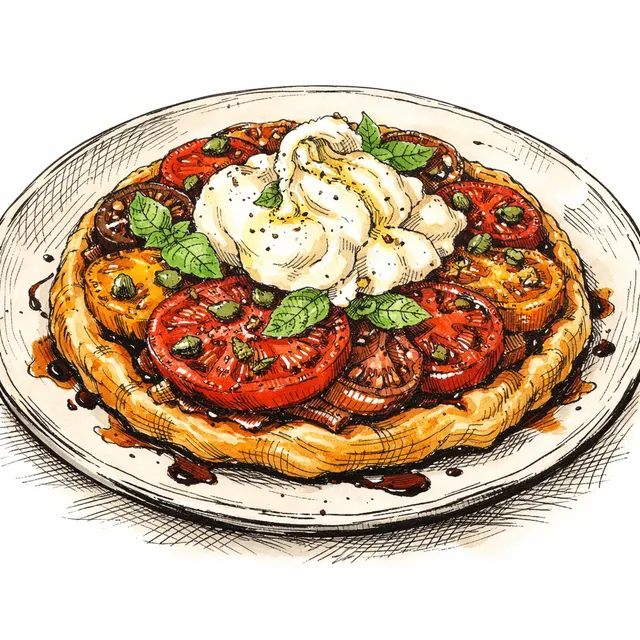
Caramelized Heirloom Tomato & Burrata Skillet Tatin
Growing up in Paris, a tarte Tatin was strictly dessert—apples, butter, sugar, full stop. But after moving to the Bay Area, summer farmers' markets wrecked my traditionalist tendencies. I remember hauling home a flat of bruised, heavy-for-their-size heirlooms and realizing they begged for the upside-down treatment.
This skillet Tatin is my savory love letter to late August. Thick-cut tomatoes roast in a quick balsamic caramel, blanketed under my lamination-lite rough puff. When flipped, the tomatoes are intensely jammy, the crust is shattering, and torn burrata melts right into the savory juices. Zero soggy bottoms.
It works because the high-heat caramel reduces the tomato liquids instantly, creating a thick glaze that protects the pastry. Make it your own: swap the balsamic for a sharp sherry vinegar, or fold cracked black pepper and thyme into the dough.
Cami’s shortcut note: Store-bought all-butter puff is fine for a weeknight, but my 15-minute rough puff is vastly sturdier.
Don’t skip this: Salt and drain the sliced tomatoes on paper towels for twenty minutes before assembling. Excess water is the enemy of flake. We want a shattered crust, not something tight like a bad alibi. Remember, we’re not suffering for brunch.
Featured Recipe
Caramelized Heirloom Tomato & Burrata Skillet Tatin
Tarte Tatin isn't just for apples. This is an upside-down love letter to summer: thick-cut heirlooms roasted in a balsamic caramel, blanketed under a quick, flaky rough puff. When flipped, the tomatoes are jammy, the crust is shattering, and torn burrata melts right into the savory juices. Zero soggy bottoms.
Save a copy to your collection for editing
Timeline
Ingredients
- 1.5 cups All-purpose flour(Plus more for dusting)
- 1 tsp Kosher salt(Divided use for dough and tomatoes)
- 0.5 cup Cold cultured butter(1 stick, kept ice cold for the dough)
- 0.25 cup Ice water
- 2 lbs Firm heirloom tomatoes(Mix of colors, firm enough to hold shape)
- 3 tbsp Cultured butter(For the caramel)
- 1 tbsp Light brown sugar(Packed)
- 2 tbsp Aged balsamic vinegar
- 3 sprigs Fresh thyme
- 8 oz Fresh burrata(One large ball)
- 0.5 cup Fresh basil leaves(Torn)
- 1 pinch Flaky sea salt(For finishing)
Instructions
- 1
Make the rough puff. Combine 1.5 cups all-purpose flour and 0.5 tsp kosher salt in a large bowl. Grate in the 0.5 cup cold cultured butter using the large holes of a box grater. Toss the shards to coat in flour, then drizzle in the 0.25 cup ice water. Bring it together with your hands into a shaggy disk. You want visible butter streaks. That is your flake insurance.
5 min
Tip: If the butter starts to soften, throw the bowl in the freezer for five minutes. The fridge is your friend.
- 2
Wrap the dough tightly in plastic wrap and place it in the fridge to hydrate and chill for at least 30 minutes.
30 min
Tip: Let time do the work here. The flour needs to hydrate while the butter stays firm.
- 3
Prep the heirlooms while the dough chills. Core and slice the 2 lbs firm heirloom tomatoes into thick half-inch slabs. Lay them flat on paper towels and sprinkle lightly with the remaining 0.5 tsp kosher salt. Let them sit to drain excess moisture. Tomatoes are water bombs. Salting them now pulls out moisture so your pastry stays crisp, not tight like a bad alibi.
10 min
Tip: Don't skip this. Unsalted, undrained tomatoes equal a soggy bottom.
- 4
Begin preheating your oven to 400°F. Pull the chilled dough. On a lightly floured surface, roll it out into an 11-inch circle, about a quarter-inch thick. Slide it onto a parchment-lined plate and slide it right back into the fridge. Keep that butter cold.
5 min
Tip: Rolling the dough cold requires some elbow grease, but it guarantees maximum lift.
- 5
Make the savory caramel. Place a 10-inch cast-iron skillet over medium heat. Melt the 3 tbsp cultured butter, 1 tbsp light brown sugar, and 2 tbsp aged balsamic vinegar. Swirl the pan until the mixture bubbles and thickens into a glossy, dark syrup, about 3 minutes. Toss in the 3 sprigs fresh thyme and take in that aroma.
5 min
Tip: Watch the caramel closely. Balsamic burns fast if you ignore it.
- 6
Pat the tomatoes entirely dry with another paper towel. Arrange them tightly in the skillet over the bubbling caramel, overlapping them slightly as they will shrink. Cook for 5 minutes without moving them to concentrate their juices and start the caramelization. Remove the skillet from the heat.
5 min
Tip: Pack them in tighter than you think is necessary.
- 7
Carefully drape your cold, rolled dough directly over the hot tomatoes in the skillet. Use a spoon to quickly tuck the edges of the dough straight down the inside edge of the skillet, hugging the tomatoes. Poke three small holes in the center of the dough so steam can escape during the bake.
2 min
Tip: Work quickly so the butter in the dough doesn't melt before hitting the oven.
- 8
Transfer the skillet to the preheated oven. Bake for 30 to 35 minutes. You are looking for a pastry that is deeply golden and puffed, with thick, jammy tomato juices bubbling aggressively around the edges.
30 min
Tip: Bake until you see a rich mahogany color on the crust. Pale pastry is a missed opportunity.
- 9
Remove the skillet from the oven. This is the crucial resting phase. Let the skillet sit for exactly 5 minutes off the heat. Too hot and the tomatoes slide everywhere; too cold and the caramel cements to the pan. Place a large serving plate over the skillet. Take a breath, use oven mitts, hold tightly, and confidently flip it over. Lift the skillet away.
5 min
Tip: If a tomato sticks to the pan, just nudge it back into place on the tart. No one will know.
- 10
While the tart is still warm, tear the 8 oz fresh burrata directly over the caramelized tomatoes. Scatter the surface with the 0.5 cup fresh basil leaves and finish with the 1 pinch flaky sea salt. Serve immediately. We are not suffering for brunch.
3 min
Tip: The residual heat of the tomatoes will gently melt the creamy center of the burrata.
Chef's Notes
Cami's shortcut note: If you absolutely cannot deal with making dough on a weekend, a high-quality all-butter store-bought puff pastry works beautifully. Just keep it ice cold until the very second you drape it over the skillet. But frankly, the box-grater blitz pastry takes five minutes and delivers undeniable flake. Butter is not a garnish. Use the good stuff here.

Camille Roux
Café-level bakes, weeknight methods, zero compromise.
Camille “Cami” Roux was born in Paris with flour in her hair and a healthy skepticism of culinary dogma. She grew up around neighborhood boulangeries that treated crust and crumb like religion—but what stuck with her wasn’t rigid tradition. It was the quiet precision: good butter that actually tastes like milk, patient fermentation that builds flavor for free, and desserts that know when to stop before they get cloying. After moving to the Bay Area, Cami trained in a bread-and-pastry scene obsessed with texture, naturally leavened doughs, and seasonal fruit—Tartine energy, minus the martyrdom. She became known for loaves that sing when they cool, jammy tarts with clean edges, and “how is this so good?” weeknight pastries made with a few smart shortcuts. Her motto is high impact, low fuss: splurge where it counts (butter, salt, time), streamline the rest (sheet pans, one bowl, cold-proofing). If it doesn’t improve flavor or structure, it doesn’t earn a step.