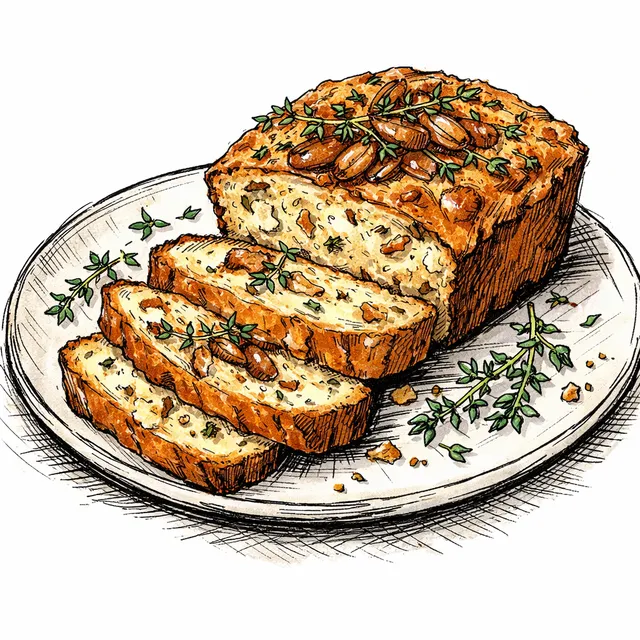
Caramelized Shallot & Thyme Chèvre Cake Salé
Growing up in Paris, the cake salé (savory cake) was our ultimate cheat code for last-minute picnics along the Seine. It's essentially a quick bread, but that sounds dry, and we don't do dry. My Caramelized Shallot & Thyme Chèvre Cake Salé takes that childhood memory and gives it the Bay Area treatment. I swap the traditional loaf tin for a square slab pan. Why? Maximum crust-to-crumb ratio. Every slice gets that crispy, golden edge. The batter is studded with sweet, jammy shallots and sharp pockets of goat cheese, topped with toasted almonds for crunch. What makes this recipe special is its absolute resilience. It bakes up with a lacy crumb that laughs at the fridge and revives beautifully in a toaster slot. Feel free to make it your own: swap the chèvre for sharp feta, or fold in roasted garlic. Cami's shortcut note: Cook your shallots in a splash of balsamic to speed up caramelization without compromising depth. Don't skip this: Let the batter rest in the pan for twenty minutes before baking. It hydrates the flour, ensuring your crumb isn't tight like a bad alibi. Remember, butter is not a garnish, and we are not suffering for brunch.
Featured Recipe
Caramelized Shallot & Thyme Chèvre Cake Salé
Café-level snacks shouldn't require a culinary degree or a weekend of planning. This savory slab cake combines sweet, jammy shallots with sharp pockets of goat cheese and toasted almonds for maximum crunch. Baked in a square pan for an unbeatable edge-crust ratio, it keeps in the fridge for days and revives beautifully in a toaster slot.
Save a copy to your collection for editing
Timeline
Ingredients
- 3 whole large shallots(thinly sliced (about 1.5 cups))
- 3 tbsp olive oil(for caramelizing)
- 1.5 cups all-purpose flour(190g)
- 2 tsp baking powder
- 1 tsp kosher salt(Diamond Crystal preferred)
- 0.5 tsp black pepper(freshly cracked)
- 3 whole large eggs(room temperature)
- 1/3 cup extra-virgin olive oil(80ml, for the batter)
- 1/2 cup whole milk(120ml, room temperature)
- 1 tbsp fresh thyme leaves(plus extra for the top)
- 1/3 cup toasted chopped almonds(45g)
- 4 oz cold goat cheese (chèvre)(115g, crumbled into large chunks)
Instructions
- 1
Preheat oven to 375°F (190°C). Line an 8x8-inch square baking pan with parchment paper, leaving an overhang on two sides. We use a square pan because edge pieces are superior and we want a tall, lacy crumb.
5 min
Tip: Don't skip the parchment overhang. It's your insurance policy for an easy release.
- 2
In a skillet over medium-low heat, warm the 3 tbsp olive oil. Add the 3 large shallots and a heavy pinch of salt. Cook, stirring occasionally, until deeply golden and jammy. Scrape them onto a plate to cool completely.
15 min
Tip: Don't rush this. If you crank the heat, the shallots will burn and turn bitter instead of sweet. Let time do the work.
- 3
In a large bowl, aggressively whisk together the 1.5 cups all-purpose flour, 2 tsp baking powder, 1 tsp kosher salt, and 0.5 tsp black pepper to aerate.
3 min
Tip: Properly dispersing the baking powder prevents weird metallic tasting pockets in the final bake.
- 4
In a separate jug, violently whisk the 3 large eggs, 1/3 cup extra-virgin olive oil, and 1/2 cup whole milk until completely emulsified and frothy.
3 min
Tip: A lazy whisk means a greasy cake. You want this liquid looking cohesive and slightly thickened.
- 5
Pour the wet ingredients into the dry. Add the cooled shallots, 1 tbsp fresh thyme leaves, and 1/3 cup toasted chopped almonds. Stir just until the flour disappears. Finally, scatter in the 4 oz cold goat cheese and give it exactly three gentle folds.
5 min
Tip: Overmix and your crumb will be tight like a bad alibi. The cheese must be cold so it leaves molten pockets instead of turning into a homogeneous gray batter.
- 6
Scrape the batter into the prepared pan and level the top. Scatter a few extra thyme leaves over it if you like. Bake until golden brown and deeply fragrant. A cake tester should come out clean, though you might hit a pocket of cheese. Look for a firm spring back when tapped.
35 min
Tip: Ovens lie. Check at the 30-minute mark. If the top is browning too fast, tent loosely with foil.
- 7
Let the cake cool in the pan for 10 minutes. Use the parchment sling to lift it onto a wire rack to cool completely before slicing into generous rectangles.
15 min
Tip: Cami's shortcut note: The fridge is your friend. This cake actually tastes better on day two once the flavors marry.
Chef's Notes
Butter is not a garnish, but here, olive oil does the heavy lifting for a tender, moist crumb that survives the fridge without turning to stone. We're not suffering for brunch, and we're definitely not eating dry snacks on a Tuesday. Toast a slice in a dry skillet the next morning until the edges sizzle and the chèvre pockets get gooey again.

Camille Roux
Café-level bakes, weeknight methods, zero compromise.
Camille “Cami” Roux was born in Paris with flour in her hair and a healthy skepticism of culinary dogma. She grew up around neighborhood boulangeries that treated crust and crumb like religion—but what stuck with her wasn’t rigid tradition. It was the quiet precision: good butter that actually tastes like milk, patient fermentation that builds flavor for free, and desserts that know when to stop before they get cloying. After moving to the Bay Area, Cami trained in a bread-and-pastry scene obsessed with texture, naturally leavened doughs, and seasonal fruit—Tartine energy, minus the martyrdom. She became known for loaves that sing when they cool, jammy tarts with clean edges, and “how is this so good?” weeknight pastries made with a few smart shortcuts. Her motto is high impact, low fuss: splurge where it counts (butter, salt, time), streamline the rest (sheet pans, one bowl, cold-proofing). If it doesn’t improve flavor or structure, it doesn’t earn a step.