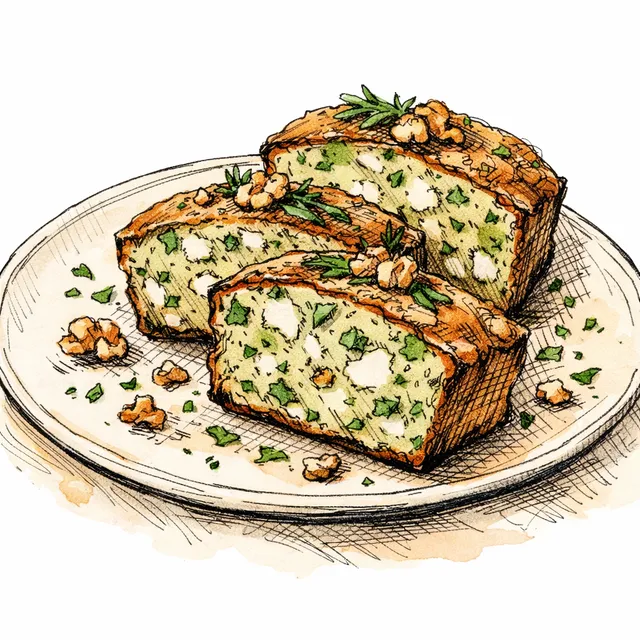
Green Garlic, Chèvre & Walnut Cake Salé
Growing up in Paris, "cake" almost exclusively meant something savory. We call it cake salé—a deeply golden, olive-oil-rich quick bread sitting proudly in every corner café display case. My Green Garlic, Chèvre & Walnut Cake Salé is born straight from those memories of rushing through the 11th arrondissement, grabbing a thick slice for a Tuesday desk lunch. What makes this version special is the fleeting magic of spring green garlic. It melts into the batter alongside tangy pockets of chèvre and toasted walnuts, creating a beautiful lacy crumb—never tight like a bad alibi. Why it works: folding the cheese in cold keeps distinct, creamy pockets instead of disappearing into the oil. Make it your own by swapping the walnuts for hazelnuts or the green garlic for charred scallions if spring has passed. Cami's shortcut note: Mix it in one bowl, but let the batter sit for twenty minutes before baking. Don't skip this. That brief rest hydrates the flour, giving you maximum crust-to-crumb ratio when it hits the heat. Slice it thick, toast it until the edges sizzle, and serve with a punchy Dijon vinaigrette salad. We’re not suffering for brunch, and we certainly aren't suffering for Tuesday lunch either.
Featured Recipe
Green Garlic, Chèvre & Walnut Cake Salé
In Paris, a 'cake' is almost exclusively savory—a deeply golden, olive-oil-rich quick bread built for café display cases and make-ahead lunches. This version hinges on the fleeting magic of spring green garlic and tangy pockets of chèvre that melt into a lacy crumb. Pair a thick, toasted slice with a punchy Dijon vinaigrette salad, and suddenly your Tuesday desk lunch feels like a corner table in the 11th arrondissement.
Save a copy to your collection for editing
Timeline
Ingredients
- 1 bunch Green garlic(About 3/4 cup when finely chopped; white and pale green parts only)
- 1 tbsp Cultured butter(For sautéing)
- 3 Large eggs(Room temperature)
- 1/2 cup Whole milk Greek yogurt(Full fat is non-negotiable for crumb texture)
- 1/3 cup Extra-virgin olive oil(Pungent, grassy oil works best here)
- 1 1/2 cups All-purpose flour(Spoon and leveled)
- 2 tsp Baking powder
- 1 tsp Kosher salt(Diamond Crystal)
- 1/2 tsp Black pepper(Coarsely ground)
- 5 oz Chèvre (goat cheese)(Cold, crumbled into large chunks)
- 1/2 cup Walnuts(Toasted and roughly chopped)
Instructions
- 1
Preheat your oven to 350°F. Line a 9x5 loaf pan with a parchment paper sling. Do not skip the sling; wrestling a warm savory cake out of a tin is a rookie mistake.
5 min
Tip: Leave a little overhang on the long sides so you can lift the baked cake straight out.
- 2
In a small skillet over medium heat, melt 1 tbsp cultured butter. Butter is not a garnish, it's the foundation of the flavor here. Add the chopped 1 bunch green garlic and sauté for 3 to 4 minutes until softened and fragrant but not browned. Remove from heat and let it cool completely.
5 min
Tip: Cooling is crucial. Hot garlic will scramble your eggs and melt your cheese too early.
- 3
In a large mixing bowl, vigorously whisk together 3 large eggs, 1/2 cup whole milk Greek yogurt, and 1/3 cup extra-virgin olive oil. You want this completely emulsified, smooth, and slightly pale. Think mayonnaise consistency.
3 min
- 4
Dump the 1 1/2 cups all-purpose flour, 2 tsp baking powder, 1 tsp kosher salt, and 1/2 tsp black pepper right on top of the wet ingredients. Switch to a rubber spatula and fold gently just until the major flour streaks disappear. If you overmix now, you'll develop gluten and end up with a crumb that's tight like a bad alibi. We want lacy.
2 min
Tip: Stop folding while it still looks a little rough. The mix-ins will finish the job.
- 5
Add your cooled green garlic, 5 oz chèvre, and 1/2 cup walnuts. Fold exactly three times, deliberately. You want distinct, suspended pockets of goat cheese, not a homogenous smear.
2 min
Tip: If the chèvre is too warm, pop it in the freezer for 5 minutes before folding.
- 6
Pour the batter into your prepared pan. Now, let it rest on the counter for 15 minutes. Don't skip this. Giving the flour time to hydrate means a taller rise, a better crust, and a significantly superior texture. Let time do the work.
15 min
Tip: This resting period is the difference between an amateur quick bread and a café-level bake.
- 7
Bake on the center rack for 45 to 50 minutes. You are looking for a deeply golden, crusty top that springs back slightly when pressed, and a skewer inserted into the center should come out clean (save for melted cheese).
45 min
Tip: Look for a distinct crack down the center. That’s the sign of an excellent oven spring.
- 8
Let the cake cool in the pan for 10 minutes to stabilize, then use the parchment sling to transfer it to a wire rack. Let it cool completely before slicing.
15 min
Tip: Slicing while hot will compress that lacy crumb you worked so hard for. Patience.
Chef's Notes
Cami's shortcut note: Buy pre-toasted walnuts from the baking aisle. Weeknights are too short to hover over a hot pan of nuts. We're not suffering for brunch here; we're securing elite workday lunches. To serve from the fridge the next day, slice thick and pan-toast in a dry skillet for 2 minutes per side to revive the crust.

Camille Roux
Café-level bakes, weeknight methods, zero compromise.
Camille “Cami” Roux was born in Paris with flour in her hair and a healthy skepticism of culinary dogma. She grew up around neighborhood boulangeries that treated crust and crumb like religion—but what stuck with her wasn’t rigid tradition. It was the quiet precision: good butter that actually tastes like milk, patient fermentation that builds flavor for free, and desserts that know when to stop before they get cloying. After moving to the Bay Area, Cami trained in a bread-and-pastry scene obsessed with texture, naturally leavened doughs, and seasonal fruit—Tartine energy, minus the martyrdom. She became known for loaves that sing when they cool, jammy tarts with clean edges, and “how is this so good?” weeknight pastries made with a few smart shortcuts. Her motto is high impact, low fuss: splurge where it counts (butter, salt, time), streamline the rest (sheet pans, one bowl, cold-proofing). If it doesn’t improve flavor or structure, it doesn’t earn a step.