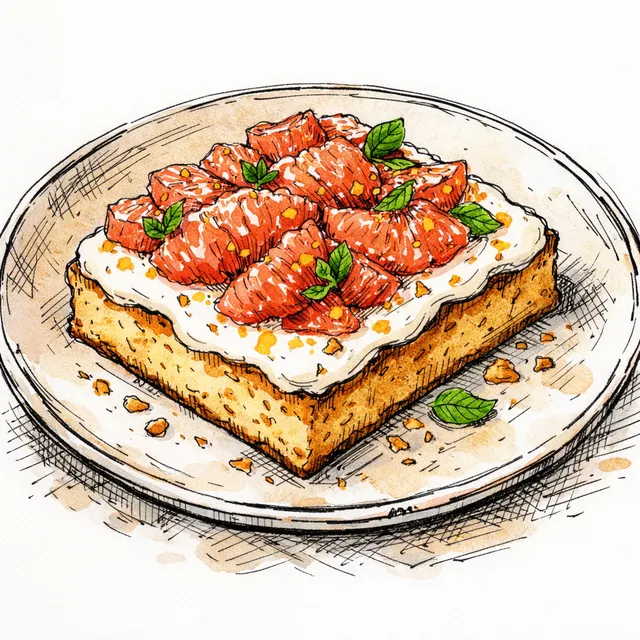
Shatter-Glazed Grapefruit & Crème Fraîche Slab Cake
This is the citrus square you eye in the glass case at 3 p.m.
Growing up in Paris, le goûter—the afternoon sweet snack—was sacred. I’d press my nose against the bakery glass, craving something bright and fiercely buttery. Now, with Bay Area winter citrus in full swing, I want that café experience at home. But we’re not suffering for brunch.
Enter the slab cake. I skip the traditional tall loaf pan for a quarter-sheet pan. Why? It cuts the bake time in half and drastically maximizes the surface area for our tart grapefruit glaze. High impact, low fuss.
We lean heavily on the creaming method. First, rub the grapefruit zest into your sugar until it looks like wet sand to release the oils. Whip it with cultured butter and crème fraîche until deeply aerated. This ensures the crumb bakes up lacy, never tight like a bad alibi.
Cami’s shortcut note: You can absolutely bake the sponge a day ahead. The fridge is your friend, and the crème fraîche keeps the crumb exceptionally moist.
Don’t skip this: Let the glaze dry completely. It forms a crisp, snowy shell that shatters beautifully when you slice it. Feel free to swap in Meyer lemon or blood orange, but whatever you do, use the good cultured butter. Butter is not a garnish.
Featured Recipe
Shatter-Glazed Grapefruit & Crème Fraîche Slab Cake
This is the citrus square you eye in the glass case at 3 p.m. We skip the tall loaf pan for a quarter-sheet slab, cutting the bake time in half and maximizing the surface area for our tart grapefruit glaze. We lean heavily on the creaming method here—whipping cultured butter and citrus sugar until aerated—so the crumb bakes up lacy, not tight like a bad alibi. Let the glaze dry completely; it forms a crisp, snowy shell that shatters when you slice it.
Save a copy to your collection for editing
Timeline
Ingredients
- 1 1/2 cups granulated sugar(300g)
- 2 tbsp grapefruit zest(From about 2 ruby red grapefruits. Save the fruit for juice.)
- 1 cup cultured unsalted butter(226g, very soft but not greasy/melted)
- 3 large eggs(Room temperature)
- 1/2 cup crème fraîche(120g, room temperature)
- 1/4 cup fresh grapefruit juice(60ml, for the batter)
- 1 tsp vanilla bean paste(Or pure extract)
- 2 cups all-purpose flour(250g)
- 1 1/2 tsp baking powder
- 1/2 tsp baking soda
- 3/4 tsp kosher salt(Diamond Crystal)
- 1 1/2 cups powdered sugar(180g, sifted if clumpy)
- 3 tbsp fresh grapefruit juice(For the glaze)
- 1/4 tsp flaky sea salt(Maldon or similar, for finishing)
Instructions
- 1
Preheat your oven to 350°F (175°C). Grease a 9x13-inch quarter-sheet pan or baking dish, then line it with a parchment paper sling, leaving overhang on the long sides for easy lifting.
5 min
Tip: Using a metal quarter-sheet pan ensures crisp edges. Glass or ceramic will take longer to bake and won't caramelize the edges the same way.
- 2
In the bowl of a stand mixer, combine 1 1/2 cups granulated sugar and 2 tbsp grapefruit zest. Use your fingertips to massage the zest into the sugar until it feels like wet sand and smells extremely fragrant.
5 min
Tip: Don't skip this. Rubbing the zest releases the natural essential oils. If you just whisk it in, you leave half the flavor trapped in the rind.
- 3
Add 1 cup cultured unsalted butter to the citrus sugar. Using the paddle attachment, beat on medium-high speed for 4 to 5 minutes. Scrape down the bowl halfway through. You want the mixture to turn noticeably pale, fluffy, and increased in volume.
5 min
Tip: This is the creaming method in action. We are mechanically forcing air into the fat to give the cake its lift. Rush this, and your crumb will be dense.
- 4
With the mixer on medium-low, add 3 large eggs one at a time, letting each incorporate fully before adding the next. Pour in 1/2 cup crème fraîche, 1/4 cup fresh grapefruit juice, and 1 tsp vanilla bean paste. Mix until just combined. It might look slightly curdled—that's fine.
5 min
Tip: Room temperature ingredients are non-negotiable here. Cold eggs will seize the aerated butter and break your emulsion.
- 5
In a separate bowl, briefly whisk 2 cups all-purpose flour, 1 1/2 tsp baking powder, 1/2 tsp baking soda, and 3/4 tsp kosher salt. Add the dry ingredients to the wet in two additions, mixing on low speed just until the last streaks of flour disappear.
5 min
Tip: Finish the mixing by hand with a rubber spatula to ensure you don't overwork the gluten. Scrape the bottom to catch any hidden pockets of butter.
- 6
Scrape the batter into your prepared pan, smoothing the top with an offset spatula. Bake for 25 to 30 minutes, or until the edges are golden and the center springs back slightly when pressed. The cake should not jiggle or wobble.
30 min
Tip: Rotate the pan at the 15-minute mark if your oven has hot spots.
- 7
While the cake bakes, whisk 1 1/2 cups powdered sugar with 3 tbsp fresh grapefruit juice in a small bowl until completely smooth. The glaze should be thick but pourable, like heavy cream.
5 min
Tip: If it's too stiff, add more juice a few drops at a time. Too thin? Add a tablespoon more powdered sugar.
- 8
Remove the cake from the oven and let it sit in the pan for 5 minutes. While the cake is still warm, pour the glaze evenly over the top. Use an offset spatula to push it all the way to the edges. Immediately sprinkle with 1/4 tsp flaky sea salt.
5 min
Tip: Glazing while warm is the secret to a shatter-crisp shell. The heat sets the sugars fast.
- 9
Let the cake cool completely in the pan—about 30 minutes minimum. The glaze will turn from shiny to opaque and matte. Once fully set, use the parchment overhang to lift the slab onto a board, slice into neat squares, and serve.
30 min
Tip: Wipe your knife between cuts if you want razor-sharp café presentation.
Chef's Notes
Cami's shortcut note: The slab format is the ultimate weeknight hack. A standard pound cake takes over an hour to bake. A quarter-sheet takes 30 minutes. Don't skip the step of rubbing the zest into the sugar—it extracts the essential oils that would otherwise stay locked in the rind. Butter is not a garnish here; use cultured butter with at least 82% butterfat for a tang that balances the grapefruit perfectly.

Camille Roux
Café-level bakes, weeknight methods, zero compromise.
Camille “Cami” Roux was born in Paris with flour in her hair and a healthy skepticism of culinary dogma. She grew up around neighborhood boulangeries that treated crust and crumb like religion—but what stuck with her wasn’t rigid tradition. It was the quiet precision: good butter that actually tastes like milk, patient fermentation that builds flavor for free, and desserts that know when to stop before they get cloying. After moving to the Bay Area, Cami trained in a bread-and-pastry scene obsessed with texture, naturally leavened doughs, and seasonal fruit—Tartine energy, minus the martyrdom. She became known for loaves that sing when they cool, jammy tarts with clean edges, and “how is this so good?” weeknight pastries made with a few smart shortcuts. Her motto is high impact, low fuss: splurge where it counts (butter, salt, time), streamline the rest (sheet pans, one bowl, cold-proofing). If it doesn’t improve flavor or structure, it doesn’t earn a step.