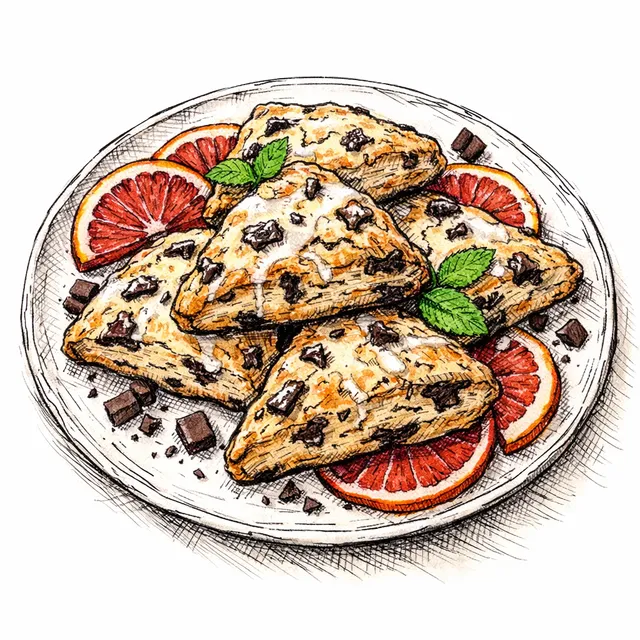
Shortcut Laminated Blood Orange & Dark Chocolate Scones
Growing up in Paris, I lived for the shatter of a proper pain au chocolat (chocolate pastry). But in my tiny Bay Area kitchen, spending three days on laminated dough for a Tuesday morning craving is out of the question. We are not suffering for brunch. I wanted a café-style pastry with a lacy crumb and towering layers, but I needed it fast.Enter these shortcut laminated scones. This is lamination-lite rough puff at its finest. One bowl, huge shards of cold cultured butter, and three quick letter folds. The cold butter hits the hot oven, creates steam, and pushes the dough into flaky, sky-high layers. That is why it works. I rub blood orange zest directly into toasted sugar to release the essential oils, anchoring the floral punch with bittersweet chocolate.Make it your own: swap blood orange for Meyer lemon, or fold in toasted hazelnuts.Cami's shortcut note: The fridge is your friend. Chill the punched-out scones for 20 minutes before baking to firm the butter. Don't skip this. If your crumb is tight like a bad alibi, your butter got too warm. Look for a deep golden-brown crust. Butter is not a garnish; let time do the work.
Featured Recipe
Shortcut Laminated Blood Orange & Dark Chocolate Scones
I love a café-style pastry with a lacy crumb and towering layers, but I refuse to suffer for brunch. This rapid lamination method gives you the shatter of a croissant in a forgiving scone format, anchored by bitter chocolate and the floral punch of blood orange. One bowl, three quick folds, zero compromise.
Save a copy to your collection for editing
Timeline
Ingredients
- 2 tbsp Granulated sugar(Plus a little extra for sprinkling)
- 1 tbsp Blood orange zest(From about 2 medium blood oranges)
- 2.5 cups All-purpose flour(Unbleached)
- 1 tbsp Baking powder(Ensure it is fresh for maximum lift)
- 1 tsp Kosher salt(Diamond Crystal preferred)
- 1 cup Frozen cultured butter(2 sticks, European style, rock solid)
- 4 oz Bittersweet chocolate (70%)(Roughly chopped into irregular shards)
- 3/4 cup Cold buttermilk(Plus 1 tbsp extra for brushing tops)
- 1 cup Powdered sugar(Sifted if clumpy)
- 2 tbsp Blood orange juice(Freshly squeezed)
- 1 tbsp cold buttermilk(used to brush tops of scones)
Instructions
- 1
Preheat your oven to 400F. Line a heavy baking sheet with parchment paper. We bake hot to blast the butter into steam—that's how we get towering layers.
5 min
Tip: Always use a heavy aluminum sheet pan. Thin pans warp and scorch the bottoms.
- 2
In a large, wide mixing bowl, combine 2 tbsp granulated sugar and 1 tbsp blood orange zest. Use your fingers to rub the zest into the sugar until it turns pale pink and smells incredibly fragrant. This extracts the essential oils.
3 min
Tip: Don't skip this. Fat carries flavor, but sugar unlocks the citrus oils before the fat even enters the bowl.
- 3
Whisk 2.5 cups all-purpose flour, 1 tbsp baking powder, and 1 tsp kosher salt into the citrus sugar until completely uniform.
2 min
- 4
Take your 1 cup frozen cultured butter and grate it on the large holes of a box grater directly into the flour mixture. Toss the butter shreds lightly with your hands so every piece is coated in flour. Butter is not a garnish here; it is the architecture of the pastry.
5 min
Tip: Toss as you grate so the butter doesn't form a giant clump. Work fast to keep it cold.
- 5
Toss in 4 oz bittersweet chocolate (70%). Make a well in the center and pour in 3/4 cup cold buttermilk. Using a fork, gently toss the mixture until it just begins to form a shaggy, dry mess. It should look like a disaster. Good.
3 min
Tip: If it looks like a smooth dough right now, your crumb will be tight like a bad alibi. Embrace the shag.
- 6
Turn the shaggy dough out onto a clean counter. Pat it into a rough rectangle. Fold it in thirds like a business letter. Turn it 90 degrees, pat it out again, and do another letter fold. Repeat one last time. You are building rapid layers (our shortcut lamination). Pat into a 1-inch thick circle.
5 min
Tip: If the dough crumbles on the first fold, just press it together. By the third fold, the buttermilk will have hydrated the flour.
- 7
Transfer the dough disc to a plate and place it in the freezer to relax the gluten and chill the butter.
15 min
Tip: Let time do the work. This 15-minute freeze ensures your scones rise up instead of spreading out.
- 8
While the dough chills, make the glaze. In a small bowl, whisk 1 cup powdered sugar and 2 tbsp blood orange juice until perfectly smooth. It should be a vivid, shocking pink.
3 min
Tip: If the glaze is too thin, add another tablespoon of powdered sugar. You want a consistency like heavy cream.
- 9
Remove the dough from the freezer. Using a sharp chef's knife, cut the circle into 8 wedges. Push straight down, do not saw, or you will seal the laminated edges. Place them on the prepared pan. Brush the tops lightly with the remaining 1 tbsp cold buttermilk.
3 min
Tip: Looking at the cut edges, you should see distinct layers of butter, flour, and chocolate. That is your lacy crumb waiting to happen.
- 10
Bake the scones until the tops are deeply golden brown and the edges look like a puffed deck of cards. The high heat creates the steam needed to push those layers apart.
20 min
Tip: Check at 18 minutes. Depending on your oven, you might need the full 22. Look for firm, golden edges.
- 11
Transfer the baked scones to a wire rack. Let them cool for at least 10 minutes before generously spooning the blood orange glaze over the tops. Serve warm.
10 min
Tip: If you glaze them straight out of the oven, the glaze will melt into the crumb. Patience.
Chef's Notes
Cami's shortcut note: The grating of the frozen butter is the magic trick here. It disperses the fat evenly without the warmth of your hands melting it, creating instant lamination-style flakes when folded. We're not suffering for brunch, but we absolutely are not compromising on texture.

Camille Roux
Café-level bakes, weeknight methods, zero compromise.
Camille “Cami” Roux was born in Paris with flour in her hair and a healthy skepticism of culinary dogma. She grew up around neighborhood boulangeries that treated crust and crumb like religion—but what stuck with her wasn’t rigid tradition. It was the quiet precision: good butter that actually tastes like milk, patient fermentation that builds flavor for free, and desserts that know when to stop before they get cloying. After moving to the Bay Area, Cami trained in a bread-and-pastry scene obsessed with texture, naturally leavened doughs, and seasonal fruit—Tartine energy, minus the martyrdom. She became known for loaves that sing when they cool, jammy tarts with clean edges, and “how is this so good?” weeknight pastries made with a few smart shortcuts. Her motto is high impact, low fuss: splurge where it counts (butter, salt, time), streamline the rest (sheet pans, one bowl, cold-proofing). If it doesn’t improve flavor or structure, it doesn’t earn a step.