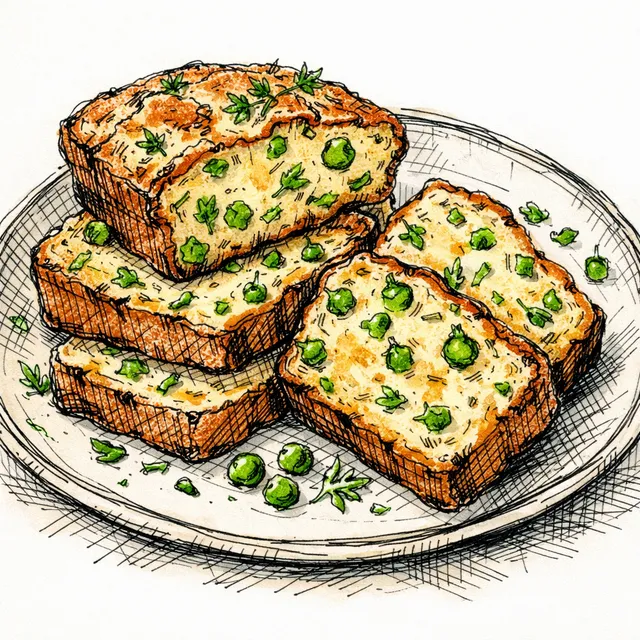
Sweet Pea & Gruyère Picnic Cake Salé
A picnic without a proper cake salé—a French savory loaf—is just eating sad sandwiches on a blanket. Growing up in Paris, my mother baked these for Sunday trips to the Luxembourg Gardens. They were brilliant: robust, sliceable, and deeply flavorful without the soggy dread of a built sandwich.
What makes this special is the texture. The secret to a lacy crumb that isn't tight like a bad alibi is treating your batter like mayonnaise. You are building a tight emulsion with room-temperature eggs, cultured butter, and a swipe of Dijon mustard. This suspends the fat, keeping the loaf moist but never greasy. I use sweet spring peas and sharp Gruyère, but you can swap the peas for roasted asparagus or add cubed ham. It is a blank canvas.
Cami's shortcut note: Use frozen petite peas. No blanching required. Just run them under warm water and pat them dry. Butter is not a garnish, so use the cultured stuff here.
Don't skip this: Grate the Gruyère yourself. Pre-bagged cheese is coated in starch and refuses to melt properly. We want gooey sharpness, not grainy disappointment. Bake until the top splits. We're not suffering for brunch.
Featured Recipe
Sweet Pea & Gruyère Picnic Cake Salé
A picnic without a proper cake salé—a French savory loaf—is just eating sad sandwiches on a blanket. The secret to a lacy crumb that isn't greasy is treating the batter like mayonnaise: building a tight emulsion with eggs, cultured butter, and mustard. Spiked with sweet spring peas and sharp gruyère, this loaf travels beautifully and tastes best at ambient temperature.
Save a copy to your collection for editing
Timeline
Ingredients
- 1.5 cups fresh spring peas(shelled (frozen works in a pinch; thaw and pat bone-dry))
- 6 oz Gruyère cheese(grated on large holes, divided)
- 3 large eggs(room temperature (crucial for emulsion))
- 1 tbsp Dijon mustard
- 1/3 cup whole milk plain yogurt(room temperature)
- 1/2 cup unsalted cultured butter(melted and slightly cooled)
- 1.5 cups all-purpose flour
- 2 tsp baking powder
- 1 tsp Diamond Crystal kosher salt
- 1/2 tsp freshly ground black pepper
- 1/4 cup fresh chives(finely chopped)
Instructions
- 1
Preheat your oven to 400°F (200°C). Line an 8.5x4.5-inch loaf pan with a parchment sling, leaving a 2-inch overhang on the long sides. Don't skip the overhang; you'll need it to cleanly lift the loaf later without tearing the crust.
5 min
Tip: A high initial heat gives us maximum oven spring. We'll drop the temp right when the pan goes in.
- 2
Grate the Gruyère, shell the peas, and chop the chives. Having your mix-ins ready means your batter won't sit around waiting while the leavening agents activate.
8 min
Tip: Cami's shortcut note: Don't bother blanching the fresh peas. The ambient heat of the baking batter will steam them to perfectly tender-sweet without turning them to mush.
- 3
In a large bowl, aggressively whisk 3 large eggs, 1 tbsp Dijon mustard, and 1/3 cup whole milk plain yogurt until uniform. Slowly stream in 1/2 cup unsalted cultured butter while whisking constantly. You want it thick and glossy, almost like a loose mayonnaise. Butter is not a garnish; it’s the foundation of our crumb, and this emulsion prevents it from weeping out during the bake.
4 min
Tip: Visual cue: The mixture should look pale, cohesive, and leave a slight trail when you drag the whisk through it.
- 4
In a separate bowl, whisk 1.5 cups all-purpose flour, 2 tsp baking powder, 1 tsp Diamond Crystal kosher salt, and 1/2 tsp freshly ground black pepper. Dump the dry ingredients into the wet emulsion. Fold with a flexible spatula until just a few flour streaks remain. Stop there. Overmixing develops gluten, and your crumb will be tight like a bad alibi.
3 min
Tip: Be gentle. We want a tender, cake-like texture, not bread dough.
- 5
Add 1.5 cups fresh spring peas, 1/4 cup fresh chives, and roughly two-thirds of the grated cheese (4 oz Gruyère cheese). Fold twice, just to distribute. Scrape the heavy batter into your prepared pan and smooth the top. Sprinkle evenly with the remaining 2 oz Gruyère cheese.
3 min
Tip: That reserved cheese on top will melt and crisp into a deeply golden, lacy crust.
- 6
Place the pan in the oven and immediately drop the temperature to 375°F (190°C). Bake for 45 to 50 minutes. You are looking for a deeply browned, rugged crust and a toothpick inserted into the center that comes out clean.
45 min
Tip: If the cheese is getting too dark at the 35-minute mark, tent loosely with foil.
- 7
Let time do the work. Cool the loaf in the pan for 15 minutes before using the parchment sling to transfer it to a wire rack. Let it cool completely to room temperature before slicing.
45 min
Tip: Don't skip this. Slicing a warm cake salé releases trapped steam, leaving you with a gummy, wet crumb.
Chef's Notes
We're not suffering for brunch, and we certainly aren't suffering in the park. This cake salé is deliberately rich so it stays moist for up to three days at room temperature, making it the ultimate make-ahead picnic workhorse. Wrap it tightly in parchment, not plastic, to preserve that lacy cheese crust.

Camille Roux
Café-level bakes, weeknight methods, zero compromise.
Camille “Cami” Roux was born in Paris with flour in her hair and a healthy skepticism of culinary dogma. She grew up around neighborhood boulangeries that treated crust and crumb like religion—but what stuck with her wasn’t rigid tradition. It was the quiet precision: good butter that actually tastes like milk, patient fermentation that builds flavor for free, and desserts that know when to stop before they get cloying. After moving to the Bay Area, Cami trained in a bread-and-pastry scene obsessed with texture, naturally leavened doughs, and seasonal fruit—Tartine energy, minus the martyrdom. She became known for loaves that sing when they cool, jammy tarts with clean edges, and “how is this so good?” weeknight pastries made with a few smart shortcuts. Her motto is high impact, low fuss: splurge where it counts (butter, salt, time), streamline the rest (sheet pans, one bowl, cold-proofing). If it doesn’t improve flavor or structure, it doesn’t earn a step.