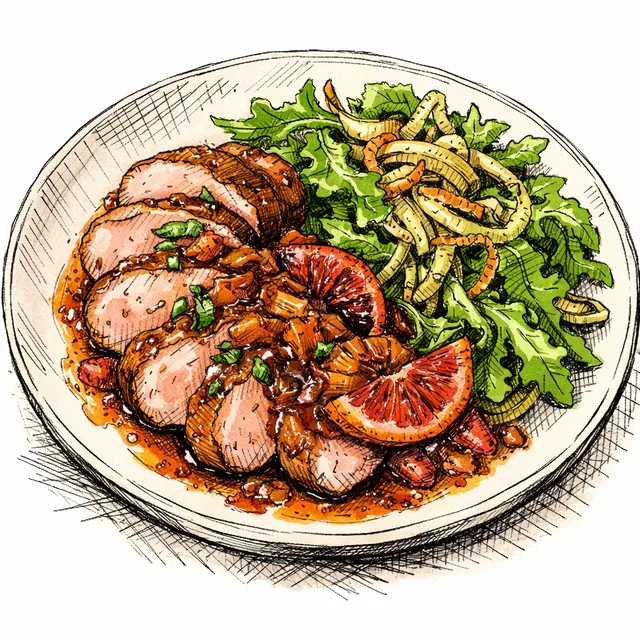
My Winter Weeknight Flex: Skillet-to-Oven Pork Tenderloin with Blood Orange–Shallot Pan Sauce
I wrote Skillet-to-Oven Pork Tenderloin with Blood Orange–Shallot Pan Sauce + Crispy Fennel & Peppery Arugula because winter makes me crave cozy food and something sharp and fresh to cut through it. The inspiration hit at the grocery store, staring at a pile of blood oranges like they were tiny sunset lanterns. I wanted that flavor—sweet, bitter, tangy—on a Tuesday.
This dish takes me back to my restaurant days, when “pan sauce” was basically the answer to everything. You’d sear a protein, scrape up the good bits, swirl in something acidic, and suddenly the whole plate had purpose. The first time I tested this at home, my kitchen smelled like shallots and citrus and I thought, okay—this is the kind of dinner that makes February feel survivable.
What makes it special to me is the one-skillet logic: sear, roast, sauce—no extra drama. The fennel gets a quick sauté so it stays sweet-crisp, and the arugula goes on at the end so it wilts just enough.
Make it yours: swap arugula for baby spinach, add a pinch of chili flakes, or (yes) use regular oranges if blood oranges are being elusive.
Featured Recipe
Skillet-to-Oven Pork Tenderloin with Blood Orange–Shallot Pan Sauce + Crispy Fennel & Peppery Arugula
This is my winter weeknight flex: pork tenderloin gets a hard stovetop sear, finishes in the oven, and then you build a glossy, bright blood orange–shallot pan sauce in the same skillet. I toss in quick-sautéed fennel for sweetness and crunch, then top it all with arugula so it eats light and lively—even when it’s freezing outside.
Save a copy to your collection for editing
Ingredients
- 1 to 1.25 lb pork tenderloin(trim silver skin if present)
- 1.25 tsp kosher salt
- 1 tsp black pepper(freshly ground)
- 1 tsp ground coriander(optional but highly recommended for citrus-friendly warmth)
- 2 tbsp olive oil(divided)
- 1 fennel bulb(thinly sliced, fronds reserved)
- 2 shallots(thinly sliced)
- 2 cloves garlic(finely grated or minced)
- 0.25 tsp red pepper flakes(optional)
- 0.5 cup dry white wine(or chicken broth)
- 2 blood oranges(zest 1; juice both (about 1/2 cup). Navel oranges work too.)
- 1 tsp Dijon mustard(for balance and sauce body)
- 1 tsp honey(optional; use if your oranges aren’t very sweet)
- 2 tbsp unsalted butter(cold, for finishing the sauce)
- 3 cups arugula(loosely packed)
- 1 tsp sherry vinegar(or red wine vinegar; for dressing the arugula)
- 0.5 lemon(optional squeeze at the end if you want it extra bright)
- a few fronds fennel fronds(Optional garnish mentioned in steps)
Instructions
- 1
Heat the oven to 425°F. Pat the 1 to 1.25 lb pork tenderloin dry (this is the difference between a real sear and sad steaming). Season all over with 1.25 tsp kosher salt, 1 tsp black pepper, and 1 tsp ground coriander.
5 min
Tip: If you have 10 extra minutes, let the seasoned pork sit uncovered on a plate while you prep. Drier surface = better browning.
- 2
In a large oven-safe skillet (12-inch), heat 1 tablespoon olive oil over medium-high. Sear the tenderloin until deeply browned on all sides, turning every 1–2 minutes.
6 min
Tip: Don’t move it too soon—when it’s ready to flip, it releases easily.
- 3
Slide the skillet into the oven and roast until the thickest part hits 140–145°F (for juicy, slightly rosy pork). Transfer pork to a plate and rest.
10 min
Tip: Carryover heat will take it up a few degrees. If you like it more done, pull at 150°F.
- 4
Carefully pour off excess fat, leaving about 1 tablespoon in the skillet. Add remaining 1 tablespoon olive oil, then add 1 fennel bulb, trimmed and thinly sliced and a pinch of kosher salt. Cook, stirring occasionally, until edges are browned and fennel is crisp-tender.
6 min
Tip: You’re not trying to melt the fennel into softness—keep it snappy for that ‘bright, not heavy’ winter vibe.
- 5
Add 2 shallots, thinly sliced and cook until softened, 1–2 minutes. Add 2 cloves garlic, minced and 0.25 tsp red pepper flakes and cook 30 seconds just until fragrant.
2 min
Tip: Garlic burns fast here—keep it moving.
- 6
Deglaze with 0.5 cup dry white wine, scraping up all the browned bits. Simmer until reduced by about half. Stir in juice and zest of 2 blood oranges, 1 tsp Dijon mustard, and 1 tsp honey (if using). Simmer 2–3 minutes until slightly syrupy.
5 min
Tip: If it ever tastes flat, it usually needs either a pinch of salt or a tiny splash of vinegar—not more orange.
- 7
Off heat, whisk in 2 tbsp unsalted butter until the sauce turns glossy. Taste and adjust salt/pepper. Add a few fronds fennel fronds if you’ve got them.
2 min
Tip: Butter goes in off heat so the sauce emulsifies instead of breaking.
- 8
Toss 3 cups arugula with 1 tsp sherry vinegar and a pinch of salt right on your cutting board (lazy and perfect). Slice the rested pork. Spoon fennel and pan sauce onto plates, top with pork slices, then pile arugula over the top so it wilts just a touch from the heat. Squeeze 0.5 lemon over the top.
5 min
Tip: Finish with a squeeze of lemon if you want it extra sharp and bright.
Chef's Notes
This dish is basically my love letter to “winter, but make it lively.” Blood oranges show up for a hot minute, and I use them like a shortcut to instant restaurant energy—bright acidity, a little sweetness, and that gorgeous color. Substitutions I actually endorse: navel oranges instead of blood oranges; broth instead of wine. What I don’t love: skipping the sear—those browned bits are the whole sauce.

Elena Reyes
Delicious doesn't have to be difficult
I spent a decade in restaurant kitchens before my daughter was born and I realized I needed a different relationship with food. The 16-hour days had to end, but my love of cooking didn't. Now I'm obsessed with the puzzle of making genuinely good food achievable on a Tuesday night. No weird ingredients, no 47-step processes—just smart techniques and bold flavors that come together fast. Because life is too short for boring weeknight dinners.