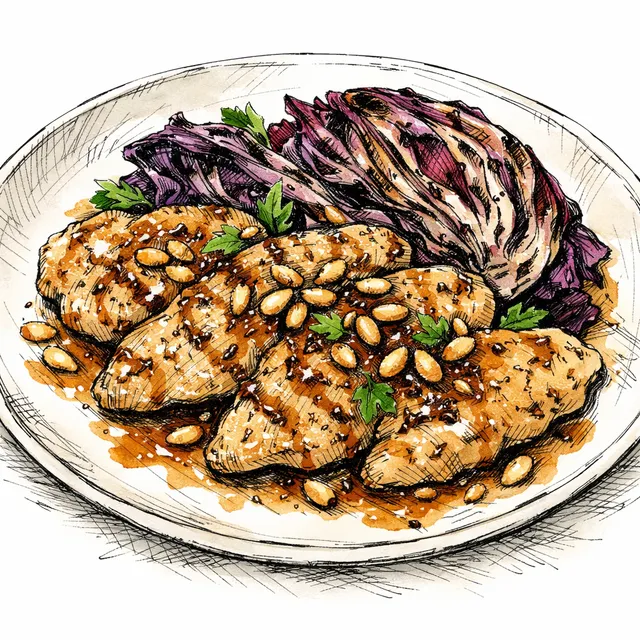
The Senato Loggia: Gentle Pan-Seared Chicken Paillards with Charred Radicchio and Warm Pine Nut Aceto Glaze
There is a quiet elegance to midday dining in Milan, particularly when the autumn light hits the stone balconies along Via Senato. Whenever I crave that effortless sophistication amidst a frantic workday, I make my Senato Loggia chicken paillards. This dish is a love letter to my Piedmontese grandmother's weekend lunches, reimagined for the fast pace of a modern metropolitan afternoon. The load-bearing foundation here is simple: thinly pounded chicken breast cooked to juicy perfection, paired with deeply wilted, bittersweet Radicchio di Treviso. We finish everything in minutes with a glossy pan glaze of aged aceto balsamico, toasted pine nuts, and fragrant sage. Let the ingredients do the heavy lifting. My favorite shortcut is using a well-chilled dry vermouth to deglaze the pan, building deep, complex flavor in seconds rather than hours. If you want to make it your own, swap the pine nuts for crushed hazelnuts for a richer, more rustic Piedmontese crunch, or use endive if radicchio is too sharp for your palate. Weeknight and midday cooking should always feel like an escape, never a chore.
Featured Recipe
The Senato Loggia: Gentle Pan-Seared Chicken Paillards with Charred Radicchio and Warm Pine Nut Aceto Glaze
Crisp-tender chicken breast paillards gently pan-seared to juicy perfection, resting beside deeply wilted, bittersweet Radicchio di Treviso. Finished in minutes with a glossy pan glaze of aged aceto balsamico, toasted pine nuts, and fragrant sage, this lunch brings swift Milanese sophistication to your afternoon table.
Save a copy to your collection for editing
Timeline
Ingredients
- 2 boneless, skinless chicken breasts(halved horizontally into 4 thin paillards, patted dry)
- 1 tsp kosher salt(divided)
- 1/2 tsp freshly cracked black pepper(divided)
- 2 tbsp extra-virgin olive oil(divided; use a rich, fruity Northern Italian olive oil)
- 2 heads Radicchio di Treviso or Chioggia(trimmed and sliced lengthwise into neat wedges with core intact)
- 2 tbsp unsalted butter(cold, cut into cubes)
- 2 tbsp pine nuts(raw)
- 8 fresh sage leaves(whole leaves)
- 3 tbsp dry vermouth(load-bearing aromatic base for deglazing)
- 2 tbsp aged balsamic vinegar of Modena(dense, syrupy aceto balsamico)
- 1/4 cup Parmigiano-Reggiano(shaved into thin ribbons for finishing)
Instructions
- 1
Lightly pound the 2 boneless, skinless chicken breasts (split into 4 paillards) between parchment paper to an even 1/3-inch thickness. Season evenly on both sides with 3/4 tsp kosher salt and 1/4 tsp freshly cracked black pepper.
4 min
Tip: Uniform thickness ensures the paillards cook in minutes without shedding precious moisture.
- 2
Set a large, wide stainless steel skillet over medium heat and warm 1 tbsp extra-virgin olive oil. Lay the cut sides of 2 heads Radicchio di Treviso or Chioggia into the shimmering oil. Sear undisturbed until the edges soften and take on a rich, smoky bronze char, then gently turn once.
5 min
Tip: Do not crowd or fiddle with the radicchio; letting the leaves caramelize tames their assertive bitterness into something mellow and complex.
- 3
Transfer the wilted radicchio to warm serving plates. Return the hot skillet to medium-high heat and add the remaining 1 tbsp extra-virgin olive oil. Lay in the chicken paillards and gently pan-sear until golden blond underneath, about 2 to 3 minutes, then flip and cook for 1 to 2 minutes more until opaque throughout. Transfer the paillards to the plates beside the radicchio.
5 min
Tip: Thin paillards require only gentle heat and brief contact to remain exceptionally tender.
- 4
Immediately reduce the skillet heat to low. Add 2 tbsp pine nuts and 8 fresh sage leaves, swirling gently for 60 seconds until the pine nuts are golden and the sage is crisp and fragrant.
2 min
Tip: Watch the pine nuts like a hawk—they go from beautifully toasted to overdone in seconds.
- 5
Deglaze the skillet with 3 tbsp dry vermouth, scraping up any caramelized fond from the pan floor. Simmer until reduced by half, about 1 minute, then stir in 2 tbsp aged balsamic vinegar of Modena, 2 tbsp unsalted butter, and remaining 1/4 tsp kosher salt and 1/4 tsp freshly cracked black pepper, swirling vigorously until a glossy, emulsified pan glaze forms.
2 min
Tip: The cold butter is your structural binder, creating an instant silky emulsion with the vermouth and balsamic reduction.
- 6
Spoon the warm pine nut and balsamic pan sauce generously over the seared chicken paillards and charred radicchio. Finish each plate with 1/4 cup Parmigiano-Reggiano shaved over the top and serve immediately.
2 min
Tip: The ribbon-thin curls of Parmigiano melt slightly over the warm chicken, grounding the aceto glaze with savory depth.
Chef's Notes
In Milan, an elegant midday pause is an art form. We lean on architectural simplicity: the chicken breast serves as an impeccably lean, neutral canvas, while the charred radicchio brings smoky bitterness and the quick vermouth-balsamic emulsion delivers rich, slow-simmered depth in just two minutes. Let the ingredients do the heavy lifting—always seek out an authentic aged aceto balsamico whose syrupy density effortlessly ties the whole plate together.

Elena Rossi
Effortless Northern Italian elegance for busy modern weeknights.
Milan-born Elena Rossi, her true passion was always simmering on the stove. Raised on the rich, comforting flavors of her grandmother's Piedmontese kitchen, Elena found herself constantly reimagining those time-intensive classics for her own demanding, fast-paced lifestyle. Today, Elena is the voice behind a beloved culinary movement that proves authentic Italian food does not require spending eight hours stirring a pot. She beautifully merges the precision of her design background with the soul of Northern Italian cooking, offering busy home cooks a stylish, stress-free approach to dinner. Whether she is utilizing a pressure cooker for a Tuesday night osso buco or elevating a high-quality store-bought brodo with fresh herbs, Elena empowers her readers to cook with confidence. Her recipes are a testament to the idea that practicality and elegance can perfectly coexist on the modern dinner table.