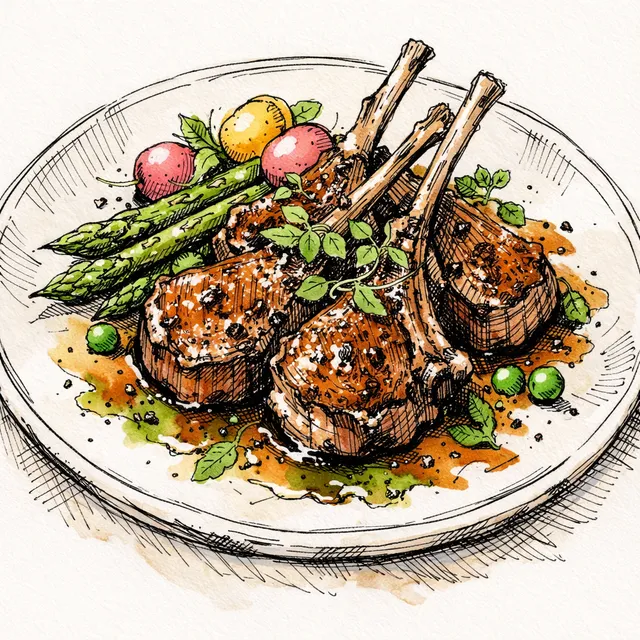
The Spring Colonnade: Pan-Seared Lamb Chops with Vermouth-Mint Reduction
In my architectural days, a colonnade was a sequence of columns built to support a structure and invite light. In my fast-paced metropolitan kitchen, these spring lamb chops stand as the load-bearing pillars of a vibrant April dinner. The inspiration for this dish actually stems from my grandmother's kitchen in Piedmont. She would braise tough cuts of lamb for hours until they surrendered into tenderness. While I deeply cherish those memories of her slow-cooking, modern Milanese weeknights demand a swifter blueprint. Instead of a slow braise, I deeply sear the chops to build a robust structural foundation of flavor, then construct a rapid, elegant pan sauce. We deglaze the skillet with a heavy splash of dry vermouth and mount it with cold butter, fresh mint, and a handful of fresh sage. What makes this recipe so special to me is its absolute structural integrity; the vermouth acts as the mortar, binding the rich lamb juices with the bright herbs. Remember, let the ingredients do the heavy lifting! Weeknight cooking should feel like an escape, not a chore. To make it your own, treat your garnishes as decorative detailing: a scatter of toasted pine nuts or a quick flurry of robust Parmigiano-Reggiano over your accompanying arborio rice adds wonderful textural contrast.
Featured Recipe
The Spring Colonnade: Pan-Seared Lamb Chops with Vermouth-Mint Reduction
In my architectural days, a colonnade was a sequence of columns built to support a structure and invite light. In my kitchen, these spring lamb chops stand as the load-bearing pillars of a vibrant April dinner, deeply seared and resting beneath a bright, structural pan sauce. We deglaze the skillet with dry vermouth, mounting it with cold butter, fresh mint, and sage—letting a few exceptional ingredients do all the heavy lifting in a fraction of the time.
Save a copy to your collection for editing
Timeline
Ingredients
- 8 chops spring lamb rib chops(About 1-inch thick, room temperature)
- 1 tsp kosher salt(For seasoning)
- 1/2 tsp black pepper(Freshly ground)
- 1 tbsp extra-virgin olive oil(For searing)
- 2 cloves garlic(Smashed but left whole)
- 1 fillet oil-packed anchovy fillet(Optional, but crucial for structural umami)
- 1/2 cup dry white vermouth(The ultimate weeknight deglazing tool)
- 1/2 cup premium store-bought chicken brodo(Low-sodium)
- 3 tbsp cold unsalted butter(Cubed, kept cold until the end)
- 1 tbsp fresh sage(Finely chopped)
- 1 tbsp fresh mint(Finely chopped)
- 1 tsp lemon zest(Freshly grated)
Instructions
- 1
Pat 8 spring lamb rib chops dry with a paper towel. Season both sides generously with 1 tsp kosher salt and 1/2 tsp black pepper. In my architectural training, we learned that a surface must be perfectly prepared before applying finishes; in the kitchen, a dry surface ensures a spectacular, load-bearing crust.
5 min
Tip: Take the meat out of the fridge 15 minutes prior to ensure even cooking.
- 2
Heat 1 tbsp extra-virgin olive oil in a large stainless steel or cast-iron skillet over medium-high heat. Once the oil shimmers, arrange the lamb chops in the pan. Do not crowd them—think of them as columns in a colonnade, each needing its own space to breathe. Sear undisturbed.
4 min
Tip: Resist the urge to move the meat. A solid crust is your flavor foundation.
- 3
Flip the lamb chops and tuck the 2 cloves garlic into the empty spaces in the pan. Continue cooking until the second side is deeply browned and the interior reaches medium-rare (about 130°F).
3 min
Tip: Tilt the pan slightly to baste the garlic oil over the meat.
- 4
Transfer the lamb to a plate. Let them rest, structurally redistributing their juices, while you construct the pan sauce.
5 min
Tip: Do not cover tightly with foil, or you will ruin the crust. A loose tent is fine if your kitchen is chilly.
- 5
Lower the heat to medium. Add the 1 oil-packed anchovy fillet to the residual fat, mashing it with a wooden spoon until it dissolves into a foundational umami paste. Pour in the 1/2 cup dry white vermouth, scraping up the browned bits (the fond) from the bottom of the skillet.
2 min
Tip: The anchovy won't taste fishy; it acts as an invisible support beam for the savory flavors.
- 6
Pour in the 1/2 cup premium store-bought chicken brodo. Let the liquid bubble aggressively and reduce by half. This rapid evaporation concentrates the flavors, doing the heavy lifting of a slow-simmered demi-glace in just minutes.
3 min
Tip: Watch the bubbles; as they become larger and slower, the reduction is nearly ready.
- 7
Remove the skillet from the heat. Whisk in the 3 tbsp cold unsalted butter one piece at a time, creating a glossy, structurally sound emulsion. Stir in the 1 tbsp fresh sage, 1 tbsp fresh mint, and 1 tsp lemon zest.
2 min
Tip: Off-heat emulsification prevents the butter from breaking and separating into oil.
- 8
Pour any accumulated resting juices from the lamb back into the sauce. Arrange the chops on a warm serving platter and spoon the gleaming reduction over the top. Serve immediately.
1 min
Tip: Serve alongside lightly charred spring onions or simple roasted potatoes to soak up the sauce.
Chef's Notes
A nod to my grandmother's springtime herb garden in Piedmont, juxtaposed with the speed required by modern Milanese life. The mint offers a bright, soaring elevation to the dish, while the vermouth and anchovy keep the foundation decidedly grounded. Weeknight cooking should feel like an escape, not a chore—let these robust ingredients do the heavy lifting for you.

Elena Rossi
Effortless Northern Italian elegance for busy modern weeknights.
Milan-born Elena Rossi, her true passion was always simmering on the stove. Raised on the rich, comforting flavors of her grandmother's Piedmontese kitchen, Elena found herself constantly reimagining those time-intensive classics for her own demanding, fast-paced lifestyle. Today, Elena is the voice behind a beloved culinary movement that proves authentic Italian food does not require spending eight hours stirring a pot. She beautifully merges the precision of her design background with the soul of Northern Italian cooking, offering busy home cooks a stylish, stress-free approach to dinner. Whether she is utilizing a pressure cooker for a Tuesday night osso buco or elevating a high-quality store-bought brodo with fresh herbs, Elena empowers her readers to cook with confidence. Her recipes are a testament to the idea that practicality and elegance can perfectly coexist on the modern dinner table.