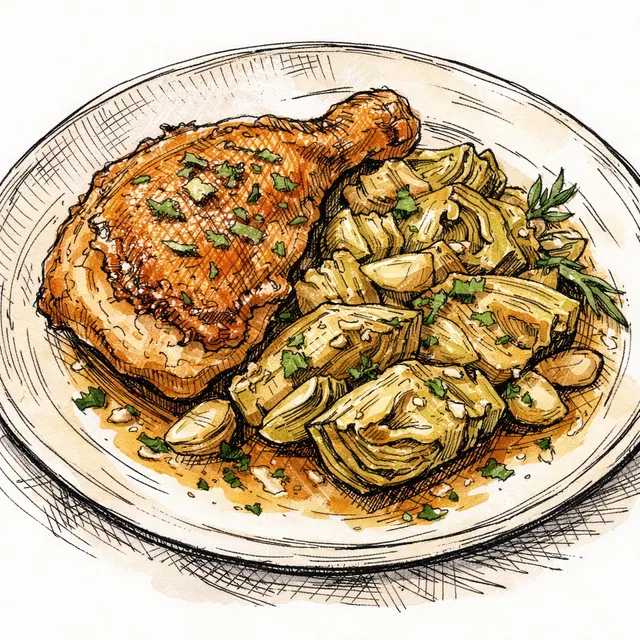
The Lombard Architrave: Pan-Roasted Chicken and Vermouth-Glazed Artichokes
Like a perfectly proportioned Milanese architrave, this dish relies on a seamless transfer of weight: crisp pan-roasted chicken cutlets support a deeply structured vermouth and sage pan-sauce. By utilizing premium thawed artichoke hearts—a brilliant weeknight shortcut to bypass tedious trimming—we build complex, slow-simmered Piedmontese flavor in mere minutes. It is effortless, elegant, and entirely structurally sound.

Save a copy to your collection for editing
Timeline
Ingredients
- 1.5 lbs chicken breast cutlets(Pounded very thin, about 1/4-inch)
- 1 tsp kosher salt(Divided use if needed, primarily for the chicken)
- 1/2 tsp black pepper(Freshly ground)
- 1/2 cup all-purpose flour(For dredging)
- 3 tbsp extra virgin olive oil(Divided use)
- 12 oz frozen artichoke quarters(Thawed and patted completely dry)
- 1/3 cup dry vermouth(Our deglazing solvent)
- 1/2 cup premium chicken brodo(Store-bought is perfect, but ensure it is high quality)
- 8 fresh sage leaves(Large leaves)
- 3 tbsp unsalted butter(Must be cold and cubed for proper mantecatura)
- 1 tbsp fresh lemon juice(For acidic lift at the end)
- 2 tbsp Parmigiano-Reggiano(Finely grated for garnish)
Instructions
- 1
Season 1.5 lbs chicken breast cutlets evenly with 1 tsp kosher salt and 1/2 tsp black pepper. Lightly dredge them in 1/2 cup all-purpose flour, shaking off the excess to ensure a micro-thin, load-bearing crust. This flour layer is crucial—it protects the meat and later provides the thickening starch for our pan sauce.
5 min
Tip: Do not let the dredged chicken sit too long before searing, or the flour will hydrate and become gummy rather than crisp.
- 2
Heat 2 tbsp extra virgin olive oil in a wide, heavy-bottomed skillet over medium-high heat. Sear the chicken cutlets in batches, cooking undisturbed until a golden-brown facade develops, about 2 minutes per side. Transfer the seared cutlets to a plate and set aside.
8 min
Tip: Leave plenty of space between the cutlets; overcrowding the pan causes the chicken to steam, ruining our structural sear.
- 3
While the chicken is searing, take your 12 oz frozen artichoke quarters (which should be fully thawed) and pat them completely dry with a paper towel. As I always say, surface moisture is the absolute enemy of structural browning!
2 min
Tip: If your artichokes are wet, they will boil instead of pan-roast. Squeeze them gently if necessary.
- 4
Add the remaining 1 tbsp extra virgin olive oil to the empty skillet. Drop in the dried artichokes and pan-roast them in the rendered chicken fat, turning occasionally, until their edges are deeply caramelized and crispy.
5 min
Tip: Do not stir them constantly. Let them sit and build a deep, structural crust against the pan.
- 5
While the artichokes are building their crust, quickly tear 8 fresh sage leaves into large pieces to begin releasing their essential oils.
1 min
Tip: Tearing the sage rather than chopping it prevents the edges from bruising too heavily while still releasing aroma.
- 6
Pour in 1/3 cup dry vermouth to deglaze the pan. Let it bubble vigorously, using a wooden spoon to excavate the golden fond from the bottom of the pan—this is the absolute foundation of our sauce. Cook until the liquid has almost entirely evaporated.
2 min
Tip: The pan will hiss loudly. Keep scraping; you want every bit of that caramelized mortar integrated into the liquid.
- 7
Pour in 1/2 cup premium chicken brodo and scatter in the torn sage leaves. Allow the liquid to simmer and reduce by half, letting the residual flour in the pan naturally bind and thicken the broth.
3 min
Tip: The sauce should easily coat the back of a spoon when it is ready.
- 8
Remove the skillet entirely from the heat. Briskly swirl in 3 tbsp unsalted butter and 1 tbsp fresh lemon juice to mount the sauce into a glossy, structural emulsion. The cold butter brings the temperature down and creates a perfectly bound sauce.
2 min
Tip: If you add the butter while the pan is over the flame, the emulsion will break and become greasy.
- 9
Return the rested chicken cutlets (and any juices from the plate) to the skillet, turning them gently to coat in the rich emulsion. Finish the dish with a dusting of 2 tbsp Parmigiano-Reggiano for an final hit of umami. Let the ingredients do the heavy lifting!
2 min
Tip: Serve immediately while the chicken's crust retains its delicate texture under the sauce.
Chef's Notes
My grandmother in Piedmont used to spend hours trimming fresh spring carciofi by hand. It was an act of pure devotion, but the modern weeknight demands a practical shortcut. By utilizing premium frozen artichoke hearts—and ensuring they are aggressively dried before hitting the hot oil—we achieve that same caramelized depth without the exhaustive labor. Think of the chicken as your structural slabs and the pan sauce as the mortar holding the entire flavor profile together.
Frequently Asked Questions
How long does The Lombard Architrave: Pan-Roasted Chicken and Vermouth-Glazed Artichokes take to make?
The Lombard Architrave: Pan-Roasted Chicken and Vermouth-Glazed Artichokes takes about 37 minutes total. That includes 10 minutes of prep and 27 minutes of cooking.
How many servings does this recipe make?
This recipe makes 4 servings.
What skill level is needed for The Lombard Architrave: Pan-Roasted Chicken and Vermouth-Glazed Artichokes?
This recipe is rated medium — it's intermediate, requiring some cooking experience.
What ingredients do I need for The Lombard Architrave: Pan-Roasted Chicken and Vermouth-Glazed Artichokes?
The main ingredients are: chicken breast cutlets, kosher salt, black pepper, all-purpose flour, extra virgin olive oil, frozen artichoke quarters, dry vermouth, premium chicken brodo, fresh sage leaves, unsalted butter, fresh lemon juice, Parmigiano-Reggiano.
What type of meal is The Lombard Architrave: Pan-Roasted Chicken and Vermouth-Glazed Artichokes?
The Lombard Architrave: Pan-Roasted Chicken and Vermouth-Glazed Artichokes is categorized as: dinner.
Ask Elena Rossi a question
Sign in to chat about this recipe, get cooking tips, and ask for substitutions.
Sign in to chat