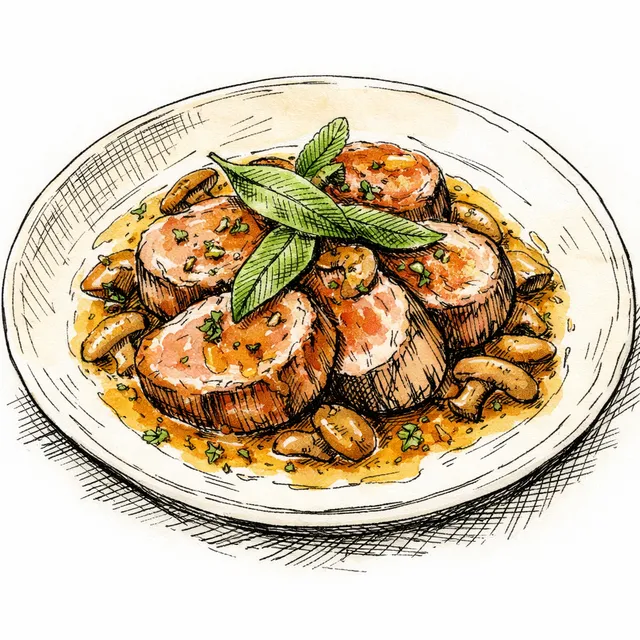
The Piedmontese Cladding: Pan-Roasted Pork Tenderloin with Sage and Vermouth
In architecture, cladding protects a structure from the elements while defining its entire aesthetic. Here, a tight wrap of thinly sliced pancetta and fresh sage acts as an edible facade for lean pork tenderloin, basting the meat as it pan-roasts to ensure perfect structural integrity and moisture. A rapid vermouth pan-sauce finishes the dish, delivering effortless Northern Italian elegance for a busy weeknight.

Save a copy to your collection for editing
Timeline
Ingredients
- 1 lb pork tenderloin(Trimmed of silver skin)
- 4 oz thinly sliced pancetta(Sliced paper-thin at the deli counter)
- 6 whole fresh sage leaves(Plus a few extra for garnish)
- 1 tsp black pepper(Freshly ground; no salt needed due to the pancetta)
- 1 tbsp olive oil(Just enough to lubricate the pan)
- 1/2 cup dry vermouth(A high-quality brand, the secret to a fast Northern Italian glaze)
- 1/2 cup premium chicken brodo(Store-bought is perfectly fine if it's high quality)
- 3 tbsp cold unsalted butter(Cubed, crucial for the final emulsion)
Instructions
- 1
Preheat your oven to 400°F (200°C). On a cutting board, arrange 4 oz thinly sliced pancetta in slightly overlapping rows to create a rectangular sheet. Scatter 6 whole fresh sage leaves evenly across the meat. Place the 1 lb pork tenderloin in the center, season generously with 1 tsp black pepper, and tightly roll the pancetta around the pork. This structural cladding will protect the lean meat from drying out.
5 min
Tip: Make sure the pancetta ends overlap underneath the pork so it doesn't unroll in the pan. The pancetta brings enough salinity, so omit additional salt.
- 2
Heat 1 tbsp olive oil in a large, heavy-bottomed, oven-safe skillet over medium-high heat. Carefully place the wrapped pork into the skillet, seam-side down. Sear the pork, gently rotating every minute or two, until the pancetta is rendered, golden, and crisped on all sides.
6 min
Tip: Don't rush the sear; rendering the fat from the pancetta is what builds the load-bearing foundation of flavor for your pan sauce.
- 3
Transfer the skillet directly into the preheated oven. Pan-roast the pork until an instant-read thermometer inserted into the thickest part reads 140°F (60°C).
12 min
Tip: The ambient heat of the oven ensures an even cook, while the pancetta continues to baste the tenderloin.
- 4
While the pork is roasting, measure out your liquid elements: 1/2 cup dry vermouth and 1/2 cup premium chicken brodo. Cube your 3 tbsp cold unsalted butter and place it back in the refrigerator. Mise en place is like laying down your blueprints before pouring concrete.
3 min
Tip: Keeping the butter ice-cold is essential for forcing a stable emulsion later.
- 5
Remove the skillet from the oven (remember the handle will be scorching hot). Use tongs to transfer the pork to a cutting board to rest. Place the skillet back on the stove over medium heat. Immediately pour in the 1/2 cup dry vermouth, using a wooden spoon to scrape up all the browned pancetta bits—the foundation of your sauce. Let it reduce by half.
3 min
Tip: The pork needs at least 5 minutes of resting time to allow the internal juices to redistribute. Let the meat rest while you build the sauce.
- 6
Pour in the 1/2 cup premium chicken brodo and let the mixture simmer vigorously for another 2 minutes until slightly thickened. Turn off the heat completely. Drop in the chilled 3 tbsp cold unsalted butter and swirl the pan continuously until the butter melts and binds with the liquids into a glossy, velvety emulsion. Slice the rested pork into thick medallions and spoon the sauce over the top.
4 min
Tip: Never boil the sauce once the butter is added, or the emulsion will break and separate into a greasy mess.
Chef's Notes
Let the ingredients do the heavy lifting! Wrapping a lean cut like pork tenderloin in fatty pancetta is a brilliant shortcut to slow-roasted flavor on a Tuesday night schedule. Serve this alongside a simple bowl of soft polenta or a crisp arugula salad dressed merely with lemon and olive oil.
Frequently Asked Questions
How long does The Piedmontese Cladding: Pan-Roasted Pork Tenderloin with Sage and Vermouth take to make?
The Piedmontese Cladding: Pan-Roasted Pork Tenderloin with Sage and Vermouth takes about 30 minutes total. That includes 10 minutes of prep and 20 minutes of cooking.
How many servings does this recipe make?
This recipe makes 4 servings.
What skill level is needed for The Piedmontese Cladding: Pan-Roasted Pork Tenderloin with Sage and Vermouth?
This recipe is rated easy — it's beginner-friendly and straightforward.
What ingredients do I need for The Piedmontese Cladding: Pan-Roasted Pork Tenderloin with Sage and Vermouth?
The main ingredients are: pork tenderloin, thinly sliced pancetta, fresh sage leaves, black pepper, olive oil, dry vermouth, premium chicken brodo, cold unsalted butter.
What type of meal is The Piedmontese Cladding: Pan-Roasted Pork Tenderloin with Sage and Vermouth?
The Piedmontese Cladding: Pan-Roasted Pork Tenderloin with Sage and Vermouth is categorized as: dinner.
Ask Elena Rossi a question
Sign in to chat about this recipe, get cooking tips, and ask for substitutions.
Sign in to chat