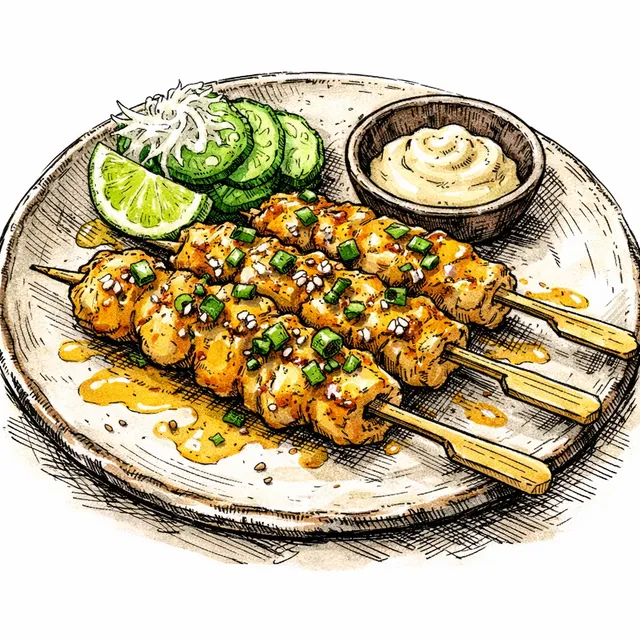
Aji Amarillo & Shio Koji Chicken Yakitori: Tokyo Meets Lima
Hey everyone, Kenji here. Chicken breast gets a terrible rap on the grill, right? It goes from perfect to chalky in thirty seconds. But Japanese fermentation science completely changes the game. When I was cooking in Lima, I fell in love with aji amarillo—this sunny, fruity, bright yellow chili that locals use in almost everything. I was standing in a bustling market eating anticuchos when it hit me: what if I married this Peruvian heat with the umami magic of Japanese shio koji? Shio koji is my absolute favorite secret weapon. It's essentially rice fermented with salt and the Aspergillus oryzae mold. Why this works: the enzymes in the shio koji break down the proteins in the lean chicken breast, acting as a tenderizer while pumping it full of amino acids (hello, umami!). When you mix that with the vibrant aji amarillo paste, you lock in insane moisture and flavor before the meat even hits the high heat of the charcoal. This recipe is special to me because it perfectly captures my journey from the yakitori alleys of Tokyo to the vibrant streets of Peru. Feel free to make it your own by swapping the aji amarillo for Korean gochujang or even a smoky Mexican chipotle paste. Just don't skip the shio koji! Keep those jars fermenting, friends.
Featured Recipe
Aji Amarillo & Shio Koji Chicken Breast Yakitori
Chicken breast gets a bad rap on the grill, but Japanese fermentation science completely changes the game. By curing lean protein with umami-rich shio koji and the sunny, fruity heat of Peruvian aji amarillo, we lock in moisture and flavor before hitting the high heat. This is Tokyo-meets-Lima street food for your backyard.
Save a copy to your collection for editing
Timeline
Ingredients
- 1.5 lbs boneless skinless chicken breasts(Cut into uniform 1-inch cubes)
- 3 tbsp shio koji(Liquid or paste works)
- 3 tbsp aji amarillo paste(Divided (2 tbsp for marinade, 1 tbsp for tare))
- 8 scallions(Cut into 1-inch pieces, white and light green parts only)
- 1/4 cup soy sauce(For the tare)
- 1/4 cup mirin(For the tare)
- 1/4 cup sake(For the tare)
- 1 tbsp brown sugar(For the tare)
- 1 tbsp toasted sesame seeds(For garnish)
- 4 shiso leaves(Chiffonade, for garnish)
- 1 lime(Cut into wedges)
Instructions
- 1
In a mixing bowl, toss the 1.5 lbs boneless skinless chicken breasts cubes with 3 tbsp shio koji and 2 tbsp aji amarillo paste. Massage it into the meat until fully coated. Set aside to marinate at room temperature.
5 min
Tip: Don't skip the massage. You want those enzymes making contact with every surface.
- 2
Let the chicken marinate while you prepare the sauce and grill. The enzymes in the koji need this time to tenderize the breast meat.
30 min
Tip: Thirty minutes is the sweet spot. Less than that, and the proteins don't break down enough. More than an hour, and chicken breast gets unpleasantly mushy.
- 3
To make the tare (glaze), combine the 1/4 cup soy sauce, 1/4 cup mirin, 1/4 cup sake, 1 tbsp brown sugar, and the remaining 1 tbsp aji amarillo paste in a small saucepan. Simmer over medium heat until it reduces by about a third and coats the back of a spoon.
15 min
Tip: Keep an eye on this. The sugar in the mirin and brown sugar can scorch quickly once it starts reducing.
- 4
While the tare reduces and chicken marinates, fire up your grill to high heat. If using bamboo skewers, submerge them in water to soak so they don't incinerate over the coals.
15 min
Tip: I prefer binchotan charcoal for yakitori, but a scorching hot gas grill works if that's what you have in the backyard.
- 5
Thread the marinated chicken cubes onto the soaked skewers, alternating with pieces of the 8 scallions. Pack them tightly; this protects the meat from drying out.
10 min
Tip: Try to keep the surface of the skewer relatively flat so it makes even contact with the grill grates.
- 6
Place the skewers on the hottest part of the grill. Cook for 3 minutes until a nice char develops, then flip and cook for another 3 minutes. The chicken should be mostly cooked through at this point.
6 min
Tip: Shio koji contains sugars that will caramelize quickly, so keep them moving if flare-ups occur.
- 7
Brush the reduced tare generously over the skewers. Grill for 30 seconds, flip, brush the other side, and grill for another 30 seconds. Repeat this one more time to build up a sticky, lacquered crust.
2 min
Tip: Do this at the very end. The sugars in the glaze will burn into bitter carbon if left on the heat too long.
- 8
Transfer the skewers to a platter. Garnish with 1 tbsp toasted sesame seeds and the 4 shiso leaves. Serve immediately with wedges from the 1 lime.
2 min
Tip: Squeeze the lime right before eating. The acidity cuts through the sweet, umami-heavy glaze.
Chef's Notes
Let's geek out for a second on why this works. Most people avoid chicken breast for yakitori because it turns into dry sawdust over high heat. But shio koji is packed with protease enzymes. These act like molecular scissors, snipping the long, tight protein chains in the chicken breast into smaller amino acids (hello, free glutamates!). This not only prevents the proteins from squeezing out all their moisture on the grill, but it also translates to pure, unadulterated umami. Adding the aji amarillo directly to the cure means that fruity, sun-drenched heat penetrates all the way to the center of the meat, marrying Lima street cart vibes with Tokyo alleyway precision.

Kenji Nakamura
Where Japanese precision meets global flavors
I trained in Tokyo for eight years, mastering the discipline of washoku—traditional Japanese cuisine. But I got restless. So I cooked my way through Southeast Asia, spent a year in Mexico City, and fell hard for the food of Peru. Now I see connections between cuisines that others miss: the umami in dashi and fish sauce, the heat in shishito and Szechuan peppercorns, the way Japanese technique can unlock flavors from any tradition. I'm always fermenting something.