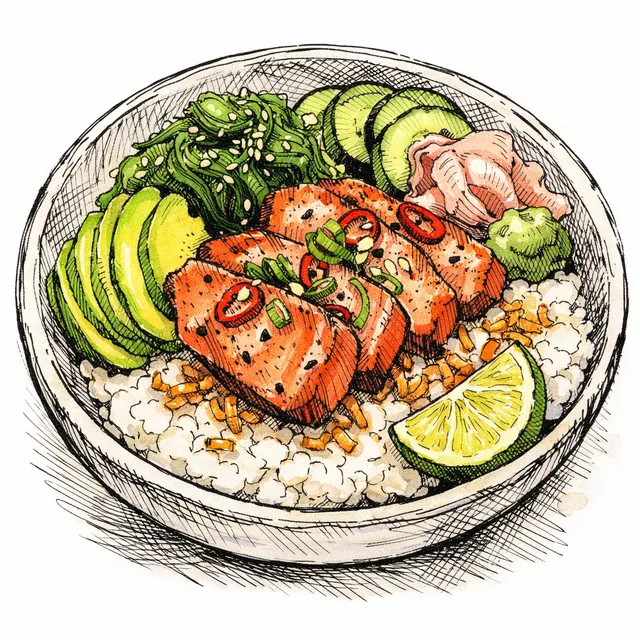
Aji Panca and Yuzu Kosho Cured Swordfish Bowl
Swordfish is the steak of the ocean, but its lean texture can turn dry in a heartbeat if you overcook it. I first stumbled on this flavor mashup late one night in Lima, staring at a jar of Peruvian aji panca paste next to some fermented yuzu kosho I had packed in my kit. I wondered what would happen if I married the smoky, berry-like heat of the aji panca with the sharp, citrusy punch of the yuzu. The result blew my mind. Quick-curing the swordfish in shio koji alongside these pastes locks in incredible moisture while creating a deep, caramelized crust when you give it a hard sear. Served over fragrant coconut-dashi rice, it bridges the gap between Tokyo precision and South American bold strokes. Why this works: shio koji enzymes gently break down surface proteins, making the fish insanely tender while the sugars caramelize instantly in the pan. Don't be afraid to swap the swordfish for firm tuna or even king oyster mushrooms if you are going plant-based. Get in the kitchen, break some rules, and let me know how it goes!
Featured Recipe
Aji Panca & Yuzu Kosho Cured Swordfish Bowl with Coconut-Dashi Rice
Swordfish is the steak of the ocean, but its lean texture can turn dry if overcooked. Quick-curing it in shio koji, yuzu kosho, and Peruvian aji panca locks in moisture while creating a deep, caramelized crust when hard-seared, served over fragrant coconut-dashi rice.
Save a copy to your collection for editing
Timeline
Ingredients
- 1.25 lbs Swordfish steaks (cut into 1-inch thick cubes)(Skinless, fresh center-cut)
- 2 tbsp Shio koji(Enzyme-rich fermented rice marinade)
- 1 tbsp Aji panca paste(Smoky Peruvian red pepper paste)
- 1 tsp Green yuzu kosho(Japanese fermented chili and citrus paste)
- 1 tsp Lime zest(Freshly grated)
- 1.5 cups Jasmine rice(Rinsed until water runs clear)
- 1.5 cups Dashi stock(Kombu and bonito dashi or instant dashi)
- 0.5 cup Full-fat coconut milk(Unsweetened)
- 0.5 tsp Kosher salt(Divided)
- 1 cup Sweet corn kernels(Fresh off the cob or thawed frozen)
- 0.5 cup Edamame(Shelled and thawed)
- 0.5 cup Cherry tomatoes(Halved)
- 6 Fresh shiso leaves(Chiffonade or thinly sliced)
- 2 tbsp Ponzu sauce(Citrus-soy dressing)
- 1 tsp Toasted sesame oil(For finish)
- 1.5 tbsp Avocado oil(High smoke point oil for searing)
- 1 Avocado(Sliced for serving)
- 0.25 tsp Kosher salt(mentioned in step 2 but missing from list)
- 1 serving Coconut-Dashi Rice(mentioned in step 6, likely referring to the rice made in step 2)
- 1 Avocado(mentioned in step 6, but not listed as an ingredient)
Instructions
- 1
In a bowl, combine 2 tbsp Shio koji, 1 tbsp Aji panca paste, 1 tsp Green yuzu kosho, and 1 tsp Lime zest. Gently toss 1.25 lbs Swordfish steaks (cut into 1-inch thick cubes) in the mixture until evenly coated. Set aside at room temperature to quick-cure for 15 minutes.
15 min
Tip: Why this works: The enzymes in shio koji break down surface proteins while drawing out excess moisture. Combined with the acid and salt in yuzu kosho, this short cure seasons the fish deeply and guarantees a dark, flavorful crust during the sear.
- 2
In a small rice cooker or heavy saucepan, combine rinsed 1.5 cups Jasmine rice, 1.5 cups Dashi stock, 0.5 cup Full-fat coconut milk, and 0.25 tsp Kosher salt. Bring to a boil, cover, reduce heat to low, and simmer for 15 minutes. Turn off heat and let steam covered for 5 minutes.
20 min
Tip: Using dashi instead of plain water infuses glutamate-rich umami straight into the grains, balanced by coconut fat.
- 3
Heat a dry cast-iron skillet over high heat. Add 1 cup Sweet corn kernels and 0.5 cup Edamame and cook without stirring for 2 minutes until blistered and charred. Transfer to a bowl and toss with 0.5 cup Cherry tomatoes, 6 Fresh shiso leaves, 2 tbsp Ponzu sauce, 1 tsp Toasted sesame oil, and remaining 0.25 tsp Kosher salt.
8 min
Tip: Charring without oil gives a subtle smokiness that echoes the Peruvian Aji Panca in the cure.
- 4
Wipe out the cast-iron skillet and heat 1.5 tbsp Avocado oil over medium-high heat until shimmeringly hot. Dab cured swordfish cubes with a paper towel to remove heavy moisture while leaving a thin glaze of marinade. Add swordfish in a single layer without overcrowding.
2 min
Tip: A quick dab ensures crisp sear crispiness rather than steaming in the pan.
- 5
Hard-sear the swordfish for 90 seconds per side without moving them, creating a deep golden-red crust. Remove from heat immediately while the center remains juicy and slightly rosy medium.
4 min
Tip: Swordfish continues cooking off heat. Over-searing will make it rubbery, so keep the heat high and the cook time brief.
- 6
Divide warm Coconut-Dashi Rice among lunch bowls. Top with seared swordfish cubes, charred corn-edamame relish, and fan out slices of 1 Avocado. Drizzle any remaining pan juices over top.
3 min
Tip: Serve immediately while the contrast between warm, crispy fish and cool, herbaceous salsa is at its peak.
Chef's Notes
Shio koji is my secret weapon for lean proteins like swordfish. It acts like a fast-forward button for dry-aging. The natural sugars caramelize rapidly under high heat, forming an intense Maillard crust that traps the fish juices inside.

Kenji Nakamura
Where Japanese precision meets global flavors
I trained in Tokyo for eight years, mastering the discipline of washoku—traditional Japanese cuisine. But I got restless. So I cooked my way through Southeast Asia, spent a year in Mexico City, and fell hard for the food of Peru. Now I see connections between cuisines that others miss: the umami in dashi and fish sauce, the heat in shishito and Szechuan peppercorns, the way Japanese technique can unlock flavors from any tradition. I'm always fermenting something.