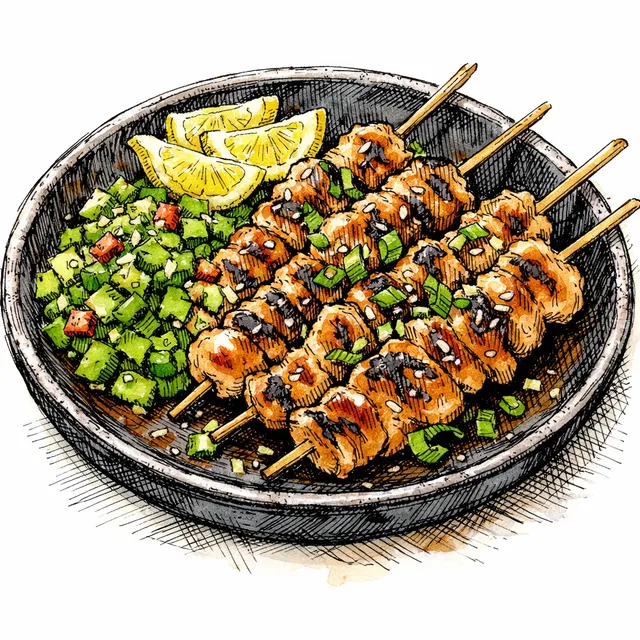
Cast-Iron Yakitori with Charred Poblano-Shiso Salsa: A Tokyo-Oaxaca Mashup
I still dream about a tiny, smoke-filled izakaya in Shinjuku where the yakitori master turned grilling into an Olympic sport. Years later, standing at a late-night taco stand in Oaxaca eating charred meats smothered in vibrant salsa verde, it clicked. The DNA was exactly the same: the aggressive sizzle of animal fat hitting screaming-hot heat, cut by something bright and acidic. That is how this Cast-Iron Yakitori with Charred Poblano-Shiso Salsa was born. Let us geek out on the food science for a second: traditional Japanese binchotan charcoal burns at over 1,800 degrees Fahrenheit. To mimic that blistered perfection without a specialized backyard grill, we rely on the immense thermal mass of a cast-iron skillet. Getting the pan to its absolute smoking point ensures rapid Maillard browning, searing the exterior instantly before the chicken overcooks. The salsa is where the global mashup really sings. We take the smoky, earthy base of Mexican poblanos and blend it with the herbaceous, almost minty punch of Japanese shiso. It cuts through the savory chicken fat like a sharp scalpel. Want to make it your own? Swap the chicken thighs for thick-cut king oyster mushrooms. Better yet, if you have a jar of fermented jalapeños bubbling on your counter (and you always should!), throw a spoonful into the blender for an extra funky umami bomb. Grab an ice-cold beer and let's get searing.
Featured Recipe
Cast-Iron "Yakitori" with Charred Poblano-Shiso Salsa
Izakaya culture is all about aggressive seasoning, ice-cold drinks, and the beautiful alchemy of fat hitting screaming-hot metal. We're mimicking the intense heat of a binchotan grill using a smoking-hot cast iron and a little food science. A smoky, vibrant Mexican-Japanese salsa cuts right through the savory richness of the chicken.
Save a copy to your collection for editing
Timeline
Ingredients
- 1.5 lbs Boneless, skinless chicken thighs(Cut into 1.5-inch pieces. Skin-on works too if you want extra crispy fat!)
- 2 tbsp Shio koji(Liquid or paste works. This is our umami engine.)
- 1 tbsp Mezcal(Tequila or sake are fine substitutes.)
- 1 tbsp Fresh ginger(Finely grated)
- 1 large Poblano pepper(For that sweet, earthy Mexican smoke)
- 4 whole Scallions(Roots trimmed)
- 10 leaves Fresh shiso leaves(About 1/2 cup lightly packed. Mint + basil is an okay fallback, but try to find shiso.)
- 1 tbsp Lime juice(Freshly squeezed)
- 1 tbsp Toasted sesame oil
- 1 tsp Soy sauce(Preferably a good quality Japanese shoyu)
- 1 tbsp Neutral oil(Grapeseed, canola, or avocado oil)
Instructions
- 1
In a mixing bowl, toss 1.5 lbs boneless, skinless chicken thighs with 2 tbsp shio koji, 1 tbsp mezcal, and 1 tbsp fresh ginger. Massage it in with your hands. Let it hang out at room temperature while you prep the vegetables.
5 min
Tip: Don't let this marinate for more than an hour. Shio koji is powerful and will turn the meat to mush if left too long. 15-20 minutes is the sweet spot.
- 2
Place 1 large poblano pepper and 4 whole scallions directly over a high gas flame, or under a screaming hot broiler. Char them aggressively, turning occasionally, until the skins are deeply blackened and blistered all over.
10 min
Tip: Don't be afraid of the black spots! That carbonized exterior is essential for the smoky profile of the salsa.
- 3
Transfer the blackened poblano to a bowl and cover tightly with a plate or plastic wrap to let it steam. Leave the scallions on your cutting board to cool.
5 min
Tip: Steaming loosens the tough outer skin of the pepper, making it effortless to peel.
- 4
While the pepper steams, thread the marinated chicken pieces tightly onto bamboo or metal skewers.
5 min
Tip: Packing the meat tightly prevents it from drying out over the extreme heat of the cast iron.
- 5
Peel the blackened skin off the poblano (it's okay if a few charred flecks remain), remove the stem and seeds, and roughly chop. Roughly chop the cooled scallions. Add both to a food processor along with 10 fresh shiso leaves, 1 tbsp lime juice, 1 tbsp toasted sesame oil, and 1 tsp soy sauce. Pulse until you have a chunky, vibrant salsa.
5 min
Tip: If you prefer a more rustic texture, you can hand-chop everything very finely instead of using a processor.
- 6
Place a heavy cast-iron skillet over medium-high heat. Let it get smoking hot. Right before cooking, add 1 tbsp neutral oil to coat the pan.
5 min
Tip: Open a window or turn on your vent hood! We want high heat for that authentic yakitori char.
- 7
Lay the chicken skewers flat in the skillet. Press down gently with a spatula to ensure maximum contact. Cook undisturbed for 3 to 4 minutes until a deep, mahogany crust forms. Flip and char the other side for another 3 to 4 minutes until cooked through.
8 min
Tip: Watch closely! The added sugars from the shio koji mean this will caramelize—and potentially burn—much faster than unmarinated chicken.
- 8
Transfer the charred skewers to a serving plate. Spoon the poblano-shiso salsa generously over the top. Serve immediately with ice-cold beer or a highball.
2 min
Tip: A final squeeze of fresh lime right before eating takes this completely over the top.
Chef's Notes
Why does shio koji make such a profound difference here? It's loaded with protease and amylase enzymes. These little biological scissors snip the chicken's proteins and starches into free amino acids (pure umami) and simple sugars. More sugar means the meat achieves the Maillard reaction (browning and charring) at a much faster rate. This is exactly how we mimic the aggressive, fast sear of a binchotan grill using just a cast iron pan on a Tuesday night. The poblano brings that Mexican street-food smokiness that pairs shockingly well with Japanese shiso.

Kenji Nakamura
Where Japanese precision meets global flavors
I trained in Tokyo for eight years, mastering the discipline of washoku—traditional Japanese cuisine. But I got restless. So I cooked my way through Southeast Asia, spent a year in Mexico City, and fell hard for the food of Peru. Now I see connections between cuisines that others miss: the umami in dashi and fish sauce, the heat in shishito and Szechuan peppercorns, the way Japanese technique can unlock flavors from any tradition. I'm always fermenting something.