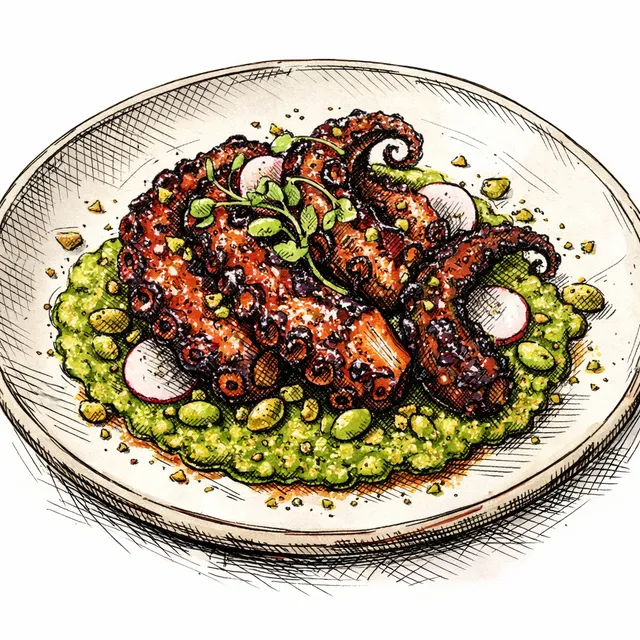
Charred Tako with Ume-Chipotle Glaze & Edamame-Pistachio Pipian
I still remember sweating through my chef's coat in an Oaxacan market, devouring a green pipian that tasted impossibly bright and nutty. My mind immediately flashed back to Tokyo spring nights—open windows, ice-cold Asahi, and the intoxicating, smoky char of grilled octopus (tako). I knew right then I had to marry these two worlds. Enter my Charred Tako with Ume-Chipotle Glaze & Edamame-Pistachio Pipian. What makes this recipe so special to me is the shared DNA between Japanese and Mexican flavor profiles. Why This Works: Umeboshi (pickled plum) brings a sharp, fruity acidity and intense salinity. When you blend it with smoky, earthy chipotles, the ume acts like a hyper-charged lime juice, cutting the richness of the octopus while amplifying the smoke. Underneath, substituting traditional pumpkin seeds with edamame and pistachios in the pipian creates a velvety, vibrant green base that catches every drop of that umami-bomb glaze. Make It Yours: Don't have tako? This glaze is incredible on grilled chicken thighs or king oyster mushrooms. The trick is getting your grill ripping hot—we want a fast, aggressive char so the inside stays tender. Grab a beer, open the windows, and let the flavor collision begin.
Featured Recipe
Charred Tako with Ume-Chipotle Glaze & Edamame-Pistachio Pipian
Spring izakaya culture is all about cold beer, open windows, and the intoxicating smell of char. I’m taking classic Japanese grilled octopus (tako) and mashing it up with Mexican sensibilities. We’re using a smoky, fruity Umeboshi-Chipotle glaze and serving it over a bright green Edamame-Pistachio Pipian. It’s a flavor collision that makes perfect, nerdy sense.
Save a copy to your collection for editing
Timeline
Ingredients
- 1 lb Pre-cooked octopus tentacles (tako)(Buying pre-cooked octopus saves you a 2-hour tenderizing braise. Look for it at Japanese or well-stocked seafood markets.)
- 1 bunch Spring onions or thick scallions(Trimmed, leaving the green tops intact)
- 1 tbsp Neutral oil(Plus 1/4 cup for the pipian)
- 1 tbsp Umeboshi paste(Japanese salted plum paste)
- 1 tbsp Chipotle in adobo(Finely chopped or puréed)
- 2 tbsp Mirin
- 1 tbsp Soy sauce
- 1 tsp Toasted sesame oil
- 1 cup Shelled edamame(Thawed if frozen)
- 1/2 cup Shelled pistachios(Toasted and unsalted)
- 1 Serrano chili(Stemmed (remove seeds if you want less heat))
- 1 clove Garlic
- 1 tbsp White miso
- 8 Fresh shiso leaves(5 for the pipian, 3 torn for garnish)
- 3 tbsp Lime juice(Freshly squeezed)
- 2 tbsp Water(For blending)
- 1 tbsp Toasted sesame seeds(For garnish)
- 1/4 cup neutral oil(mentioned in step 3)
Instructions
- 1
Preheat your outdoor grill or a heavy cast-iron grill pan over medium-high heat. You want it ripping hot to get a fast sear on the octopus without overcooking the interior.
10 min
Tip: If using a cast-iron pan, turn on your exhaust fan! We want aggressive char.
- 2
In a small bowl, whisk together 1 tbsp umeboshi paste, 1 tbsp chipotle in adobo, 2 tbsp mirin, 1 tbsp soy sauce, and 1 tsp toasted sesame oil. This is our glaze. Why this works: Umeboshi brings intense lactic tang and a fruity backbone that perfectly mirrors the smoky, dried-fruit notes of the chipotle. The mirin provides the sugar needed for caramelization on the grill.
3 min
Tip: Taste the glaze! It should be aggressively punchy—salty, sour, smoky, and slightly sweet.
- 3
Make the Edamame-Pistachio Pipian. In a blender or food processor, combine 1 cup shelled edamame, 1/2 cup shelled pistachios, 1 serrano chili, 1 clove garlic, 1 tbsp white miso, 5 fresh shiso leaves, 3 tbsp lime juice, 1/4 cup neutral oil, and 2 tbsp water. Blend until smooth and creamy, adding a tiny splash of extra water if it's too thick to blend. It should have the consistency of hummus.
5 min
Tip: Miso acts as our salt here, while also boosting the nutty, earthy profile of the edamame and pistachios.
- 4
Place the 1 lb pre-cooked octopus tentacles and 1 bunch spring onions on a tray. Drizzle with 1 tbsp neutral oil to prevent sticking, then brush generously with half of the ume-chipotle glaze.
2 min
Tip: Don't use all the glaze yet! The sugars in mirin burn easily, so we’ll apply the rest as a fresh layer right at the end of grilling.
- 5
Place the octopus and spring onions onto the hot grill. Grill for 2-3 minutes per side, pressing down lightly to ensure maximum contact with the grates. You are looking for deep, blistered char marks. In the last 30 seconds, brush with the remaining ume-chipotle glaze and immediately pull from the heat.
6 min
Tip: Since the octopus is already cooked, you are strictly grilling for texture and temperature. Fast and hot is the rule.
- 6
To plate: Swoosh the Edamame-Pistachio Pipian aggressively across a large serving platter. Slice the charred octopus on a bias into bite-sized medallions. Arrange the grilled spring onions and octopus over the pipian. Garnish with 1 tbsp toasted sesame seeds and 3 torn shiso leaves.
4 min
Tip: Let the octopus rest for 1 minute before slicing so the glaze sets slightly into the crust.
Chef's Notes
Let's talk about the mashup: A traditional Mexican Pipian relies on pumpkin seeds and chili to create a rich, textural sauce. Here, edamame and pistachios take on that role, providing the necessary fat and mouthfeel to balance the chewy, intensely savory charred octopus. Don't be precious about plating this—izakaya food is meant to be rustic and shared. Grab a cold Sapporo or a crisp Junmai Ginjo sake.

Kenji Nakamura
Where Japanese precision meets global flavors
I trained in Tokyo for eight years, mastering the discipline of washoku—traditional Japanese cuisine. But I got restless. So I cooked my way through Southeast Asia, spent a year in Mexico City, and fell hard for the food of Peru. Now I see connections between cuisines that others miss: the umami in dashi and fish sauce, the heat in shishito and Szechuan peppercorns, the way Japanese technique can unlock flavors from any tradition. I'm always fermenting something.