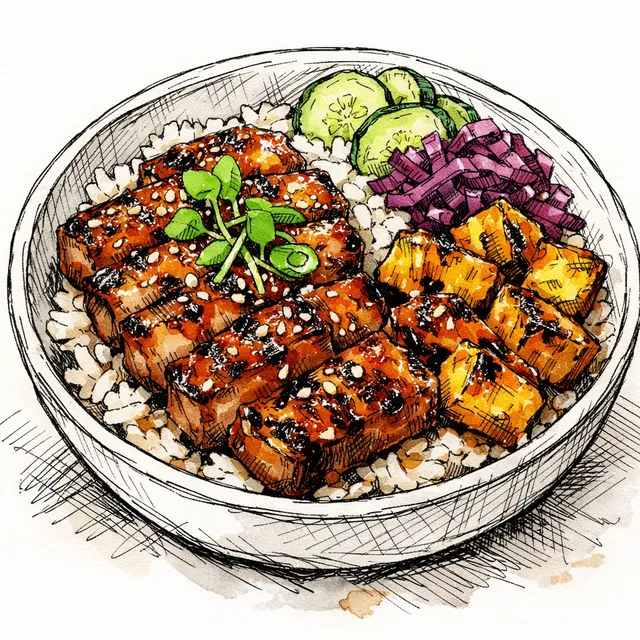
Crispy Shio Koji Pork Belly Bowl with Charred Pineapple-Gochujang Glaze
When I was running pop-ups in Mexico City, I became obsessed with how the locals paired pork with sweet pineapple. Back home in my Tokyo kitchen, I started playing with shio koji—my absolute favorite umami weapon. The enzymes in koji break down proteins with a ferocious efficiency, turning pork belly into something meltingly tender in record time. Then came the spark: why not glaze it with a charred pineapple and gochujang reduction? The sweet funk of the fermented chili meets the tropical acidity of the pineapple, cutting right through the rich, crispy fat of the pork. Served over sesame jasmine rice, it is the ultimate expression of what I love—Japanese precision meeting global boldness. Here is my tip for making it your own: don't rush the sear. Get that skin crackling loud, and if you have some homemade kimchi in your fridge, throw a handful on the side. Go break some rules in the kitchen!
Featured Recipe
Crispy Shio Koji Pork Belly Bowl with Charred Pineapple-Gochujang Glaze
Pork belly gets the ultimate tenderizing treatment with a quick shio koji cure before being seared to crispy perfection. Glazed in a smoky, sweet-spicy charred pineapple and gochujang sauce and served over sesame jasmine rice, this bowl balances deep umami with electric tropical acidity.
Save a copy to your collection for editing
Timeline
Ingredients
- 1.5 lbs pork belly, cut into 1-inch slabs(skin off, cut into bite-sized 1-inch strips or slabs)
- 3 tbsp shio koji(store-bought or homemade liquid rice koji)
- 1.5 cups jasmine rice(rinsed until water runs clear)
- 2 cups water
- 1 tbsp toasted sesame oil
- 0.5 tsp sea salt(fine sea salt)
- 0.5 cup fresh pineapple juice(unsweetened)
- 2 tbsp gochujang(Korean fermented chili paste)
- 1 tbsp mirin(Japanese sweet rice wine)
- 1 tbsp soy sauce(Japanese tamari or shoyu)
- 1 tbsp fresh lime juice
- 1 tsp grated fresh ginger
- 1 cup Persian cucumbers(thinly sliced into coins)
- 1 tbsp rice vinegar
- 0.5 tsp granulated sugar
- 2 stalks scallions(thinly sliced)
- 1 tbsp toasted sesame seeds
- 0.25 cup fresh cilantro(leaves and tender stems for garnish)
Instructions
- 1
Rub 1.5 lbs pork belly, cut into 1-inch slabs evenly with 3 tbsp shio koji in a bowl. Cover and let marinate at room temperature for 20 minutes while preparing other components.
20 min
Tip: Shio koji's enzymes work quickly. 20 minutes is plenty of time to break down muscle proteins and unleash massive umami without making the meat mushy.
- 2
In a small bowl, toss 1 cup Persian cucumbers with 1 tbsp rice vinegar and 0.5 tsp granulated sugar. Set aside to quick-pickle.
5 min
Tip: The quick acidity cuts right through the rich pork belly fat later in the dish.
- 3
In a medium saucepan, combine 1.5 cups jasmine rice, 2 cups water, 1 tbsp toasted sesame oil, and 0.5 tsp sea salt. Bring to a boil, cover, reduce heat to low, and simmer for 15 minutes. Remove from heat and let steam covered for 5 minutes.
20 min
Tip: Adding sesame oil directly to the cooking liquid infuses every single grain of rice with a nutty aroma.
- 4
In a small skillet or saucepan, whisk together 0.5 cup fresh pineapple juice, 2 tbsp gochujang, 1 tbsp mirin, 1 tbsp soy sauce, 1 tbsp fresh lime juice, and 1 tsp grated fresh ginger. Simmer over medium-high heat for 6 to 8 minutes until thickened into a glossy glaze.
8 min
Tip: Watch the heat—gochujang sugars burn easily once reduced. Keep it at a gentle bubbling simmer.
- 5
Wipe off excess shio koji marinade from 1.5 lbs pork belly, cut into 1-inch slabs with a paper towel. Heat a heavy skillet or cast-iron pan over medium-high heat. Add the pork belly pieces and sear for 3-4 minutes per side until deeply browned and crisp.
10 min
Tip: Shio koji caramelizes very fast due to rice sugars. Keep an eye on it—you want mahogany char, not black burn.
- 6
Pour the reduced glaze over the seared pork belly in the pan, tossing constantly for 2 minutes over medium heat until every piece is richly coated and sticky.
3 min
Tip: Tossing the hot pork belly in the reduction glazes it effortlessly while creating a lacquered crust.
- 7
Divide cooked sesame rice into four serving bowls. Top each bowl with glazed pork belly, drained pickled cucumbers, 2 stalks scallions, 1 tbsp toasted sesame seeds, and 0.25 cup fresh cilantro. Serve immediately.
5 min
Tip: Arrange toppings in neat clusters around the pork belly for a stunning street-food style presentation.
Chef's Notes
WHY THIS WORKS: Shio koji contains natural protease enzymes (fungal enzymes from Aspergillus oryzae) that hydrolyze tough pork belly muscle proteins into savory free glutamates. It doesn't just flavor the meat—it chemically tenderizes it in minutes. When cooked over high heat, those same koji starches undergo a rapid Maillard reaction, forming a gorgeously caramelized crust that anchors the bright, acidic gochujang-pineapple glaze.

Kenji Nakamura
Where Japanese precision meets global flavors
I trained in Tokyo for eight years, mastering the discipline of washoku—traditional Japanese cuisine. But I got restless. So I cooked my way through Southeast Asia, spent a year in Mexico City, and fell hard for the food of Peru. Now I see connections between cuisines that others miss: the umami in dashi and fish sauce, the heat in shishito and Szechuan peppercorns, the way Japanese technique can unlock flavors from any tradition. I'm always fermenting something.