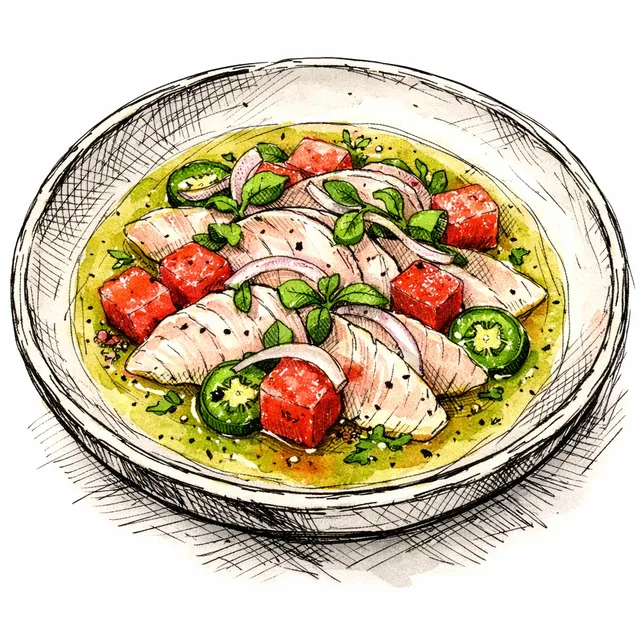
Hamachi & Watermelon Aguachile: Sinaloa Meets Tokyo
I've eaten my weight in acid-cured seafood from Lima to Ensenada, but I will never forget sitting on a plastic stool in Sinaloa, sweating through a fiercely bright plate of aguachile. That immediacy—the way the acid just kisses the seafood rather than cooking it to death—stuck with me. When I got back to Tokyo, I started playing with that memory. What if we took that aggressive heat and softened it with Japanese aromatics? That is exactly how this Hamachi and Watermelon Aguachile with Yuzu-Serrano Broth was born. This dish is incredibly special to me because it bridges two culinary worlds that share a deep respect for raw fish. The buttery hamachi thrives against the sweet crunch of summer watermelon, while the yuzu-serrano broth delivers a sharp, fragrant kick. Here is why this works: unlike a traditional ceviche that cures for hours, aguachile is all about the present moment. You only want a 3-minute marinade here. The yuzu denatures the exterior proteins of the yellowtail just enough to grab onto the serrano heat, leaving the center perfectly sashimi-grade. To make it your own, try swapping the watermelon for fermented cucumbers, or whisk a dash of white miso into the broth for an unexpected umami bomb. Play around, break the rules, and make sure you eat it immediately!
Featured Recipe
Hamachi & Watermelon Aguachile with Yuzu-Serrano Broth
I've eaten my weight in acid-cured seafood from Lima to Ensenada, and nothing beats the immediacy of a Mexican aguachile. Here, we're crossing the fierce, bright heat of Sinaloa with Japanese precision—using sweet summer watermelon and aromatic yuzu to cure buttery yellowtail just minutes before eating.
Save a copy to your collection for editing
Timeline
Ingredients
- 1/4 cup red onion(thinly sliced)
- 1 cup ice water(for soaking onions)
- 1 cup chopped watermelon(rough chopped, for the broth)
- 1/4 cup lime juice(freshly squeezed)
- 2 tbsp yuzu juice(bottled is fine if fresh is unavailable)
- 1 whole serrano pepper(rough chopped, seeds included for heat)
- 1/4 cup fresh cilantro(leaves and tender stems)
- 1 tbsp shiro shoyu(white soy sauce)
- 1/2 cup finely cubed watermelon(for garnish)
- 1/2 cup diced cucumber(seeds removed)
- 4 leaves shiso leaves(chiffonade)
- 12 oz sashimi-grade hamachi(yellowtail, kept very cold)
- 1/2 tsp toasted sesame oil(just for a subtle finish)
- 1/2 tsp flaky sea salt(like Maldon)
- 1 batch Crispy tostadas or senbei(for serving)
Instructions
- 1
Place 1/4 cup red onion into a small bowl and cover with 1 cup ice water. Let this sit while you prep the rest of the dish.
2 min
Tip: Soaking raw onions in ice water leaches out the harsh sulfuric compounds (the stuff that makes your eyes burn) while keeping them incredibly crisp.
- 2
In a blender, combine 1 cup chopped watermelon, 1/4 cup lime juice, 2 tbsp yuzu juice, 1 serrano pepper, 1/4 cup fresh cilantro, and 1 tbsp shiro shoyu. Blend on high until completely smooth, then strain through a fine-mesh sieve into a bowl or pitcher. Discard the solids and chill the liquid.
6 min
Tip: Shiro shoyu (white soy sauce) is my secret weapon here. It provides a massive hit of savory umami without muddying the vibrant pink color of our watermelon broth.
- 3
Prep your garnishes so they are ready for plating. Place the 1/2 cup finely cubed watermelon, 1/2 cup diced cucumber, and 4 shiso leaves in small prep bowls near your workstation.
5 min
Tip: Removing the seeds from the cucumber prevents your final dish from becoming watery.
- 4
Using a very sharp knife, slice the cold 12 oz sashimi-grade hamachi against the grain into 1/4-inch thick slices. Keep the fish as cold as possible until the very last second.
4 min
Tip: If the fish is too soft to slice cleanly, pop it in the freezer for 10 minutes to firm up the exterior.
- 5
Drain the red onions well. Arrange the sliced hamachi on a wide, chilled serving plate or shallow bowl with slight overlap. Scatter the cubed watermelon, diced cucumber, and crisp red onions evenly over the fish.
3 min
Tip: Use a wide, shallow bowl so the fish sits in the aguachile broth rather than being completely submerged like a soup.
- 6
Right before serving, pour the chilled watermelon-yuzu broth over the fish. Drizzle with 1/2 tsp toasted sesame oil, sprinkle with 1/2 tsp flaky sea salt, and top with the chiffonade shiso. Let it sit for exactly 3 to 5 minutes before eating with Crispy tostadas or senbei.
5 min
Tip: Do not let it sit longer than 5 minutes! We want a fleeting kiss of acid to snap the exterior proteins while leaving the center raw and buttery.
Chef's Notes
Let's talk about the 3-minute cure. Unlike a traditional ceviche where fish sits in acid for 15+ minutes until it turns opaque and firm all the way through, an aguachile is about immediacy. We're using a highly acidic liquid (lime + yuzu) to flash-denature the exterior proteins of the hamachi. This gives you a slight textural snap on the outside, but keeps the center completely raw, buttery, and unmistakably yellowtail. It's the perfect light, refreshing lunch for a sweltering July day.

Kenji Nakamura
Where Japanese precision meets global flavors
I trained in Tokyo for eight years, mastering the discipline of washoku—traditional Japanese cuisine. But I got restless. So I cooked my way through Southeast Asia, spent a year in Mexico City, and fell hard for the food of Peru. Now I see connections between cuisines that others miss: the umami in dashi and fish sauce, the heat in shishito and Szechuan peppercorns, the way Japanese technique can unlock flavors from any tradition. I'm always fermenting something.