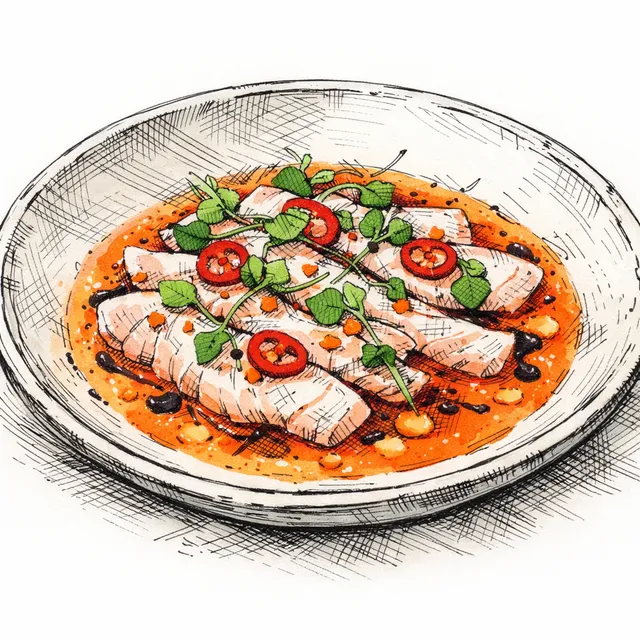
Kombu-Cured Tai Tiradito with Miso-Rocoto Emulsion
I still remember the first time I tasted a proper tiradito in Lima. It was vibrant, acidic, and unapologetically loud. As I sat on a plastic stool sweating through the rocoto heat, I thought: what if this had the quiet, deep umami of Tokyo?That is the soul of my Kombu-Cured Tai Tiradito with Miso-Rocoto Emulsion. It is where Japanese precision meets Peruvian fire. We use kombu-jime, curing red snapper between sheets of kelp. Why this works: The kombu absorbs excess moisture, firming the delicate flesh, while transferring natural glutamates directly into the fish. It is food science at its most delicious, turning a simple fillet into a sheer umami bomb. Then, we slice it tiradito-style and dress it in a creamy, fiery rocoto pepper and white miso emulsion.This dish is deeply special to me because it traces my exact culinary journey on a single plate. My tip? Do not be precious with it. If you cannot find tai, use fluke or sea bass. Try swapping the rocoto for fermented gochujang if you want a Korean twist. Just keep tasting, keep playing, and maybe start fermenting your own chili paste!
Featured Recipe
Kombu-Cured Tai Tiradito with Miso-Rocoto Emulsion
This is where Japanese precision meets Peruvian fire. We are using an ancient Japanese technique called kombu-jime to pack red snapper with explosive umami, then slicing it tiradito-style and dressing it in a creamy, fiery rocoto pepper emulsion. It is raw, elegant, and completely unforgettable.
Save a copy to your collection for editing
Timeline
Ingredients
- 12 oz red snapper fillet(skinless, pinbones removed (Tai))
- 1 piece dried kombu(large sheet, about 6x8 inches)
- 2 tbsp sake(cheap drinking sake is fine)
- 2 tbsp rocoto paste(find in Latin markets (pasta de rocoto))
- 1 tbsp shiro miso(sweet white miso)
- 2 tbsp yuzu juice(substitute equal parts lime and mandarin juice if unavailable)
- 2 tbsp awase dashi(or water in a pinch)
- 3 tbsp grapeseed oil(or any neutral oil)
- 2 tbsp toasted buckwheat(kasha, for crunch)
- 2 whole spring radishes(very thinly sliced)
- 1/4 cup micro cilantro(or finely chopped standard cilantro)
- 1/2 tsp flaky sea salt(for finishing)
Instructions
- 1
Lightly dampen a paper towel with 2 tbsp sake and wipe down the 1 piece dried kombu. Do not scrub off the white powdery stuff—that is pure umami! Cut the kombu if needed to cover both sides of your 12 oz red snapper fillet. Wrap the fish tightly in the kombu, then wrap tightly in plastic wrap. Place in the fridge to cure for exactly 45 minutes.
5 min
Tip: The 45-minute mark is the sweet spot for a delicate fish like snapper. It firms the flesh and injects glutamates without making the fish overly leathery.
- 2
While the fish cures, make the emulsion. In a blender or tall container for an immersion blender, combine 2 tbsp rocoto paste, 1 tbsp shiro miso, 2 tbsp yuzu juice, and 2 tbsp awase dashi. Blend until smooth, then slowly stream in 3 tbsp grapeseed oil until the sauce thickens into a bright, creamy emulsion.
5 min
Tip: Rocoto can be surprisingly spicy. The shiro miso and oil help round out the heat, but taste it! If it's too fiery, add a drop of honey.
- 3
Place a small dry skillet over medium heat. Add the 2 tbsp toasted buckwheat and toast, tossing frequently, until it smells incredibly nutty and slightly darkens, about 3 to 4 minutes. Transfer immediately to a small bowl to cool.
5 min
Tip: Buckwheat burns fast once it gets going. Don't walk away to check your phone.
- 4
Prep your garnishes. Using a mandoline or a very sharp knife, shave the 2 whole spring radishes into paper-thin rounds. Place them in a small bowl of ice water to crisp up. Gently pick your 1/4 cup micro cilantro.
5 min
Tip: Ice water shocking makes the radishes curl beautifully and stay ultra-crisp.
- 5
Remove the fish from the fridge. Unwrap the plastic and peel off the kombu (you can save the kombu for making dashi later). Using a very sharp knife, slice the cured 12 oz red snapper fillet at a slight bias into thin sashimi-style pieces (about 1/4-inch thick).
5 min
Tip: Cut against the grain. You will immediately notice how much firmer and stickier the flesh is compared to raw, uncured fish.
- 6
Arrange the sliced snapper in an overlapping fan on a chilled serving plate. Spoon the rocoto emulsion generously over the fish. Drain and pat dry the radishes, then scatter them over the top. Sprinkle with the toasted buckwheat, micro cilantro, and finish with 1/2 tsp flaky sea salt.
3 min
Tip: Unlike ceviche, tiradito is sauced right before serving. The fish should not cook in the acid.
Chef's Notes
Let's geek out for a second on why this works. Tiradito is often confused with ceviche, but they are fundamentally different. Ceviche is a chemical cooking process where acid denatures the fish proteins. Tiradito is a celebration of raw texture, closer to Italian crudo or Japanese sashimi, just dressed in a vibrant sauce. Because we aren't relying on acid to alter the texture, we use 'kombu-jime'—curing the fish between sheets of kelp. Kombu is naturally loaded with glutamic acid (the building block of MSG). Over 45 minutes, it draws excess moisture out of the snapper, concentrating its flavor, while simultaneously pumping it full of savory umami. The result is a profoundly meaty, sweet slice of fish that stands up perfectly to the fruity, aggressive heat of the Peruvian rocoto pepper.

Kenji Nakamura
Where Japanese precision meets global flavors
I trained in Tokyo for eight years, mastering the discipline of washoku—traditional Japanese cuisine. But I got restless. So I cooked my way through Southeast Asia, spent a year in Mexico City, and fell hard for the food of Peru. Now I see connections between cuisines that others miss: the umami in dashi and fish sauce, the heat in shishito and Szechuan peppercorns, the way Japanese technique can unlock flavors from any tradition. I'm always fermenting something.