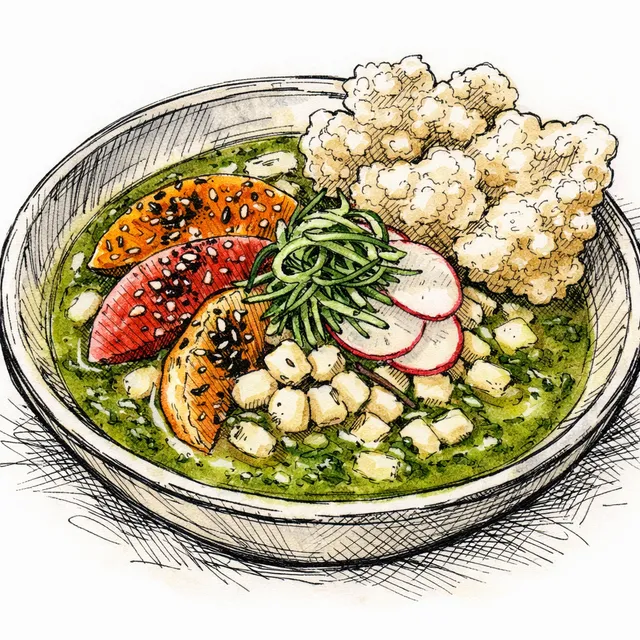
Kombu-Dashi Pozole Verde with Miso-Hominy, Sesame-Torched Winter Citrus, and Crispy Mochi “Chicharrón”
January always makes me crave contradictions: steaming broth + bright acid, deep comfort + sharp edges. This bowl is my Tokyo-to–Mexico City love letter—kombu dashi standing in for the “quiet” backbone I learned in Tokyo kitchens, and roasted tomatillos bringing that green, smoky snap I fell for wandering mercados in CDMX.
The first time I tried folding miso into hominy was honestly an accident—cold night, half a tub of miso in the fridge, and a pot of pozole that tasted good but not complete. The miso didn’t make it “Japanese.” It just made it rounder, like turning up the bass without muddying the vocals.
What makes this recipe special to me is the finish: winter citrus kissed with a torch and rolled in sesame. Heat drives off harshness, wakes up the oils, and suddenly the whole bowl smells like sunshine hitting a cedar plank.
And then: mochi “chicharrón.” Puff rice cakes until they shatter, and you get crunch that drinks broth like a sponge.
Make it yours: swap in yuzu or grapefruit, add green chiles for more heat, or stir in a spoon of your favorite ferment (I won’t stop you).
Featured Recipe
Kombu-Dashi Pozole Verde with Miso-Hominy, Sesame-Torched Winter Citrus, and Crispy Mochi “Chicharrón”
In January, I want soup that’s bright but grounding—something that feels like a hot bowl of comfort and a cold snap of citrus at the same time. This is my Tokyo-to-Mexico City pozole verde: kombu dashi and roasted tomatillos for clean depth, miso stirred into hominy for a mellow umami thicken, and torched winter citrus with sesame for a perfume-y finish. The crunchy wildcard is “mochi chicharrón”—puffed, shattering rice cakes that act like a spoonable topping and soak up broth like a dream.
Save a copy to your collection for editing
Ingredients
- 10 g Dried kombu(about a 4x4-inch piece)
- 1500 ml Water(plus more as needed)
- 450 g Boneless, skinless chicken thighs(or pork shoulder, cut into big chunks)
- 1.5 tsp Kosher salt(divided, plus more to taste)
- 1 Yellow onion(half for broth, half for salsa verde)
- 5 Garlic cloves(divided)
- 1 Bay leaf(optional but nice)
- 500 g Tomatillos(husked and rinsed)
- 1 Poblano pepper(seeded)
- 1 Jalapeño or serrano(adjust heat to taste)
- 2 tbsp Neutral oil(canola/rice bran/grapeseed)
- 40 g Pumpkin seeds (pepitas)(about 1/3 cup)
- 2 tbsp Toasted sesame seeds(white or mixed)
- 40 g Cilantro(stems and leaves; about 1 big bunch)
- 60 g Baby spinach or kale(optional, boosts green color)
- 2 cans Canned hominy, drained(15 oz / 425 g each)
- 3 tbsp White miso (shiro miso)(start here; adjust to taste)
- 2 tbsp Lime juice(plus wedges to serve)
- 2 Winter citrus (yuzu if you can find it, otherwise Meyer lemon + grapefruit)(zest + segmented or supremed)
- 1 tsp Honey(optional, balances acidity)
- 3 Kirimochi (Japanese shelf-stable rice cakes)(or 120 g; for “chicharrón”)
- 1 tsp Chili powder or togarashi(for finishing the mochi)
- 2 cups Shredded cabbage(for serving)
- 4 Sliced radishes(for serving)
- 3 Sliced scallions(for serving)
- 1 lime Lime wedges(Garnish for serving/chaos-control (cut into wedges from one lime).)
Instructions
- 1
Make a quick kombu dashi: add 10 g Dried kombu and 1500 ml Water to a pot and let it soak 20 minutes (or while you prep). Set over medium heat and bring to just-barely a simmer (small bubbles at the edge), then pull the kombu. Don’t boil it—boiling pushes out bitter, iodine-y notes.
25 min
Tip: If you’re in a hurry, do a 10-minute soak and keep the heat extra gentle. This is ‘clean bass’ for the soup, not a loud seaweed solo.
- 2
Poach the chicken in the dashi: add 450 g Boneless, skinless chicken thighs, 1.5 tsp Kosher salt (divided), 1 Yellow onion (divided, rough chunks), 5 Garlic cloves (divided), and 1 Bay leaf (if using). Keep the broth at a lazy simmer until chicken is just cooked through, 15–18 minutes. Pull chicken to a bowl to cool, then shred. Strain the broth and return it to the pot.
25 min
Tip: If you see a hard boil, dial it back. Gentle heat = clear broth + tender meat.
- 3
Roast the green base: on a sheet pan, toss 500 g Tomatillos, 1 Poblano pepper, 1 Jalapeño or serrano, the other half of the onion (wedged), and remaining garlic with 2 tbsp Neutral oil and a pinch of salt. Broil 6–10 minutes, turning once, until blistered and deeply browned in spots.
12 min
Tip: Char is flavor. Think yakitori logic: browning is a seasoning, not a mistake.
- 4
Blend salsa verde: toast 40 g Pumpkin seeds (pepitas) in a dry pan until popping and fragrant, 2–3 minutes. Blend roasted veg + pepitas + 40 g Cilantro (and 60 g Baby spinach or kale if using) with 1 cup of the strained broth until smooth-ish. Add 2 tbsp Toasted sesame seeds and pulse just a couple times so you keep a little texture.
8 min
Tip: Pepitas thicken like a nut milk; sesame adds that ‘goma’ roundness that reads as richness without cream.
- 5
Build the pozole: add 2 cans Canned hominy, drained and the blended salsa to the pot of broth. Simmer 15 minutes. In a small bowl, whisk 3 tbsp White miso (shiro miso) with a ladle of hot soup until smooth, then stir it back in off-heat (or at very low heat). Add shredded chicken and warm through. Finish with 2 tbsp Lime juice; adjust salt.
20 min
Tip: Miso loses some aroma if it boils hard. Treat it like a finishing sauce, not a base seasoning.
- 6
Make crispy mochi “chicharrón”: cut 3 Kirimochi (Japanese shelf-stable rice cakes) into small cubes (about 1/2-inch). Microwave 30–60 seconds to soften slightly, then shallow-fry in 1/2 inch oil over medium-high until puffed and deeply golden, 2–4 minutes. Drain and toss with a pinch of salt and 1 tsp Chili powder or togarashi.
10 min
Tip: Microwaving first drives off some moisture and makes the puff more dramatic. It’s the same ‘dry-then-fry’ idea as good cracklings.
- 7
Torched citrus-sesame topping: zest 2 Winter citrus (yuzu if you can find it, otherwise Meyer lemon + grapefruit) into a bowl, add segments/supremes, a tiny pinch of salt, and 1 tsp Honey (optional). Right before serving, hit the citrus lightly with a kitchen torch (or sear cut-side citrus halves in a hot dry pan and squeeze over the bowl). Sprinkle a little extra sesame on top.
5 min
Tip: Torching wakes up oils in the zest and adds a smoky high note—like a tiny campfire over perfume.
- 8
Serve: ladle pozole into bowls. Top with 2 cups Shredded cabbage, 4 Sliced radishes, 3 Sliced scallions, citrus-sesame, and a big handful of mochi chicharrón. Add 1 lime Lime wedges for chaos-control.
5 min
Tip: Add mochi right at the table so it stays loud and crunchy, then slowly turns dumpling-soft at the edges in the broth.
Chef's Notes
Why this works (my nerdy version): Pozole is a texture party—brothy, starchy hominy, fresh crunch, and something fatty on top. I swap traditional pork stock with kombu dashi for a cleaner umami backbone, then bring the body back with miso + pepitas (both are loaded with glutamates and fat-soluble aroma compounds, which make ‘green’ flavors taste deeper). Hominy is basically nixtamalized corn, which already has a toasty, alkaline sweetness; miso leans into that and makes the broth taste like it simmered all day. The mochi chicharrón is my favorite kind of rule-breaking: rice becomes a puffed, crackly garnish that behaves like a crouton and a dumpling at the same time. January produce note: tomatillos, hardy greens, cabbage, radish, and winter citrus are all at their best right now—bright, sturdy, and exactly what a hot bowl wants.

Kenji Nakamura
Where Japanese precision meets global flavors
I trained in Tokyo for eight years, mastering the discipline of washoku—traditional Japanese cuisine. But I got restless. So I cooked my way through Southeast Asia, spent a year in Mexico City, and fell hard for the food of Peru. Now I see connections between cuisines that others miss: the umami in dashi and fish sauce, the heat in shishito and Szechuan peppercorns, the way Japanese technique can unlock flavors from any tradition. I'm always fermenting something.