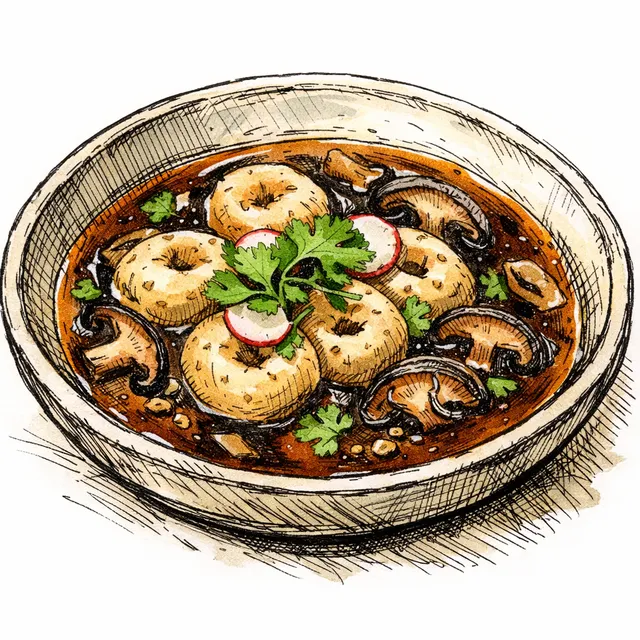
Oaxaca to Tokyo: Masa Chochoyotes in Smoked Ancho-Shiitake Dashi
When I was living in Oaxaca, surrounded by the intoxicating smell of toasted corn, I fell head over heels for chochoyotes. They are these brilliant little masa dumplings with a thumbprint right in the center, designed to catch whatever delicious sauce they cook in. One night, while pinching dough in a tiny kitchen off a cobbled street, it hit me: the nixtamalized corn has an alkaline bite almost exactly like the kansui we use in ramen noodles back in Tokyo. That shared DNA is what makes this recipe so special to me because it bridges two worlds I deeply love. I decided to spike the masa with a spoonful of my homemade shio koji for extra depth, then drop these thumbprint dumplings into a rapid dashi made from dried ancho chiles and smoked shiitake mushrooms. Why this works? Both ancho and shiitake share a deeply savory, dark-fruit umami profile that creates an explosive flavor base when steeped carefully at 140 degrees Fahrenheit. The masa releases just enough starch into the broth, thickening it beautifully with a velvety finish. To make it your own, try folding some finely minced cilantro stems or your favorite fermented chili paste directly into the masa dough before shaping. Play with it, break the rules, and let me know what umami bombs you create!
Featured Recipe
Masa Chochoyotes in Smoked Ancho-Shiitake Dashi
When I lived in Oaxaca, I fell in love with chochoyotes—little masa dumplings with a thumbprint in the center. I realized nixtamalized corn has an alkaline bite almost exactly like the kansui used in ramen noodles, making them perfect for a Japanese-style broth. We are dropping these shio koji-spiked dumplings into a rapid dashi made from dried ancho chiles and shiitake mushrooms, two ingredients that share a deeply savory, dark-fruit umami profile.
Save a copy to your collection for editing
Timeline
Ingredients
- 1 cup Masa harina
- 0.75 cups Warm water(Plus more if needed to reach play-dough consistency)
- 1 tbsp Shio koji(Adds fermented depth and softens the starches)
- 1 tbsp Neutral oil or melted chicken fat
- 1 large Dried ancho chile(Stemmed, seeded, and torn into pieces)
- 4 large Dried shiitake mushrooms
- 1 piece Kombu(About 4 inches long)
- 4 cups Water(For the dashi)
- 2 tbsp Usukuchi (light soy sauce)
- 1 tbsp Mirin
- 4 stalks Spring onions(Cut into 2-inch pieces)
- 1 bundle Enoki mushrooms(Trimmed of roots)
- 0.5 whole Avocado
- 1 tbsp Yuzu juice(Lime juice works perfectly too)
- 1 pinch salt(Used in step 7 to season the avocado and yuzu mash)
Instructions
- 1
In a medium pot, combine 4 cups water, 1 piece kombu, 4 large dried shiitake mushrooms, and 1 large dried ancho chile, torn. Bring to a gentle simmer over medium heat, then lower heat to keep it just below boiling. Let it steep to extract the guanylic acid from the mushrooms and the deep, fruity notes from the ancho.
20 min
Tip: Do not let it rapidly boil while the kombu is in there, or it can get bitter.
- 2
While the dashi simmers, combine the 1 cup masa harina, 0.75 cups warm water, 1 tbsp shio koji, and 1 tbsp neutral oil or melted chicken fat in a bowl. Knead for a couple of minutes until it feels like play-dough. If it cracks easily, add a few more drops of water.
5 min
Tip: The shio koji is a game-changer here—it lightly ferments the dough in minutes.
- 3
Pinch off small pieces of dough and roll them into 1-inch balls. Press your thumb into the center of each ball to create a deep dimple. This indentation ensures they cook evenly and acts as a little cup to catch the rich broth.
10 min
Tip: Keep the finished chochoyotes under a damp towel so they do not dry out.
- 4
Heat a dry cast-iron skillet over high heat. Toss in 4 stalks spring onions and 1 bundle enoki mushrooms. Let them blister and char without moving them too much. Remove from heat.
5 min
Tip: Dry charring gives you a smokey wok-hei flavor without extra oil greasing up your broth.
- 5
Strain the dashi through a fine mesh sieve into a clean pot, pressing the solids to extract all that dark, savory liquid. Stir in 2 tbsp usukuchi (light soy sauce) and 1 tbsp mirin. Bring to a rolling boil.
2 min
Tip: Save the rehydrated shiitakes for a quick stir-fry tomorrow!
- 6
Drop the chochoyotes gently into the boiling dashi. They will sink at first. Cook them until they float to the top, plus one more minute. The masa will release a tiny bit of starch, slightly thickening the broth into a velvety texture.
5 min
Tip: Do not overcrowd the pot; boil in two batches if necessary.
- 7
In a small bowl, roughly mash the 0.5 whole avocado with the 1 tbsp yuzu juice and 1 pinch salt. You want it to be bright and tart to cut through the rich broth.
2 min
- 8
Ladle the hot dashi and chochoyotes into bowls. Top with the charred spring onions, blistered enokis, and a dollop of the yuzu-avocado mash. Break the rules and mix the avocado right into the broth as you eat.
2 min
Chef's Notes
Why this works: Dried ancho chiles and dried shiitakes both undergo enzymatic browning and oxidation during drying, creating incredibly similar flavor compounds. When you pair them with kombu (glutamic acid), you create a synergistic umami multiplier that tastes like it simmered for three days. The shio koji in the masa doesn't just season the dumplings; its amylase enzymes slightly break down the corn starches, giving the dumplings a softer, pillowy texture.

Kenji Nakamura
Where Japanese precision meets global flavors
I trained in Tokyo for eight years, mastering the discipline of washoku—traditional Japanese cuisine. But I got restless. So I cooked my way through Southeast Asia, spent a year in Mexico City, and fell hard for the food of Peru. Now I see connections between cuisines that others miss: the umami in dashi and fish sauce, the heat in shishito and Szechuan peppercorns, the way Japanese technique can unlock flavors from any tradition. I'm always fermenting something.