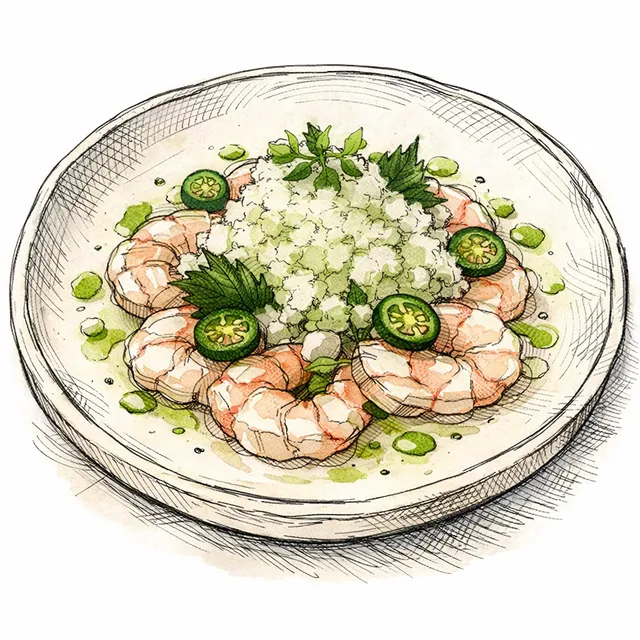
Razor-Clean Shrimp Crudo with Shio-Koji–Lime, Cucumber–Nashi Snow, and Jalapeño–Shiso Ice Oil
I built this dish while chasing a very specific feeling: the first bite at an izakaya that makes you sit up straight—clean, cold, precise—then the playful punch of street salsas I ate in Mexico. Shrimp crudo is my way of stitching those memories together.
In Tokyo, I learned that “ikejime” isn’t a vibe—it’s a promise: treat the fish (or shrimp) with respect so sweetness stays intact. Years later in Lima, a chef friend handed me ceviche so cold and bright it felt electric. That’s where the cucumber–nashi “snow” comes from: not garnish, but temperature and texture as an ingredient.
What makes this plate special to me is the quiet power of shio-koji. A 3-minute cure with lime nudges the shrimp toward sashimi-sweet, not ceviche-cooked. Go 7 minutes and you’ll feel the surface tighten—still great, just a different chew.
Make it yours: swap jalapeño for serrano, add grated ginger, or trade shiso for cilantro. Just keep the oil icy and the flavors razor-clean.
Featured Recipe
Razor-Clean Shrimp “Ikejime” Crudo with Shio-Koji–Lime Cure, Cucumber–Nashi Snow, and Jalapeño–Shiso Ice Oil
This is my izakaya-meets-global reset plate: sweet raw shrimp kissed with a quick shio-koji–lime cure, then served over a frosty “snow” of cucumber and Asian pear for maximum cold snap. A bright jalapeño–shiso oil (kept ice-cold) lands like salsa verde’s clean cousin—herbal, green, and razor-sharp without tasting busy.
Save a copy to your collection for editing
Ingredients
- 12 large Raw shrimp (sashimi-grade or very fresh, peeled and deveined; tails removed optional)(Ask for spot prawns/amaebi if available; otherwise use the freshest large shrimp you can source.)
- 1 tsp Kosher salt(For a brief pre-salt to firm texture.)
- 2 tbsp Shio-koji(Store-bought is fine.)
- 1 tsp Lime zest(From 1 lime.)
- 1 1/2 tbsp Lime juice(Freshly squeezed.)
- 1 tsp Rice vinegar(Adds crisp lift; optional but I like it.)
- 1/2 tsp Sugar(Just enough to round the acid.)
- 1 large Cucumber(Persian/English preferred for fewer seeds.)
- 1/2 medium Nashi pear (Asian pear)(For cold sweetness and crunch; substitute firm apple (e.g., Pink Lady) if needed.)
- 6 leaves Shiso leaves(Plus extra for finishing if you want.)
- 1 small Jalapeño(Seeded for mild, keep seeds for more heat.)
- 4 tbsp Neutral oil (rice bran, grapeseed)(Keeps the green flavors clean.)
- 1 tsp Toasted sesame oil(Just a whisper—don’t let it dominate.)
- 1 tsp Grated fresh ginger
- 1 tsp White miso(Optional, for extra umami in the oil.)
- 1 cup Ice(For chilling bowls/sauce fast and keeping flavors “razor-clean.”)
- 1 tbsp Toasted white sesame seeds(For delicate crunch.)
- to taste Flaky salt(Finish lightly.)
Instructions
- 1
Chill your serving bowls/plates in the freezer (or pack them with 1 cup ice). Keep this dish cold from start to finish—clean flavors read sharper at low temps.
5 min
Tip: Cold plates = the difference between “nice crudo” and “izakaya counter-level crisp.”
- 2
Quick pre-salt the 12 large Raw shrimp: lay shrimp on a paper towel–lined tray and sprinkle evenly with 1 tsp Kosher salt. Rest in the fridge, uncovered, 7 minutes. Rinse quickly under cold water and pat very dry.
10 min
Tip: This brief salt step firms the surface proteins so the later cure stays glossy instead of weepy.
- 3
Make the shio-koji–lime cure: mix 2 tbsp Shio-koji, 1 tsp Lime zest, 1 1/2 tbsp Lime juice, 1 tsp Rice vinegar, and 1/2 tsp Sugar. Add shrimp and toss to coat. Cure in the fridge 6 minutes (set a timer).
6 min
Tip: At ~3 minutes you’ll taste mostly “raw sweet shrimp.” At ~7 minutes it starts turning bouncy and opaque. I like 6 for that ceviche-adjacent snap without losing tenderness.
- 4
Make the 1 large Cucumber–1/2 medium Nashi pear “snow”: grate cucumber and nashi pear on the large holes of a box grater into a bowl. Squeeze firmly in a clean towel until it’s fluffy-dry (you want snow, not soup). Lightly season with a pinch of to taste Flaky salt. Keep cold.
8 min
Tip: Squeezing is the whole game here—dry snow gives you cold crunch and stops the shrimp from getting diluted.
- 5
Make jalapeño–shiso ice oil: in a small blender or mortar, blend 6 leaves Shiso leaves, 1 small Jalapeño, 1 tsp Grated fresh ginger, 4 tbsp Neutral oil, 1 tsp Toasted sesame oil, and (optional) 1 tsp White miso until bright green. Pour into a small bowl and set that bowl over ice to chill hard.
5 min
Tip: Chilling the oil over ice mutes bitterness and makes the aroma pop when it hits cold shrimp.
- 6
Knife work (my favorite part): remove shrimp from cure and wipe off excess with your fingers (don’t rinse). Butterfly each shrimp: slice lengthwise almost through, then open like a book. Optionally, make 2–3 shallow crosshatch cuts for extra sauce grip.
6 min
Tip: Butterflying increases surface area so you get more perfume from the cure and oil without over-curing the center.
- 7
Plate: spoon a bed of cucumber–nashi snow onto each chilled plate. Lay butterflied shrimp on top in a clean line. Drizzle with ice-cold jalapeño–shiso oil. Finish with 1 tbsp Toasted white sesame seeds, a tiny pinch of to taste Flaky salt, and (optional) fine shiso chiffonade.
4 min
Tip: Less drizzle than you think. This dish should taste like cold sunlight, not salad dressing.
- 8
Serve immediately—this is a ‘right now’ appetizer. If you must hold it, keep components separate and assemble within 10 minutes of eating.
Tip: Once plated, the snow will slowly melt and soften the edges of the flavors.
Chef's Notes
Why this works (me geeking out for a second): Shio-koji is enzymatic—so even in a 6-minute cure it boosts sweetness and umami while gently tenderizing the surface. Lime provides the ‘ceviche signal’ (acid brightness) but we keep it short so the shrimp stays translucent and snappy. The cucumber–nashi snow is basically a cold-texture amplifier: high water ingredients, but squeezed dry so they read as crunch and chill, not dilution. And the ice-chilled jalapeño–shiso oil gives you that salsa-verde green lift with Japanese aromatics—clean, sharp, and not heavy. If you can find spot prawns, this becomes dangerously good with almost no extra effort.

Kenji Nakamura
Where Japanese precision meets global flavors
I trained in Tokyo for eight years, mastering the discipline of washoku—traditional Japanese cuisine. But I got restless. So I cooked my way through Southeast Asia, spent a year in Mexico City, and fell hard for the food of Peru. Now I see connections between cuisines that others miss: the umami in dashi and fish sauce, the heat in shishito and Szechuan peppercorns, the way Japanese technique can unlock flavors from any tradition. I'm always fermenting something.