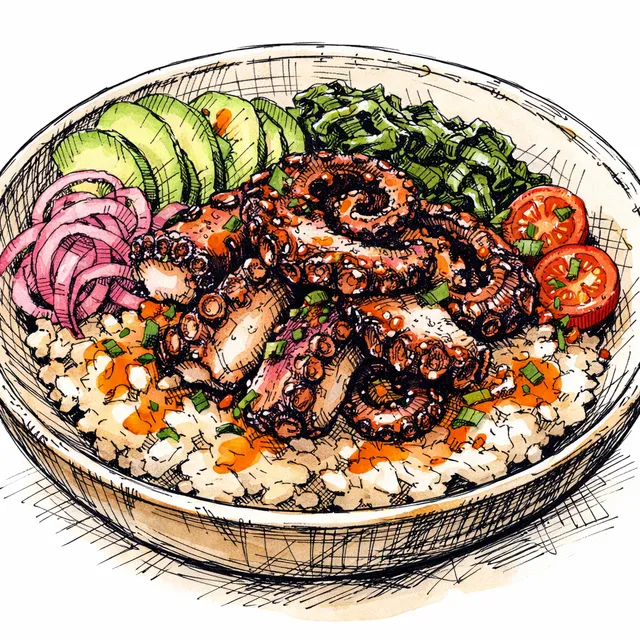
Shio Koji-Cured Charred Octopus Bowl with Yuzu-Pimentón Finishing Oil
When I was cooking in Lima, I fell hard for the way seafood markets treated octopus—treating it with respect, ensuring it was meltingly tender before it ever hit the fire. Years later, staring at a jar of shio koji on my counter in Tokyo, a lightbulb went off. Why not use enzymatic magic instead of traditional long braises? That is how this bowl was born. I take tender octopus and give it a short shio koji cure. The natural enzymes break down the proteins just enough while amping up the umami sweetness. Then, I blast it in a screaming hot cast iron pan for that classic Spanish charred edge. Toss it over warm rice and drown it in a smoky yuzu-pimentón finishing oil that bridges the gap between Basque and Japanese pantries. Here is why this works: koji enzymes work fast, so a 30-minute cure does the heavy lifting without making the meat mushy. Want to make it your own? Swap the octopus for thick-cut king oyster mushrooms if you are plant-based, or dial up the heat with extra chilies. Dive in, break the rules, and let me know what you ferment next!
Featured Recipe
Shio Koji-Cured Charred Octopus Bowl with Yuzu-Pimentón Finishing Oil
This vibrant lunch bowl pairs Spanish Pulpo a la Gallega sensibilities with Japanese cure and sear techniques. Tender octopus is short-cured in shio koji to amplify sweetness and tenderize the flesh, high-heat charred in cast iron, and served over warm rice with a smoky yuzu kosho finishing oil.
Save a copy to your collection for editing
Timeline
Ingredients
- 1 lb Octopus tentacles(cleaned, pre-cooked or raw octopus tentacles)
- 1 strip Kombu(about 4-inch piece)
- 3 tbsp Shio koji(rice koji cure paste)
- 3 cups Sushi rice(cooked and warm)
- 2 tbsp Rice vinegar(unseasoned)
- 1 medium Avocado(sliced)
- 1 cup Edamame(shelled and blanched)
- 4 Watermelon radish(thinly sliced into rounds)
- 2 tbsp Toasted sesame oil
- 1 tsp Yuzu kosho(green or red paste)
- 0.5 tsp Pimentón(smoked Spanish sweet paprika)
- 1 tbsp Soy sauce(or tamari)
- 1 tbsp White sesame seeds(toasted)
- 1 pinch salt(mentioned in step 2 for seasoning rice)
- 1 pot water(mentioned in step 1 for simmering octopus)
Instructions
- 1
Bring a pot of water to a gentle simmer with 1 strip kombu. Submerge 1 lb octopus tentacles and simmer until knife tender, about 15 minutes if raw (or 3 minutes to warm through if pre-cooked).
15 min
Tip: Dunking the octopus tentacles three times before full immersion curls them beautifully.
- 2
In a bowl, gently fold 3 cups cooked sushi rice with 2 tbsp rice vinegar and a light pinch of salt. Cover loosely with a damp towel to keep warm.
5 min
Tip: Fanning the rice as you cut in the vinegar gives it a polished luster.
- 3
Prep your bowl toppings: slice 1 medium avocado, thin-mandoline 4 watermelon radish, and measure out 1 cup edamame.
5 min
Tip: Store sliced radishes in ice water for maximum crunch.
- 4
Drain the octopus and cut into 1-inch bite-sized pieces. Toss in a glass bowl with 3 tbsp shio koji to coat evenly. Let sit at room temperature to cure for 10 minutes.
10 min
Tip: Don't rinse the shio koji off; those rice enzymes create the incredible caramelized char in the pan.
- 5
In a tiny pan over low heat, gently warm 2 tbsp toasted sesame oil, 1 tsp yuzu kosho, 0.5 tsp pimentón, and 1 tbsp soy sauce for 2 minutes until fragrant and emulsified.
3 min
Tip: Keep heat low so the citrus aromatics of yuzu kosho don't burn off.
- 6
Heat a heavy cast-iron skillet over high heat until smoking hot. Add the shio koji-cured octopus pieces directly to the dry pan. Sear undisturbed for 2 minutes, then toss for another 1-2 minutes until deeply charred on edges.
4 min
Tip: High heat is key—you want rapid crust formation without overcooking the interior.
- 7
Divide seasoned rice among bowls. Arrange charred octopus, avocado slices, edamame, and radish rounds. Generously drizzle warm yuzu-pimentón oil over the top and garnish with 1 tbsp white sesame seeds.
3 min
Tip: Drizzle the oil directly over the octopus to let the warmth unlock the spice aroma.
Chef's Notes
Why this works: Shio koji is pure culinary magic for octopus. Protease enzymes in the fermented koji break down dense muscular collagen while introducing amino acids that accelerate the Maillard reaction. Pairing Spanish pimentón (smoky, earthy sweet) with Japanese green yuzu kosho (fermented citrus-chili punch) creates a bridge between Galician pulpo tradition and Tokyo street food.

Kenji Nakamura
Where Japanese precision meets global flavors
I trained in Tokyo for eight years, mastering the discipline of washoku—traditional Japanese cuisine. But I got restless. So I cooked my way through Southeast Asia, spent a year in Mexico City, and fell hard for the food of Peru. Now I see connections between cuisines that others miss: the umami in dashi and fish sauce, the heat in shishito and Szechuan peppercorns, the way Japanese technique can unlock flavors from any tradition. I'm always fermenting something.