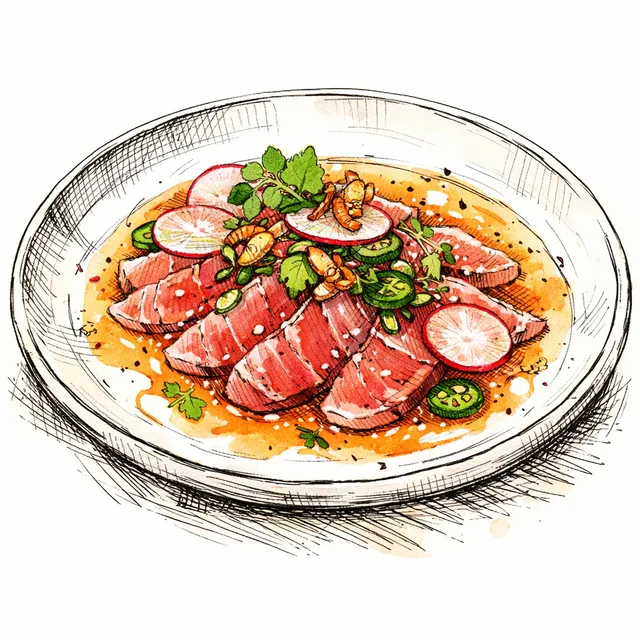
Shio Koji & Mezcal Cured Ahi Tuna Tiradito: Where Tokyo Meets Oaxaca
I still remember sitting at a tiny mezcaleria in Oaxaca, sipping a smoky Espadín, when it hit me: this wild, earthy agave spirit was begging for the sea. Fast forward to a late-night kitchen session in Lima, eating tiradito and thinking about my fermentation jars back home. That is how this Shio Koji & Mezcal Cured Ahi Tuna Tiradito was born. Tokyo meets Oaxaca by way of Lima. Here is why this works: Shio koji is an enzymatic powerhouse. A quick 30-minute cure doesn't just season the tuna; those active enzymes break down the proteins, firming up the flesh while flooding it with insane umami. Adding mezcal to the cure introduces a wisp of smoke that mimics a quick sear without any heat. We slice it thin and bathe it in a bright jalapeño-yuzu leche de tigre. It is smoky, fiercely savory, and completely addictive. This recipe is special to me because it proves that flavor DNA crosses borders. Want to make it your own? Swap the jalapeño for a fermented habanero paste if you like it fiery, or use a botanical gin instead of mezcal. Don't overthink it, just trust the enzymes and have fun!
Featured Recipe
Shio Koji & Mezcal Cured Ahi Tuna Tiradito
This is where Tokyo meets Oaxaca by way of Lima. We're using a rapid 30-minute shio koji and mezcal cure to firm up ahi tuna and flood it with umami, before bathing it in a vibrant jalapeño-yuzu leche de tigre. It's smoky, bright, fiercely savory, and completely addictive.
Save a copy to your collection for editing
Timeline
Ingredients
- 12 oz sushi-grade ahi tuna block(Look for a uniform saku block for easy, beautiful slicing)
- 3 tbsp liquid shio koji(If using paste, blend it smooth first)
- 1 tbsp joven mezcal(Joven (unaged) provides the cleanest smoke profile)
- 3 tbsp yuzu juice (or fresh lime juice)(Fresh is best, but bottled 100% yuzu works)
- 1 tbsp white soy sauce (shiro shoyu)(Keeps the sauce beautifully bright, but light soy works in a pinch)
- 2 tbsp cold kombu dashi or water(Mellows the acid just enough)
- 1/2 fresh jalapeño, seeded and roughly chopped(Leave seeds in if you want it aggressive)
- 1 tsp grated fresh ginger(Freshly grated yields the best zing)
- 1 tbsp chopped cilantro stems(Packs way more flavor than the leaves for the sauce base)
- 2 tbsp uncooked white quinoa(For the crispy garnish)
- 2 tbsp crispy garlic chili oil (rayu or salsa macha)(The bridge between Japanese and Mexican chili crisps)
- 1/4 cup micro cilantro or small cilantro leaves(For garnish)
- 1 pinch flaky sea salt(To finish)
Instructions
- 1
Pat dry the 12 oz sushi-grade ahi tuna block with a paper towel. In a small bowl, whisk together the 3 tbsp liquid shio koji and 1 tbsp joven mezcal. Place the tuna in a ziplock bag or a shallow dish, pour the marinade over it, ensuring it's completely coated. Press out the air, seal, and place in the refrigerator for exactly 30 minutes.
5 min
Tip: Don't exceed 45 minutes on the cure. Shio koji is packed with active protease enzymes—too long, and the delicate tuna will turn mushy instead of pleasantly firm.
- 2
While the tuna cures, build the Leche de Tigre. In a blender, combine the 3 tbsp yuzu juice (or fresh lime juice), 1 tbsp white soy sauce (shiro shoyu), 2 tbsp cold kombu dashi or water, 1/2 fresh jalapeño, seeded and roughly chopped, 1 tsp grated fresh ginger, and 1 tbsp chopped cilantro stems. Blend on high for 30 seconds until fully pureed, then strain through a fine mesh sieve into a small bowl. Discard the solids and place the liquid in the fridge to chill.
10 min
Tip: Straining is crucial here. We want a vibrant, acidic broth that coats the fish like a slip dress, not a chunky salsa.
- 3
Heat a dry, medium skillet over medium-high heat. Add the 2 tbsp uncooked white quinoa and toast, tossing frequently, until the grains begin to pop and smell deeply nutty, about 3 to 4 minutes. Transfer immediately to a small plate to cool.
5 min
Tip: Listen for the popping sound, similar to tiny popcorn. Keep it moving so it doesn't scorch.
- 4
Prep your garnishes. Set aside your 2 tbsp crispy garlic chili oil (rayu or salsa macha) and pick the 1/4 cup micro cilantro or small cilantro leaves. Place your serving plates in the refrigerator to chill.
5 min
Tip: Serving raw fish on a chilled plate keeps the temperature of the dish optimal from the first bite to the last.
- 5
Remove the tuna from the fridge. Rinse it very briefly under cold water to stop the enzymatic action of the koji, then pat completely dry with paper towels. Using a sharp slicing knife, slice the tuna against the grain into 1/4-inch thick pieces.
5 min
Tip: Slice in one smooth, continuous pull toward you—no sawing. This gives you the glass-smooth texture essential for tiradito.
- 6
Fan the sliced tuna onto your chilled serving plates. Vigorously stir the chilled jalapeño-yuzu leche de tigre, then pour it generously over the fish. Spoon the 2 tbsp crispy garlic chili oil (rayu or salsa macha) selectively over the slices. Garnish with the popped quinoa, the 1/4 cup micro cilantro or small cilantro leaves, and a final 1 pinch flaky sea salt.
5 min
Tip: Serve immediately. The acid in the leche de tigre will start 'cooking' the fish the second it makes contact.
Chef's Notes
Here is why this works: Shio koji is essentially a biological hack. It's packed with protease, an enzyme that breaks down protein into amino acids (specifically glutamates, which your brain registers as pure umami). By adding mezcal to the cure, we're doing two things. First, alcohol carries fat-soluble flavor compounds directly to your palate. Second, the trace smokiness mimics the profile of katsuobushi (smoked skipjack tuna) traditionally used in Japanese dashi. Paired with a punchy, jalapeño-laced ponzu 'leche de tigre', you get this incredible tension between deep, earthy umami and electrifying, raw acidity.

Kenji Nakamura
Where Japanese precision meets global flavors
I trained in Tokyo for eight years, mastering the discipline of washoku—traditional Japanese cuisine. But I got restless. So I cooked my way through Southeast Asia, spent a year in Mexico City, and fell hard for the food of Peru. Now I see connections between cuisines that others miss: the umami in dashi and fish sauce, the heat in shishito and Szechuan peppercorns, the way Japanese technique can unlock flavors from any tradition. I'm always fermenting something.