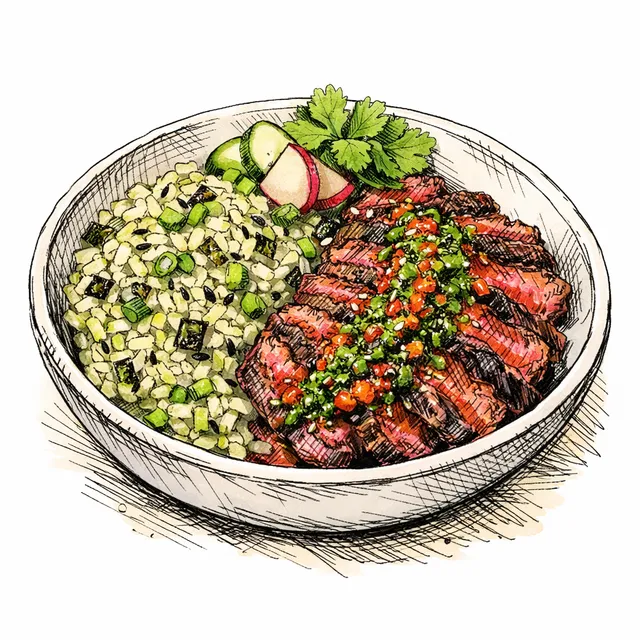
Shio Koji Skirt Steak Bowl: Where Tokyo Meets Buenos Aires and Seoul
I still remember the night in my Tokyo test kitchen when I first smeared shio koji onto a tough cut of skirt steak. As a chef obsessed with both Japanese tradition and global fusion, watching those natural enzymes melt the connective tissue into buttery submission was pure magic. This bowl is the messy, beautiful result of my travels. I wanted something that bridges the gap between a classic Argentine asado and the umami-heavy corners of my pantry. That is why we are pairing that tender, cast-iron charred beef with a fiery gochujang chimichurri—where Korean funk meets fresh Latin herbs. Tucked underneath is a bed of furikake-poblano rice that brings a smoky, seaweed-studded crunch to every single bite. Why this works: the shio koji breaks down proteins without masking the beefy flavor, creating an ideal canvas for bold condiments. Tip for making it your own? Do not be shy with the gochujang in the chimichurri. Adjust the heat to your liking, and always, always keep something fermenting on your counter!
Featured Recipe
Shio Koji Skirt Steak Bowl with Gochujang Chimichurri & Furikake Poblano Rice
Enzyme-tenderized beef skirt steak charred on cast iron, served over aromatic furikake-poblano rice and crowned with a fiery Korean-Argentinian chimichurri and blistered sweet corn.
Save a copy to your collection for editing
Timeline
Ingredients
- 1.5 lbs beef skirt steak(trimmed of silver skin)
- 1/3 cup shio koji(liquid or paste form)
- 1 tbsp fresh ginger(finely grated)
- 1.5 cups jasmine rice(rinsed until water runs clear)
- 2 cups water
- 1 medium poblano pepper(finely diced)
- 2 tbsp toasted sesame oil(divided)
- 2 tbsp furikake(sesame nori seasoning)
- 1 cup fresh flat-leaf parsley(finely chopped)
- 1/2 cup fresh cilantro(finely chopped)
- 2 tbsp gochujang(Korean fermented chili paste)
- 3 tbsp rice vinegar(unseasoned)
- 3 cloves garlic(finely minced)
- 1/3 cup extra virgin olive oil(plus 2 tbsp for searing)
- 1 tsp kosher salt(divided)
- 1.5 cups fresh sweet corn kernels(scraped fresh from cob)
- 1 cup shelled edamame(thawed if frozen)
- 2 tbsp yuzu juice(or fresh lime juice)
- 3 medium red radishes(thinly sliced into rounds)
- 1 tbsp toasted sesame oil(used in step 2)
- 1/2 tsp kosher salt(used in step 2)
- 1 tbsp toasted sesame oil(used in step 3)
- 1/2 tsp kosher salt(used in step 3)
- 1 tbsp extra virgin olive oil(used in step 4)
- 1 tbsp extra virgin olive oil(used in step 5)
Instructions
- 1
Place 1.5 lbs beef skirt steak in a shallow dish. Coat evenly with 1/3 cup shio koji and 1 tbsp fresh ginger. Let sit at room temperature for 25 minutes to allow the protease enzymes to break down the muscle fibers and amplify umami.
25 min
Tip: Don't skip the room temp rest; cold meat drops the pan temp rapidly during searing.
- 2
In a bowl, whisk together 1 cup finely chopped fresh flat-leaf parsley, 1/2 cup finely chopped fresh cilantro, 2 tbsp gochujang, 3 tbsp rice vinegar, 3 cloves minced garlic, 1/3 cup extra virgin olive oil, 1 tbsp toasted sesame oil, and 1/2 tsp kosher salt. Set aside at room temperature.
8 min
Tip: The gochujang adds fermented depth and sweetness that tempers the acidity of classic chimichurri.
- 3
Heat 1 tbsp toasted sesame oil in a medium saucepan over medium heat. Sauté 1 medium finely diced poblano pepper for 3 minutes until fragrant. Add 1.5 cups jasmine rice and toast for 1 minute. Pour in 2 cups water and add 1/2 tsp kosher salt. Bring to a boil, cover, drop heat to low, and cook for 15 minutes. Remove from heat and stir in 2 tbsp furikake.
20 min
Tip: Toasting the raw rice in oil coats the grains so they stay separate and aromatic.
- 4
Heat 1 tbsp extra virgin olive oil in a large cast-iron skillet over high heat until smoking. Add 1.5 cups fresh sweet corn kernels and 1 cup shelled edamame. Let sear undisturbed for 2 minutes to get a dark char, toss, and sear for 2 more minutes. Move to a bowl and stir in 2 tbsp yuzu juice.
8 min
Tip: Resist the urge to stir constantly; contact with high heat creates smoky caramelization.
- 5
Wipe out the cast-iron skillet and return to high heat with 1 tbsp extra virgin olive oil. Lightly wipe off excess shio koji from 1.5 lbs beef skirt steak with paper towels. Sear steak for 2 to 3 minutes per side until deeply caramelized and medium-rare (130°F internal).
7 min
Tip: Shio koji sugars burn fast, so wipe off heavy excess paste while leaving a thin layer for flavor.
- 6
Transfer steak to a board and let rest for 5 minutes. Slice thinly against the grain at a 45-degree angle.
5 min
Tip: Cutting against the grain shortens tough muscle fibers for maximum tenderness.
- 7
Divide the furikake poblano rice across 4 bowls. Arrange sliced shio koji skirt steak and blistered corn-edamame alongside. Top with 3 thinly sliced red radishes and drizzle generously with the Gochujang Chimichurri.
5 min
Tip: Serve extra gochujang chimichurri on the side for table drizzling.
Chef's Notes
WHY THIS WORKS: Skirt steak is packed with rich beefy flavor but can be tough if improperly treated. Enter liquid shio koji: its live protease enzymes break down complex protein structures into free amino acids (glutamates), acting as a natural tenderizer and umami supercharger in just 25 minutes. Because shio koji contains rice starches and sugars, it accelerates the Maillard reaction on a blazing hot cast iron pan, creating a deep crust in under 6 minutes without overcooking the center. Pairing this rich, savory beef with a Gochujang Chimichurri bridges Argentinian bright acidity with Korean fermented chili depth.

Kenji Nakamura
Where Japanese precision meets global flavors
I trained in Tokyo for eight years, mastering the discipline of washoku—traditional Japanese cuisine. But I got restless. So I cooked my way through Southeast Asia, spent a year in Mexico City, and fell hard for the food of Peru. Now I see connections between cuisines that others miss: the umami in dashi and fish sauce, the heat in shishito and Szechuan peppercorns, the way Japanese technique can unlock flavors from any tradition. I'm always fermenting something.