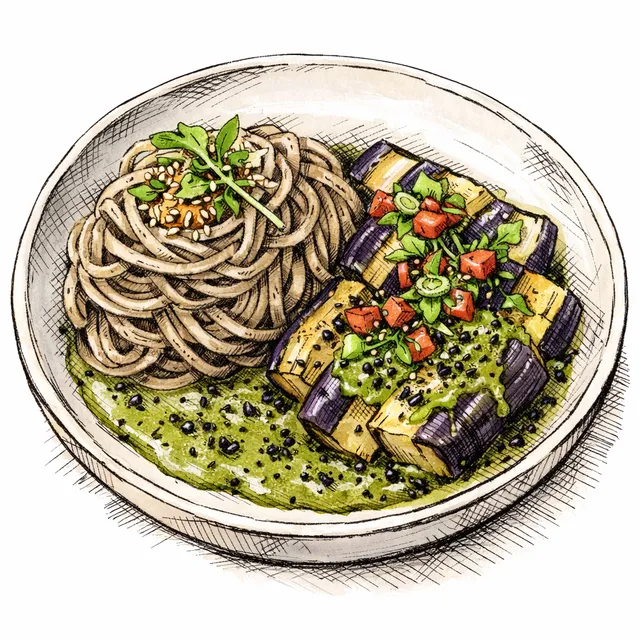
Tokyo Meets CDMX: Chilled Soba with Tomatillo-Black Sesame Emulsion
I firmly believe that cold noodles are the ultimate canvas for cross-cultural experimentation. This recipe takes me straight back to a sweltering afternoon in Mexico City. I was eating a raw tomatillo salsa and realized its bright, acidic bite shared the exact same DNA as a tart Japanese ponzu. My brain immediately went to soba. Back in my test kitchen, I started playing and found that blending sharp, raw Mexican tomatillos with deep, earthy Japanese black sesame paste creates a wildly vibrant emulsion. It is a true collision of CDMX and Tokyo that coats the earthy buckwheat noodles perfectly. To complete the bowl, I flash-steam Japanese eggplant for exactly three minutes so it keeps its structural integrity while acting as a sponge for all that sharp, nutty umami. Here is why this works: the natural pectin in the raw tomatillos emulsifies instantly with the rich fat in the sesame paste, creating an incredibly creamy texture without a single drop of dairy. If you want to make this your own, try folding a spoonful of funky fermented chili paste into the sauce (I always have a jar going on my counter), or even a splash of mezcal. Break the rules, trust your palate, and stay curious!
Featured Recipe
Chilled Soba & Steamed Japanese Eggplant with Tomatillo-Black Sesame Emulsion
I firmly believe that cold noodles are the ultimate canvas for cross-cultural experimentation. In this refreshing summer lunch, we're taking earthy Japanese buckwheat soba and pairing it with a wildly vibrant, quick-blended emulsion of raw Mexican tomatillos and rich black sesame paste. It's a collision of CDMX and Tokyo that coats the noodles perfectly, while flash-steamed Japanese eggplant soaks up all that sharp, nutty umami.
Save a copy to your collection for editing
Timeline
Ingredients
- 8 oz Dried soba noodles(Look for 100% buckwheat (juwari) if possible)
- 2 medium Japanese eggplants(Firm, with unblemished dark purple skin)
- 3 medium Raw tomatillos, husked and rinsed(The stickiness on the outside is normal; rinse it off)
- 2 tbsp Black sesame paste (kuro neri goma)(Can substitute Chinese black sesame paste or tahini in a pinch)
- 2 tbsp Soy sauce(Divided use)
- 1 tbsp Lime juice(Freshly squeezed)
- 1 medium clove Garlic(Peeled)
- 1/4 cup Grapeseed or neutral oil(For the emulsion)
- 1 tsp Grated fresh ginger(Microplane works best)
- 1/2 cup Fresh cilantro leaves(Roughly torn)
- 2 tbsp Crispy fried shallots(Store-bought is perfectly fine)
Instructions
- 1
Bring a large pot of water to a rolling boil for the noodles. Simultaneously, set up a steamer basket over a smaller pot of simmering water. Prepare an ice bath in a medium bowl.
3 min
Tip: Getting both pots going immediately cuts down your total prep time significantly.
- 2
Take the 2 medium Japanese eggplants and make shallow, diagonal scores along the skin, about 1/4-inch apart. Do not cut all the way through.
2 min
Tip: Scoring allows the heat to penetrate quickly and helps the eggplant absorb the marinade later.
- 3
Place the scored eggplant in the steamer basket, cover, and steam until tender but not mushy.
7 min
Tip: Steaming preserves that beautiful vibrant purple skin better than roasting.
- 4
While the eggplant steams, add 3 medium raw tomatillos, husked and rinsed, 2 tbsp black sesame paste (kuro neri goma), 1 tbsp soy sauce, 1 tbsp lime juice, and 1 medium clove garlic to a blender. Blend on high until completely smooth, then lower the speed and slowly drizzle in the 1/4 cup grapeseed or neutral oil to form a thick, creamy emulsion.
5 min
Tip: The natural pectin in raw tomatillos binds with the fat from the sesame paste and oil to create an incredibly stable, creamy sauce without any dairy or eggs.
- 5
Drop the 8 oz dried soba noodles into the large pot of boiling water and cook according to package directions.
5 min
Tip: Do not salt the water for soba; the noodles already contain salt from the manufacturing process.
- 6
Remove the steamed eggplant and immediately plunge it into the ice bath to halt cooking and set the color. Once cool enough to handle, tear it into bite-sized pieces with your hands and toss in a small bowl with the remaining 1 tbsp soy sauce and 1 tsp grated fresh ginger.
3 min
Tip: Tearing the eggplant rather than cutting it creates jagged edges that cling to the sauce.
- 7
Drain the cooked soba and transfer to a colander in the sink. Vigorously rinse the noodles under cold running water, scrubbing them gently with your hands until the water runs clear and the noodles feel completely cold and slightly springy.
2 min
Tip: This is the most critical step in making cold soba! You must wash off the excess surface starch, or your noodles will turn into a gummy, sticky mess.
- 8
In a large mixing bowl, aggressively toss the chilled soba with the tomatillo-sesame emulsion until every strand is thickly coated. Gently fold in the marinated eggplant and 1/2 cup fresh cilantro leaves. Transfer to shallow bowls and top with 2 tbsp crispy fried shallots before serving.
3 min
Tip: If the emulsion feels too thick after tossing with the cold noodles, add a tiny splash of cold water to loosen it up.
Chef's Notes
Food science nerd moment: The reason this quick blender emulsion works so brilliantly is due to the tomatillos. Raw tomatillos are packed with pectin and mucilage (that's the sticky film you wash off the outside, but there's plenty inside too). When you blend them with the heavy fats of the black sesame paste and the grapeseed oil, those complex carbohydrates act as powerful emulsifiers and stabilizers. It gives you a luxurious, creamy mouthfeel that mimics mayonnaise or egg-based sauces, while remaining completely plant-based. Plus, the bright acidity of the tomatillo cuts right through the earthy, muddy notes of the buckwheat soba. Don't skip the vigorous washing of the noodles at the end—Japanese precision demands clean noodles!

Kenji Nakamura
Where Japanese precision meets global flavors
I trained in Tokyo for eight years, mastering the discipline of washoku—traditional Japanese cuisine. But I got restless. So I cooked my way through Southeast Asia, spent a year in Mexico City, and fell hard for the food of Peru. Now I see connections between cuisines that others miss: the umami in dashi and fish sauce, the heat in shishito and Szechuan peppercorns, the way Japanese technique can unlock flavors from any tradition. I'm always fermenting something.