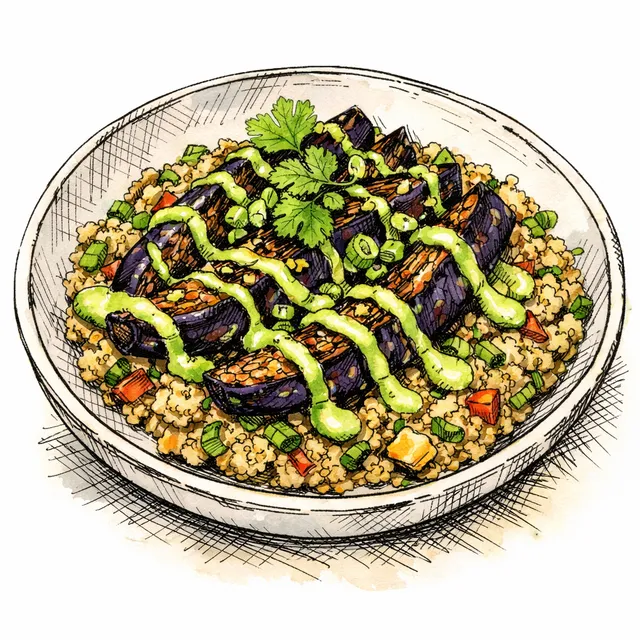
Wok-Blistered Japanese Eggplant with Kewpie Aji Verde & Quinoa Chaufa
I was standing at a street cart in Lima, inhaling a plate of chaufa at 2 AM, when the smoky wok hei hit me right in the nostalgia. It transported me straight back to my training days in Tokyo. That late-night memory is the DNA of this dish: Wok-Blistered Japanese Eggplant with Kewpie Aji Verde & Quinoa Chaufa. This recipe is incredibly special to me because it proves how seamlessly Peruvian and Japanese cuisines understand each other. Let's geek out for a second on why this works. Eggplant acts like a sponge. By aggressively blistering it on a ripping hot cast-iron surface, we collapse the cell walls instantly. This prevents the vegetable from soaking up excessive oil while yielding a meltingly creamy interior. To dress it, we make an aji verde, but we swap the traditional cheese for an umami-bomb of shio koji and Kewpie mayo. The koji enzymes and Kewpie's egg-yolk richness mellow the fierce Peruvian chiles perfectly. To make it your own, don't be precious! Toss whatever you have fermenting in the fridge into the quinoa chaufa, or hit the finished eggplant with a squeeze of yuzu. Play with the heat, break the rules, and make it yours.
Featured Recipe
Wok-Blistered Japanese Eggplant with Kewpie Aji Verde & Quinoa Chaufa
This is where Tokyo meets Lima on a ripping hot cast-iron surface. We're aggressively blistering Japanese eggplant until the cell walls collapse into creamy perfection, then drenching it in a Peruvian aji verde that swaps traditional cheese for an umami-bomb of shio koji and Kewpie mayo.
Save a copy to your collection for editing
Timeline
Ingredients
- 1 cup fresh cilantro(packed, stems and leaves included)
- 2 tbsp aji amarillo paste(find this in Latin markets; it provides a fruity heat)
- 1/3 cup Kewpie mayo(must be Kewpie for the extra egg yolks and MSG)
- 1 tbsp shio koji(our parmesan replacement)
- 1 clove garlic(smashed)
- 1 tbsp rice vinegar(unseasoned)
- 4 medium Japanese eggplants(firm, unblemished skin)
- 3 tbsp grapeseed oil(or any high smoke-point oil)
- 1 tbsp sesame oil(toasted)
- 1 tbsp ginger(minced)
- 2 whole scallions(chopped, whites and greens separated)
- 2 cups cooked quinoa(preferably day-old and chilled)
- 1 cup shelled edamame(thawed if frozen)
- 2 tbsp soy sauce(preferably a Japanese shoyu)
- 1 tbsp mirin(sweet rice wine)
- 1 tbsp toasted sesame seeds(for garnish)
Instructions
- 1
Let's build the sauce first so the flavors can marry. In a blender or food processor, combine 1 cup fresh cilantro, 2 tbsp aji amarillo paste, 1/3 cup Kewpie mayo, 1 tbsp shio koji, 1 clove garlic, and 1 tbsp rice vinegar. Blend until smooth and bright green. The shio koji acts exactly like the cotija cheese usually found in aji verde—it brings an immense, salty umami depth.
5 min
Tip: Include the cilantro stems! They hold massive amounts of flavor and the blender will obliterate them anyway.
- 2
Trim the tops off 4 medium Japanese eggplants and cut them in half lengthwise, then into 3-inch segments. Using a sharp knife, score the flesh in a tight crosshatch pattern, cutting about halfway through. This is non-negotiable: scoring expands the surface area for the Maillard reaction and allows steam to escape so the eggplant fries instead of boiling in its own moisture.
5 min
Tip: Don't salt the eggplant beforehand here. We want them dry and rigid when they hit the hot pan.
- 3
Place a large cast-iron skillet or carbon steel wok over high heat until it's aggressively smoking. Add 3 tbsp grapeseed oil, swirling to coat. Carefully place the eggplant pieces flesh-side down. Do not touch them for at least 4 minutes. You want a serious, dark blister. Flip and cook the skin side for another 3 to 4 minutes until the flesh is custardy.
8 min
Tip: Turn on your exhaust fan! High-heat charring requires riding the line between deeply caramelized and burnt.
- 4
While the eggplant is blistering, fire up a second skillet over medium-high heat. Add 1 tbsp sesame oil, 1 tbsp minced ginger, and the white parts of 2 chopped scallions. Sizzle for 30 seconds, then toss in 2 cups cooked quinoa and 1 cup shelled edamame. Press the quinoa into the pan to crisp up the edges, tossing occasionally.
6 min
Tip: Day-old quinoa works best for Chaufa (fried rice style) because the dried-out grains crisp beautifully instead of turning to mush.
- 5
Once the eggplant is deeply charred and tender, kill the heat under the pan. Immediately pour in 2 tbsp soy sauce and 1 tbsp mirin. The residual heat will instantly reduce the liquids into a sticky, savory glaze that coats the crosshatched eggplant flesh.
2 min
Tip: Stand back slightly when adding the liquids—they will vigorously sputter and steam.
- 6
To assemble, spoon the crispy quinoa chaufa into wide shallow bowls. Lay the sticky, blistered eggplant over the top. Drizzle heavily with the Nikkei aji verde, and garnish with the green parts of the scallions and 1 tbsp toasted sesame seeds.
2 min
Tip: Serve immediately while the eggplant is screaming hot and the sauce is cool.
Chef's Notes
Food science moment: Eggplant acts like a sponge because of its airy, porous cellular structure. By hitting it with extreme heat immediately, we rapidly collapse those air pockets and seal the exterior before it can drink up all the oil. Paired with the enzymatic magic of shio koji in the creamy aji verde, this dish hits every single flavor receptor.

Kenji Nakamura
Where Japanese precision meets global flavors
I trained in Tokyo for eight years, mastering the discipline of washoku—traditional Japanese cuisine. But I got restless. So I cooked my way through Southeast Asia, spent a year in Mexico City, and fell hard for the food of Peru. Now I see connections between cuisines that others miss: the umami in dashi and fish sauce, the heat in shishito and Szechuan peppercorns, the way Japanese technique can unlock flavors from any tradition. I'm always fermenting something.