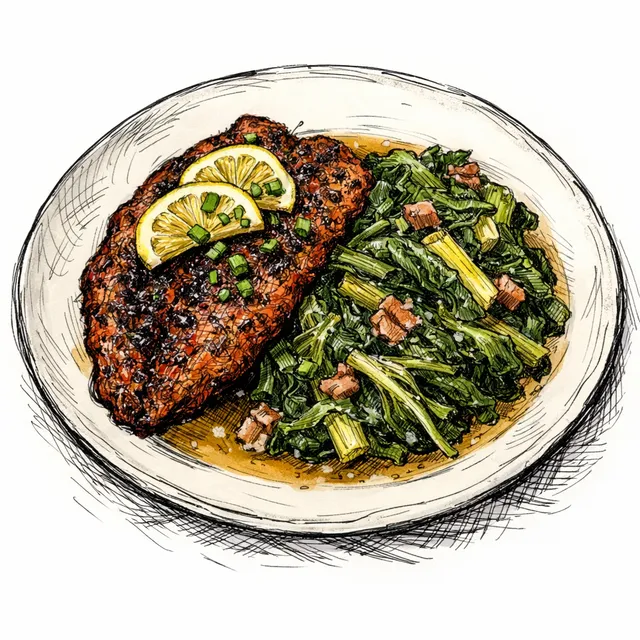
Cast-Iron Blackened Catfish with Potlikker-Braised Mustard Greens
Growing up in Atlanta, the smell of grandmama's hot oil meant one thing: Friday night fish fry. She fried her catfish until it sang. But when I moved to Charleston to cut my teeth in fine dining, I learned the magic of a screaming-hot cast-iron skillet and a perfect blackened crust. A lot of folks think blackening just means burning spices, but when done right, it creates a deeply savory seal that locks in the delicate sweetness of the fish. This recipe marries my grandmama's kitchen with my chef's journey. I serve that spiced catfish over silky mustard greens, braised low and slow with smoked bacon and—here is my little modern secret—a splash of umami-rich fish sauce. It honors the soul of Southern food while pushing it forward. This dish is special to me because it tastes like history but looks right into the future. Want to make it your own? Swap the catfish for redfish, or toss a little apple cider vinegar into those greens right before serving to brighten up that rich, legendary potlikker. Grab your heaviest cast-iron, and let's make some memories.
Featured Recipe
Cast-Iron Blackened Catfish with Potlikker-Braised Mustard Greens
A lot of folks think blackening just means burning spices, but when done right in a screaming-hot cast-iron pan, it creates a deeply savory crust that locks in the sweet, delicate nature of the catfish. Growing up in Atlanta, my grandmama always fried her fish, but during my time in Charleston, I learned the magic of this high-heat technique. I serve it over silky mustard greens slow-simmered with smoked bacon and my signature splash of umami-rich fish sauce. This is elevated Southern comfort that honors the past while looking right into the future.
Save a copy to your collection for editing
Timeline
Ingredients
- 4 fillets (6 oz each) Catfish fillets(Pat dry before using)
- 4 tbsp Unsalted butter(Melted)
- 1 tbsp Smoked paprika
- 2 tsp Garlic powder
- 2 tsp Onion powder
- 1 tsp Dried oregano
- 1 tsp Dried thyme
- 1/2 tsp Cayenne pepper(Adjust to your heat preference)
- 1 1/2 tsp Kosher salt
- 1 tsp Black pepper(Freshly ground)
- 4 slices Thick-cut smoked bacon(Chopped)
- 1 medium Yellow onion(Diced)
- 4 cloves Garlic(Minced)
- 2 large bunches Mustard greens(Stems removed, washed and torn)
- 2 cups Chicken broth(Low sodium preferred)
- 2 tbsp Apple cider vinegar
- 1 tbsp Fish sauce(A chef's secret for umami)
- 1 whole Lemon(Cut into wedges)
Instructions
- 1
In a large Dutch oven over medium heat, render 4 slices thick-cut smoked bacon, chopped until crisp, about 5 minutes. Add 1 medium yellow onion, diced and sauté until translucent, about 3 minutes.
8 min
Tip: Don't rush the bacon; you want that smoky fat fully rendered to build the base of your potlikker.
- 2
Stir in 4 cloves garlic, minced and cook for 30 seconds until fragrant. Pour in 2 cups chicken broth, 2 tbsp apple cider vinegar, and 1 tbsp fish sauce. Bring to a simmer, then begin folding in 2 large bunches mustard greens, torn in handfuls until wilted. Reduce heat to low, cover, and braise.
30 min
Tip: The greens will look like too much for the pot at first, but they will cook down beautifully. Keep the lid tight.
- 3
While the greens are braising, prepare the blackening seasoning. In a small bowl, whisk together 1 tbsp smoked paprika, 2 tsp garlic powder, 2 tsp onion powder, 1 tsp dried oregano, 1 tsp dried thyme, 1/2 tsp cayenne pepper, 1 1/2 tsp kosher salt, and 1 tsp black pepper.
5 min
Tip: Make sure your spices are fresh. The paprika and cayenne are the stars of this rub.
- 4
Pat 4 6-oz catfish fillets completely dry with paper towels. Brush both sides evenly with 4 tbsp unsalted butter, melted, then generously press the spice mixture into the flesh to create a thick, even crust.
5 min
Tip: Drying the fish ensures the butter sticks, and the butter helps the spices adhere while providing the fat needed for the blackening process.
- 5
Place a large cast-iron skillet over high heat and let it get screaming hot. You want to see faint wisps of smoke coming off the dry iron.
5 min
Tip: Turn on your exhaust fan and open a window! Authentic blackening requires intense heat and will produce smoke.
- 6
Carefully place two of the seasoned catfish fillets into the hot cast-iron skillet. Cook undisturbed for 3 minutes until a dark, crusty sear forms. Gently flip with a thin fish spatula and cook another 3 minutes. Remove to a warm plate.
6 min
Tip: Do not move the fish once it hits the pan; let that dark crust form undisturbed.
- 7
Repeat the process with the remaining two seasoned catfish fillets, cooking for 3 minutes per side until properly blackened and opaque throughout.
6 min
Tip: If the pan gets dangerously smoky, you can slightly reduce the heat, but keep it high enough to maintain the sear.
- 8
Using tongs, divide the braised mustard greens among four shallow bowls, spooning a little of that rich potlikker over the top. Gently place a blackened catfish fillet on each bed of greens and serve immediately with wedges from 1 lemon, cut into wedges.
2 min
Tip: A fresh squeeze of lemon juice right at the end cuts through the smoke and richness beautifully.
Chef's Notes
Make sure your cast-iron skillet is uncomfortably hot before you drop the fish in. True blackening is a smoky affair, but that smoke is exactly what builds the flavor. The fish sauce in the potlikker won't make the greens taste fishy at all; it simply amplifies the deeply savory, salty notes of the smoked bacon in a way that traditional salt never could.

Marcus Stone
Heritage recipes with a chef's touch
My grandmother's kitchen in Atlanta is where I learned that food carries history. Every pot of collards, every batch of biscuits, every Sunday roast told stories of resilience, family, and love. I went on to train at the finest restaurants in Charleston and worked my way up through white-tablecloth kitchens. But I always came back to those family recipes—now I cook them with a chef's technique but a grandmother's heart. Because the best food honors where it came from.