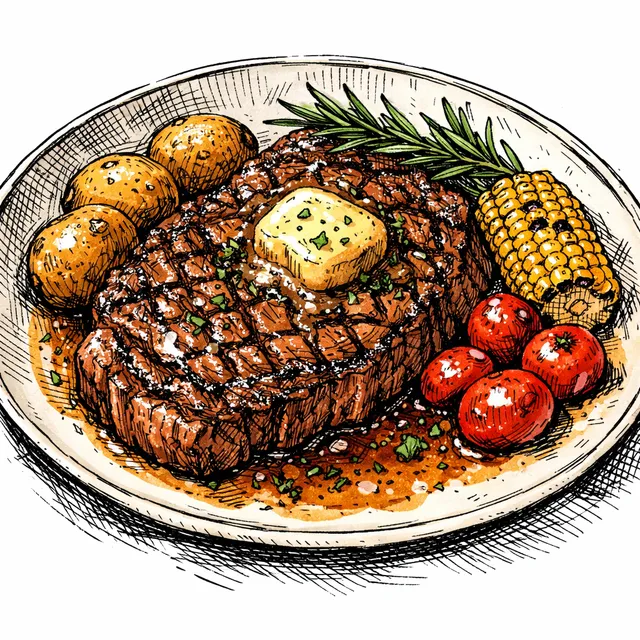
Cast-Iron Independence Day Ribeye with Sorghum-Umami Basting Butter
Growing up in Atlanta, the Fourth of July meant a yard full of hickory smoke and my uncles arguing over the grill. But the real magic was happening inside. My grandmother would be standing over the stove, building a perfect crust on meats in her ancient, jet-black cast-iron skillet. That pan held generations of flavor, and it inspired this Cast-Iron Independence Day Ribeye. I wanted to capture the soul of those summer cookouts but elevate the technique with a little Charleston fine-dining polish. We sear a thick-cut ribeye hard, then continuously baste it in a rich compound butter spiked with sweet Southern sorghum and umami-packed fish sauce. It sounds a little crazy to mix fish sauce and sorghum, but that salty-sweet depth is what makes this recipe so incredibly special to me—it honors my grandmother's solid foundation while pushing the boundaries of what Southern food can be. To make it your own, try swapping the sorghum for a drizzle of hot honey, or add a pinch of smoked paprika to the butter for that outdoor grill flavor. Grab your heaviest skillet, listen to that beautiful sizzle, and let's make some history at your table this holiday.
Featured Recipe
Cast-Iron Independence Day Ribeye with Sorghum-Umami Basting Butter
Growing up in Atlanta, the Fourth of July meant a yard full of smoke and my uncles arguing over the grill, but the real magic was happening inside where my grandmother was building a perfect crust on meats in her ancient cast-iron skillet. This thick-cut ribeye honors those cookouts, seared hard and continuously basted in a rich, distinctly Southern compound butter spiked with sweet sorghum and umami-packed fish sauce. It's the ultimate showstopper for an elevated Independence Day feast that bridges traditional comfort with a chef's touch.
Save a copy to your collection for editing
Timeline
Ingredients
- 2 (1.5-lb) thick-cut bone-in ribeye steaks(At least 1.5 inches thick)
- 1 tbsp kosher salt(Diamond Crystal preferred)
- 1 tbsp coarse black pepper(Freshly cracked)
- 6 tbsp unsalted butter(Softened at room temperature)
- 1 tbsp sorghum syrup(Can substitute with a dark molasses if necessary, though sorghum brings that true Southern heritage flavor)
- 1 tsp fish sauce(My secret ingredient for deep, roasted umami)
- 1 clove garlic(Finely grated)
- 0.5 tsp smoked paprika
- 1 tbsp grapeseed oil(Or any neutral, high-smoke-point oil)
- 3 sprigs fresh thyme
- 2 whole garlic cloves(Smashed for the pan)
Instructions
- 1
First things first. Pat your 2 (1.5-lb) thick-cut bone-in ribeye steaks completely dry with paper towels. Season them aggressively on all sides with 1 tbsp kosher salt and 1 tbsp coarse black pepper. Let them hang out on the counter at room temperature. This dry-brining step is non-negotiable for a proper crust.
30 min
Tip: Getting the chill off the meat helps it cook evenly, while the salt draws out moisture that then reabsorbs, seasoning the meat all the way through.
- 2
While the meat comes up to temperature, let's build our secret weapon. In a small bowl, thoroughly mash 6 tbsp unsalted butter with 1 tbsp sorghum syrup, 1 tsp fish sauce, 1 clove garlic (grated), and 0.5 tsp smoked paprika. This combination of my grandmother's favorite sweetener and my favorite modern umami bomb is pure magic.
5 min
Tip: Make sure your butter is fully softened so the liquid ingredients incorporate without splitting.
- 3
Set your favorite heavy cast-iron skillet over medium-high heat. Let it preheat until it's just starting to whisper smoke. You want it screaming hot to replicate the aggressive sear of a backyard charcoal grill.
5 min
Tip: A properly heated cast iron is the difference between a grey, steamed steak and a beautifully crusted, steakhouse-quality ribeye.
- 4
Swirl 1 tbsp grapeseed oil into the hot skillet. Lay the steaks in, dropping them gently away from you so the hot oil doesn't splash. Press down gently on the center of the steaks to ensure good pan contact. Let them sear undisturbed until a gorgeous, dark mahogany crust forms, about 4 to 5 minutes.
5 min
Tip: Do not touch them or peek underneath too early! Let the cast iron do the heavy lifting.
- 5
Flip those beauties. Immediately turn the heat down to medium to prevent our butter from scorching. Toss in your prepared sorghum-umami butter, 3 sprigs fresh thyme, and 2 whole garlic cloves (smashed). As the butter melts and foams, tilt the skillet slightly toward you and use a large spoon to continuously bathe the top of the steaks in the hot, aromatic butter.
5 min
Tip: Basting cooks the top of the steak gently while infusing the meat with thyme, roasted garlic, and the caramel notes of the sorghum.
- 6
Pull the steaks at an internal temperature of 120°F to 125°F for a perfect medium-rare. Transfer them to a wooden cutting board, pour those rich, deeply flavored pan drippings right over the top, and let them rest. I know it's hard, but give them a full 10 minutes before you even think about picking up a knife. Slice against the grain and serve.
10 min
Tip: Carry-over cooking will raise the internal temperature another 5-10 degrees as it rests. The rest allows the muscle fibers to relax and retain all those glorious juices.
Chef's Notes
Family, please don't skip the fish sauce. I know it might sound out of place at a traditional Southern Fourth of July cookout, but trust me—it doesn't taste 'fishy'. It simply brings out a deep, savory richness in the beef that will have your guests chasing you down for the recipe. Serve this with some blistered field peas or a sharp vinegar slaw to cut through the richness.

Marcus Stone
Heritage recipes with a chef's touch
My grandmother's kitchen in Atlanta is where I learned that food carries history. Every pot of collards, every batch of biscuits, every Sunday roast told stories of resilience, family, and love. I went on to train at the finest restaurants in Charleston and worked my way up through white-tablecloth kitchens. But I always came back to those family recipes—now I cook them with a chef's technique but a grandmother's heart. Because the best food honors where it came from.