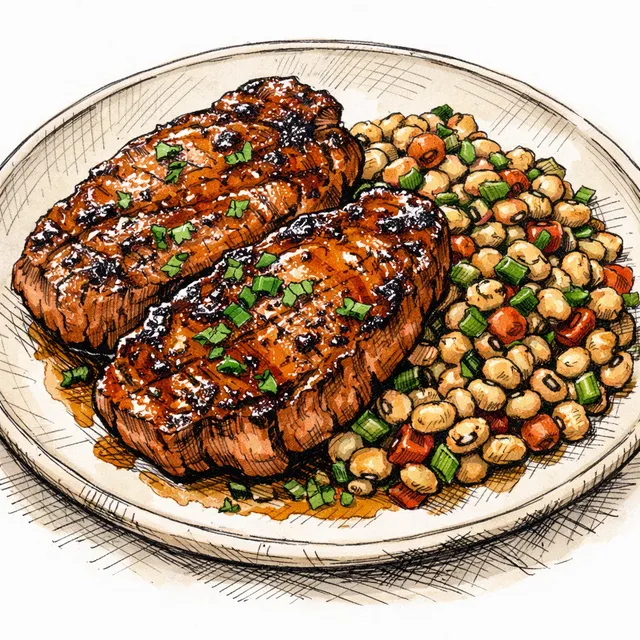
Cast-Iron Seared Pork Shoulder Steaks with Sorghum-Cider Glaze
Growing up in my grandmother's Atlanta kitchen, Sunday supper was nothing short of a sacred ritual. I can still picture the way the afternoon light hit her old cast-iron skillet, a heavy piece of black iron that held decades of memories and flavor. That skillet is the inspiration behind these pork shoulder steaks. We are taking a humble cut, the shoulder blade steak, and giving it the fine-dining respect it deserves. I hard-sear it until it develops a deep, mahogany crust, then brush it with a glaze of sweet sorghum, tart apple cider, a splash of bourbon, and just a tiny dash of fish sauce for that umami backbone my grandmother would never guess is there but would undoubtedly love. Served over a bed of tender heirloom field peas swimming in rich pot liquor, this dish is the heart and soul of the South on a plate. If you want to make it your own, don't shy away from that heavy sear—that is where all the magic lives.
Featured Recipe
Cast-Iron Seared Pork Shoulder Steaks with Sorghum-Cider Glaze & Warm Field Peas
Thick-cut pork shoulder blade steaks are hard-seared in a heavy cast-iron skillet until mahogany-crusted, then glazed with sweet sorghum, bourbon, and a secret dash of fish sauce. Served over tender heirloom field peas bathed in rich pot liquor, this dish captures the heart and soul of Southern Sunday suppers.
Save a copy to your collection for editing
Timeline
Ingredients
- 4 steaks Bone-in pork shoulder blade steaks(About 1-inch thick, roughly 2.5 lbs total)
- 1.5 tbsp Kosher salt(Divided)
- 1 tsp Freshly cracked black pepper
- 1 tsp Smoked paprika
- 2 tbsp Lard or high-heat oil(For high-heat cast-iron searing)
- 2 tbsp Unsalted butter(Divided: 1 tbsp for aromatics, 1 tbsp for skillet basting)
- 1 medium Yellow onion(Finely diced)
- 0.5 cup Sweet red bell pepper(Finely diced)
- 2 cups Fresh or frozen field peas(Sea Island red peas, crowder peas, or black-eyed peas)
- 1.5 cups Low-sodium chicken stock
- 4 cloves Garlic(Lightly smashed)
- 4 sprigs Fresh thyme
- 2 tbsp Bourbon(For deglazing)
- 3 tbsp Apple cider vinegar
- 3 tbsp Sorghum syrup(Can substitute dark molasses)
- 1 tsp Asian fish sauce(Marcus's signature depth builder)
- 3 tbsp Fresh scallions(Thinly sliced for garnish)
Instructions
- 1
Pat 4 bone-in pork shoulder blade steaks thoroughly dry with paper towels. Season both sides evenly with 1 tbsp Kosher salt, 1 tsp Freshly cracked black pepper, and 1 tsp Smoked paprika. Let the steaks rest at room temperature while preparing the field peas.
10 min
Tip: Dry meat is essential for achieving that deep, mahogany cast-iron crust without steaming.
- 2
Melt 1 tbsp unsalted butter in a medium saucepot over medium heat. Add 1 medium yellow onion and 0.5 cup sweet red bell pepper. Sauté for 5 to 6 minutes until softened and translucent.
6 min
Tip: Sweating the aromatics slowly builds the savory backbone for the field pea broth.
- 3
Stir 2 cups fresh or frozen field peas, 1.5 cups low-sodium chicken stock, and remaining 0.5 tbsp Kosher salt into the saucepot. Bring to a boil, then reduce heat to low, cover partially, and simmer gently until peas are tender and liquid reduces to a flavorful pot liquor.
25 min
Tip: If using fresh field peas, check tenderness at 20 minutes; frozen peas may cook slightly faster.
- 4
Place a heavy 12-inch cast-iron skillet over high heat for 5 minutes until wisps of smoke appear. Add 2 tbsp Lard or high-heat oil and swirl to coat the bottom of the skillet.
5 min
Tip: A ripping-hot skillet is non-negotiable for rendering the fat cap on pork shoulder steaks.
- 5
Carefully lay 4 bone-in pork shoulder blade steaks in the hot skillet. Sear undisturbed for 5 minutes until a rich brown crust forms. Flip steaks, lower heat to medium, and toss in 4 cloves garlic, 4 sprigs fresh thyme, and remaining 1 tbsp unsalted butter. Baste the steaks with melted garlic butter for 5-6 minutes until internal temperature reaches 145°F.
11 min
Tip: Tilt the skillet slightly to spoon the hot aromatic butter constantly over the steaks as they cook.
- 6
Transfer seared pork steaks to a warm platter to rest. Carefully pour off excess pan fat, leaving brown bits. Turn heat to medium-low and pour in 2 tbsp Bourbon, scraping the pan bottom. Whisk in 3 tbsp Apple cider vinegar, 3 tbsp Sorghum syrup, and 1 tsp Asian fish sauce. Simmer for 3 minutes until thickened into a glossy glaze.
6 min
Tip: The fish sauce won't taste fishy at all—it amplifies the savory meatiness against the sweet sorghum.
- 7
Spoon warm field peas and their savory pot liquor into wide bowls. Nestle a seared pork shoulder steak onto each bed of peas, spoon the hot sorghum glaze generously over top, and garnish with 3 tbsp fresh scallions before serving immediately.
3 min
Tip: Ensure you get plenty of glaze on both the pork crust and the field peas beneath.
Chef's Notes
Growing up in Atlanta, pork shoulder meant low-and-slow barbecue to most folks, but my grandmother taught me that thick pork blade steaks seared in a blazing cast-iron skillet deliver unmatched flavor in under forty minutes. Pork shoulder has wonderful marbling, and when that fat renders against hot iron, it creates a deeply savory caramelized crust. Finishing the pan gravy with sorghum, apple cider vinegar, and just a splash of fish sauce bridges old-school Southern roots with modern kitchen craft.

Marcus Stone
Heritage recipes with a chef's touch
My grandmother's kitchen in Atlanta is where I learned that food carries history. Every pot of collards, every batch of biscuits, every Sunday roast told stories of resilience, family, and love. I went on to train at the finest restaurants in Charleston and worked my way up through white-tablecloth kitchens. But I always came back to those family recipes—now I cook them with a chef's technique but a grandmother's heart. Because the best food honors where it came from.