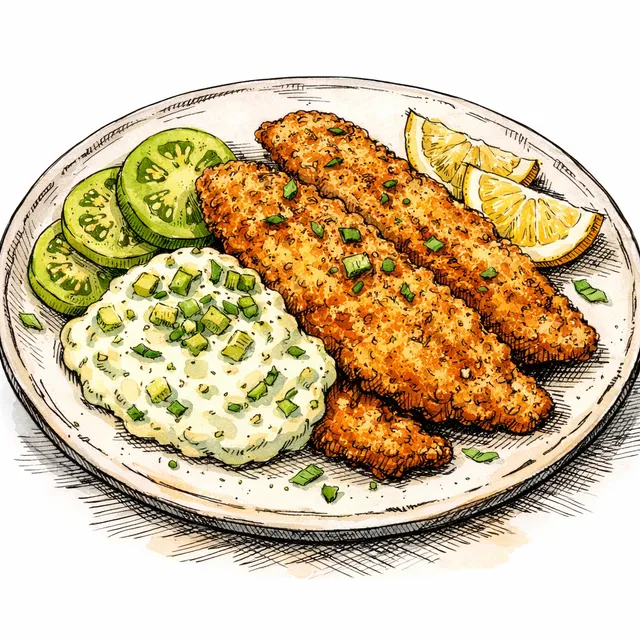
Crispy Cast-Iron Skillet-Fried Catfish with Pickled Green Tomato Remoulade
Growing up in Atlanta, Friday nights meant my grandfather and I heading down to the muddy banks with our poles, hoping to reel in supper. Those catfish were sweet-fleshed and honest, and my grandmother knew just how to fry them up golden and shatteringly crisp in her heavy-bottomed cast-iron skillet. That sound of cornmeal hitting hot lard is the soundtrack of my childhood. But tradition is a living thing, meant to stretch and breathe. In this recipe, I am honoring those riverbank memories while giving the classic fish fry a soulful modern nudge. Instead of standard tartar sauce, we are waking things up with a zesty remoulade spiked with Creole mustard and chopped pickled green tomatoes. That bright, briny pop cuts right through the rich, savory crunch of the cornmeal crust. My tip? Don't rush the heat. Let your cast-iron do the heavy lifting to get that deep, even golden brown. Pull up a chair and let me tell you a story about the waters that raised us, one delicious bite at a time.
Featured Recipe
Crispy Cast-Iron Skillet-Fried Catfish with Pickled Green Tomato Remoulade
Golden, cornmeal-crusted catfish fillets fried to shatteringly crisp perfection in a trusty cast-iron skillet. Paired with a zesty pickled green tomato remoulade spiked with Creole mustard, this is the definitive Southern fish fry elevated for a soulful midday lunch.
Save a copy to your collection for editing
Timeline
Ingredients
- 1.5 lbs catfish fillets(cut into 3-to-4-inch serving portions)
- 1 cup whole buttermilk(shaken well)
- 2 tbsp Louisiana hot sauce(such as Crystal)
- 1 tsp fish sauce(Chef Marcus's savory secret for deepening the marinade)
- 1 cup fine stone-ground yellow cornmeal(provides classic Southern texture)
- 0.5 cup all-purpose flour
- 0.25 cup cornstarch(gives an exceptionally light, crisp shatter)
- 1.5 tsp smoked paprika
- 1 tsp garlic powder
- 1 tsp onion powder
- 0.5 tsp cayenne pepper(adjust to taste)
- 2 tsp kosher salt(divided)
- 1 tsp freshly cracked black pepper(divided)
- 2.5 cups peanut oil(or vegetable oil, for shallow frying)
- 0.75 cup mayonnaise(Duke's preferred)
- 2 tbsp Creole mustard(or coarse whole grain Dijon)
- 0.33 cup finely chopped pickled green tomatoes(or traditional chow-chow relish)
- 2 tbsp fresh lemon juice(plus lemon wedges for serving)
- 2 tbsp finely chopped flat-leaf parsley
- 0.5 tsp flaky sea salt(such as Maldon, for finishing)
Instructions
- 1
In a wide shallow dish, whisk together 1 cup whole buttermilk, 2 tbsp Louisiana hot sauce, 1 tsp fish sauce, 1 tsp kosher salt, and 0.5 tsp freshly cracked black pepper. Submerge 1.5 lbs catfish fillets into the mixture, ensuring every piece is coated, and let rest at room temperature while you prepare the sauce and dredge.
5 min
Tip: That splash of fish sauce won't taste fishy at all—it adds pure savory glutamate depth that elevates the buttermilk marinade to restaurant standards.
- 2
In a small mixing bowl, stir together 0.75 cup mayonnaise, 2 tbsp Creole mustard, 0.33 cup finely chopped pickled green tomatoes, 2 tbsp fresh lemon juice, and 2 tbsp finely chopped flat-leaf parsley. Season with a pinch of salt to taste, then cover and chill in the refrigerator until lunchtime service.
7 min
Tip: The bright acidity and crunch of pickled green tomatoes cut through the rich crunch of fried catfish better than any plain tartar sauce ever could.
- 3
Set a large 12-inch cast-iron skillet over medium heat and pour in 2.5 cups peanut oil, bringing the depth to about 1/2 inch. Attach a deep-fry thermometer and heat the oil to 360°F.
6 min
Tip: Cast iron retains heat beautifully, preventing dramatic temperature drops when the fish hits the oil, which ensures a greaseless, golden fry.
- 4
In a large shallow platter, thoroughly whisk together 1 cup fine stone-ground yellow cornmeal, 0.5 cup all-purpose flour, 0.25 cup cornstarch, 1.5 tsp smoked paprika, 1 tsp garlic powder, 1 tsp onion powder, 0.5 tsp cayenne pepper, remaining 1 tsp kosher salt, and remaining 0.5 tsp freshly cracked black pepper. Remove the marinated fish pieces one at a time, allowing excess buttermilk to drip off, and dredge thoroughly in the cornmeal mixture, pressing firmly so the crust adheres evenly.
6 min
Tip: The addition of cornstarch alongside fine yellow cornmeal creates that iconic Southern fish camp crunch without feeling dense or heavy.
- 5
Working in two batches to avoid crowding, carefully slide the dredged fish into the 360°F oil. Skillet-fry for 3 to 4 minutes per side, gently flipping once with a fish spatula, until the crust is deep golden brown and the internal temperature reaches 145°F.
8 min
Tip: Listen to the sizzle—if the bubbles slow down drastically, your oil is too cool. Keep your burner dialed between medium and medium-high to stay between 350°F and 365°F.
- 6
Transfer fried catfish to a wire rack set over a baking sheet to drain. Immediately sprinkle with 0.5 tsp flaky sea salt. Serve piping hot with generous dollops of the chilled pickled green tomato remoulade and fresh lemon wedges on the side.
3 min
Tip: Never drain fried fish directly on paper towels—steam gets trapped beneath, making that hard-won crust soggy. A wire rack keeps both sides crisp.
Chef's Notes
Growing up in Atlanta, Friday midday meant running straight to the corner fish camp or waiting patiently by my grandmother's stove while her favorite 12-inch Lodge skillet bubbled with clean peanut oil. Catfish is sacred culinary ground in the South, and while simplicity is key, a couple of chef's techniques make it extraordinary: soaking the fillets in tangy buttermilk spiked with hot sauce and a touch of savory fish sauce, and blending cornstarch into stone-ground yellow cornmeal for a crust that stays shatteringly crisp until the very last bite. Pair it with a brisk pickled green tomato remoulade and you've got Southern lunchtime hospitality at its absolute finest.

Marcus Stone
Heritage recipes with a chef's touch
My grandmother's kitchen in Atlanta is where I learned that food carries history. Every pot of collards, every batch of biscuits, every Sunday roast told stories of resilience, family, and love. I went on to train at the finest restaurants in Charleston and worked my way up through white-tablecloth kitchens. But I always came back to those family recipes—now I cook them with a chef's technique but a grandmother's heart. Because the best food honors where it came from.