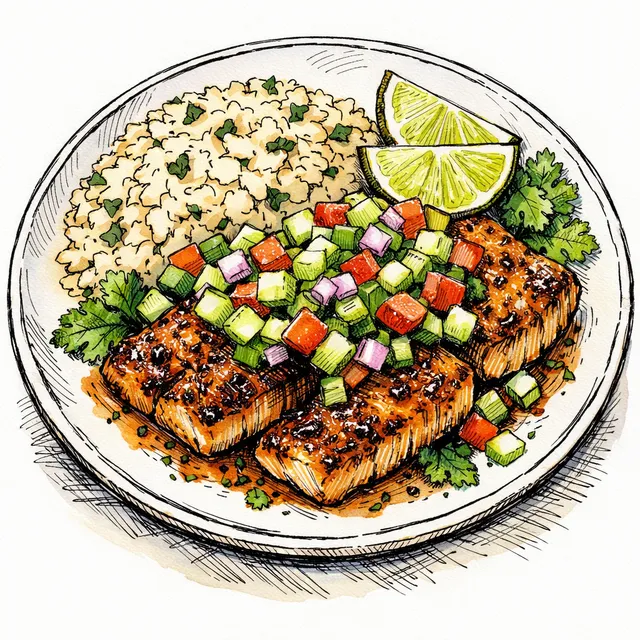
20-Minute Adobo-Seared Mahi-Mahi (The Tuesday Bright Plate)
Let’s be real. Last Tuesday, I had exactly twenty minutes before the "Mom, what's for dinner?" chant began. I was craving the smoky, wood-grilled fish we eat on the beaches of Oaxaca, but I was staring down a tiny Brooklyn stove. Enter the Tuesday Bright Plate.
This adobo-seared mahi-mahi is born from pure weeknight survival. You’re going to rub meaty fish with a quick chipotle adobo (Bodega Mode: just steal a tablespoon of sauce from a can of chipotles in adobo, mix with a little lime and salt) and sear it hot and fast. While the fish cooks, chop up a loud, crunchy cucumber-avocado salsa.
I love this dish because it’s peak texture contrast—smoky, flaky, creamy, and crunchy—with zero fuss. We’re not suffering for dinner, people.
Make it yours:
- Don’t have mahi? Use cod, shrimp, or even quick-cooking chicken cutlets.
- If the kids can’t do heat, swap the chipotle for sweet paprika, a pinch of oregano, and a splash of orange juice.
Just don't skip the salsa. Taste it—then decide if it needs an extra squeeze of lime. That bright finish is what wakes the whole plate up. Ándale, you've got this.
Featured Recipe
20-Minute Adobo-Seared Mahi-Mahi with Crunchy Cucumber Salsa (The Tuesday Bright Plate)
This is the dinner you make when you want to feel like you’re on a beach in Oaxaca, but you only have 20 minutes before someone asks what's for dinner. We’re rubbing meaty mahi-mahi with a quick, smoky chipotle adobo, searing it hot and fast, and burying it under a super-bright, crunchy cucumber and avocado salsa. It’s peak texture contrast—smoky, flaky, creamy, and loud. We are not suffering for dinner, people.
Save a copy to your collection for editing
Timeline
Ingredients
- 4 fillets Mahi-mahi fillets(About 6 oz each, patted completely dry)
- 1 Chipotle pepper in adobo(Finely chopped, plus extra sauce)
- 2 tbsp Adobo sauce(From the chipotle can)
- 2 cloves Garlic cloves(Grated or finely minced)
- 1 tsp Dried Mexican oregano(Rubbed between your fingers to release the oils)
- 2 tbsp Olive oil(Divided use)
- 1.5 tsp Kosher salt(Divided use, plus more to taste)
- 1 cup English cucumber(Diced (no need to peel if it's an English cucumber))
- 4 Radishes(Thinly sliced into half-moons)
- 1/4 cup Red onion(Finely diced)
- 1 Jalapeño(Seeded and minced (leave seeds in if you want the heat!))
- 1/2 cup Fresh cilantro(Roughly chopped, stems included)
- 2 Limes(Juiced)
- 1 large Avocado(Diced right before using)
Instructions
- 1
Pat 4 mahi-mahi fillets completely dry with paper towels. I'm serious, moisture is the enemy of a good sear! In a small bowl, mash 1 finely chopped chipotle pepper and 2 tbsp adobo sauce with 2 grated garlic cloves, 1 tsp dried Mexican oregano, 1 tbsp olive oil, and 1 tsp kosher salt. Smear this smoky paste all over both sides of the fish. Let it sit while you prep the veggies.
3 min
Tip: Bodega Mode: If you only have chili powder and smoked paprika, make a quick dry rub with a little olive oil instead of the canned adobo.
- 2
Make the crunchy salsa base. In a medium bowl, toss 1 cup diced English cucumber, 4 thinly sliced radishes, 1/4 cup finely diced red onion, 1 minced jalapeño, and 1/2 cup chopped fresh cilantro with the juice of 2 limes and 1/2 tsp kosher salt. Toss it up well. The acid will tame the raw onion while it sits, which is exactly what we want.
5 min
Tip: Don't add the avocado yet! We want the sturdy vegetables to soak up the lime juice first.
- 3
Heat your largest skillet (cast iron is perfect here) over medium-high heat. Add the remaining 1 tbsp olive oil. You want the oil shimmering and nearly smoking—that’s the secret to a weeknight sear that actually looks professional.
2 min
Tip: Wait for the pan to get truly hot. If you put the fish in too early, it will steam instead of searing.
- 4
Lay the seasoned mahi-mahi fillets into the hot skillet. Now, step away. Do not touch them! Let them sear hard for 3 to 4 minutes until a gorgeous, dark, smoky crust forms. Flip them once, and cook for another 3 to 4 minutes until the fish is opaque all the way through and flakes easily.
8 min
Tip: The adobo has some sugars in it, so it will blacken quickly. That's flavor, not burnt!
- 5
While the fish is finishing its cook on the second side, gently fold 1 large diced avocado into your cucumber salsa. We do this at the very end so the avocado stays creamy and doesn't turn to mush. Taste the salsa—then decide. Does it need a pinch more salt? A splash more lime? You are the boss of your own kitchen. Fix it now.
2 min
Tip: This is your 'lever'—the bright acid and salt in the salsa will cut right through the rich, smoky fish.
- 6
Transfer the seared mahi-mahi to warm plates. Spoon a massive, unapologetic heap of the bright, crunchy avocado-cucumber salsa right over the top of each fillet. The juices from the salsa will mix with the smoky oil from the fish. Serve immediately.
2 min
Tip: Serve with warm corn tortillas to catch the extra salsa, or just eat it as is for a bright, low-effort plate.
Chef's Notes
Bodega Mode: If you don't have mahi-mahi, any firm white fish works brilliantly—halibut, cod, or even swordfish. No radishes? Skip them or throw in some shredded green cabbage for crunch. The rule here is flavor logic and texture contrast: smoky/soft fish needs a crunchy/bright topping. Do not skip patting the fish dry; it is the single most important step for that beautiful restaurant-style crust.

María “Mari” Santiago
Oaxacan comfort, Brooklyn shortcuts, weeknight bright.
María “Mari” Santiago was born in Oaxaca, where her earliest kitchen memories are measured in scent: chiles toasting on a comal, cinnamon and chocolate blooming in mole, and the warm, nutty snap of a tlayuda folded in half for the walk home. She learned by watching—first her tías, then her abuela—picking up the small, practical rules that never made it into written recipes: how to tell when the garlic is *just* right, how to rescue a too-spicy salsa, and why you always taste the broth before you add the salt. Now in Brooklyn, Mari cooks the food she grew up on while raising two little kids and juggling real-life time limits. Her style is “real flavor, real life”: traditional Oaxacan and everyday Mexican dishes—moles, caldos, frijoles, enfrijoladas, salsas, and crispy tlayudas—made weeknight-friendly with smart shortcuts, brighter salsas, and more vegetables without losing the soul of the dish. She’s not precious about rules, she’s big on swaps, and she’s on a mission to prove that you can cook deeply flavorful Mexican food with what you can actually find at a normal grocery store (and still get dinner on the table before a meltdown). Mari’s recipes read like a friend texting you from the produce aisle: clear, funny, and unpretentious, with a side of abuela wisdom. If there’s a hard-to-find ingredient, she gives you a realistic alternative, tells you what will change (and what won’t), and keeps the focus where it belongs—on food that tastes like home, even when home is a small Brooklyn kitchen.