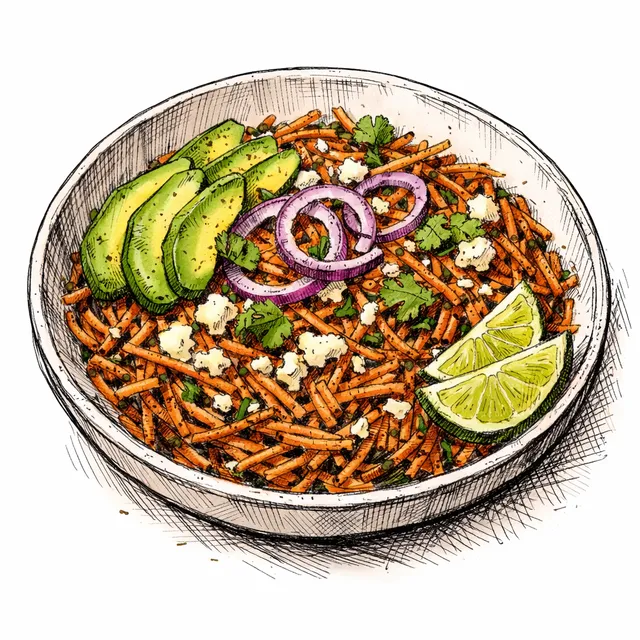
25-Minute Skillet Fideo Seco (The Weeknight Noodle Rescue)
Let's be real, some nights you are walking into the kitchen with your coat still on, staring at the pantry and praying for a miracle. (I know I do before someone asks for a snack.) That is when I pull out my 25-Minute Skillet Fideo Seco. Sopa seca is the Oaxacan-via-everywhere-else comfort food we all deserve on a tired Tuesday. Growing up, my tías made it low and slow, but here in Brooklyn? We are not suffering for dinner. You are going to break up fideo or angel hair pasta and toast it in a skillet until it smells nutty, like a bakery. Do not skip this, it is the whole secret! Then, we let the noodles drink up a quick-blended chipotle, garlic, and tomato broth until they are jammy and tender. It is basically Mexican spaghetti, and it costs about four dollars to make. Bodega Mode: If you do not have fresh tomatoes, a can of crushed tomatoes is your best friend. Make it yours: The magic is the toppings. Contrast that rich, smoky sauce with a heavy drizzle of crema, crunchy cabbage, and creamy avocado. Taste it, add a squeeze of lime, then decide. Ándale, dinner is saved.
Featured Recipe
25-Minute Skillet Fideo Seco (The Weeknight Noodle Rescue)
Sopa seca is the Oaxacan-via-everywhere-else comfort food we all deserve on a tired Tuesday. We toast broken noodles until they smell like a bakery, then let them drink up a smoky, garlicky chipotle-tomato broth until tender and jammy. It's basically Mexican spaghetti, finished with cooling crema and avocado, and it costs about four dollars to make.
Save a copy to your collection for editing
Timeline
Ingredients
- 8 oz angel hair pasta or fideo nests(broken into 2-inch pieces)
- 2 tbsp neutral oil(avocado or canola)
- 1.5 cups canned fire-roasted tomatoes(crushed or diced (about one 14oz can))
- 1/2 medium white onion(roughly chopped)
- 2 garlic cloves(smashed)
- 1-2 chipotle in adobo peppers(plus 1 tbsp sauce from the can)
- 1 tbsp adobo sauce(from the chipotle can)
- 1.5 cups chicken or vegetable broth(low sodium)
- 1 tsp kosher salt(plus more to taste)
- 1/4 cup Mexican crema(or sour cream thinned with a splash of milk)
- 1/3 cup cotija cheese(crumbled (feta works too))
- 1 avocado(sliced)
- 1/4 cup cilantro(chopped)
- 1 lime(cut into wedges)
Instructions
- 1
In a blender, combine 1.5 cups canned fire-roasted tomatoes, 1/2 medium white onion, 2 garlic cloves, 1-2 chipotle in adobo peppers (taste it—then decide how brave you feel, but don't forget 1 tbsp adobo sauce!), 1.5 cups chicken or vegetable broth, and 1 tsp kosher salt. Blend until completely smooth. You're building a powerhouse flavor base in under 60 seconds.
5 min
Tip: Do this while the kids are asking what's for dinner. It buys you time.
- 2
Heat 2 tbsp neutral oil in a large skillet over medium heat. Add 8 oz angel hair pasta or fideo nests (make sure they're broken up!) and stir constantly. We are toasting, not burning—listen to me, do not walk away to check your phone! Cook for about 3-4 minutes until they smell deeply nutty and turn an even golden-brown.
4 min
Tip: This is the most important step in Oaxacan noodle dishes. That toasted flavor is the backbone of the meal.
- 3
Carefully pour the blended tomato mixture into the skillet with the toasted noodles. Stand back, it will splatter and complain loudly! Stir to combine, bring to a gentle bubble, then drop the heat down to low. Cover the skillet tightly.
12 min
Tip: If your lid doesn't fit perfectly, wrap a clean kitchen towel under it (safely away from the flame) to trap the steam.
- 4
While the fideo drinks up that beautiful red broth, get your toppings ready. Slice 1 avocado, crumble 1/3 cup cotija cheese, and chop 1/4 cup cilantro. Have your 1/4 cup Mexican crema and 1 lime on standby.
5 min
Tip: This is "Pantry Mode" magic—the toppings are what turns a skillet of noodles into a proper dinner.
- 5
Remove the lid. The liquid should be mostly absorbed and the noodles tender but not mushy. If it's too wet, cook uncovered for another minute or two. Turn off the heat, give it a gentle toss, and let it rest for 2 minutes to let the starch settle.
3 min
Tip: It's called 'Sopa Seca' (dry soup) for a reason—you want it jammy, not soupy.
- 6
Drizzle the warm fideo with the crema, scatter the cotija and cilantro, and crown with avocado slices. Serve immediately with the lime wedges on the side. Ándale, dinner is done.
2 min
Tip: Squeeze that lime right before you eat. Acid is the finishing move that wakes the whole dish up.
Chef's Notes
Bodega Mode: If you can't find traditional fideo nests, a box of angel hair pasta broken into 2-inch pieces works exactly the same way. No cotija? Feta is a perfect salty substitute. We're not suffering for dinner, we're making it work.

María “Mari” Santiago
Oaxacan comfort, Brooklyn shortcuts, weeknight bright.
María “Mari” Santiago was born in Oaxaca, where her earliest kitchen memories are measured in scent: chiles toasting on a comal, cinnamon and chocolate blooming in mole, and the warm, nutty snap of a tlayuda folded in half for the walk home. She learned by watching—first her tías, then her abuela—picking up the small, practical rules that never made it into written recipes: how to tell when the garlic is *just* right, how to rescue a too-spicy salsa, and why you always taste the broth before you add the salt. Now in Brooklyn, Mari cooks the food she grew up on while raising two little kids and juggling real-life time limits. Her style is “real flavor, real life”: traditional Oaxacan and everyday Mexican dishes—moles, caldos, frijoles, enfrijoladas, salsas, and crispy tlayudas—made weeknight-friendly with smart shortcuts, brighter salsas, and more vegetables without losing the soul of the dish. She’s not precious about rules, she’s big on swaps, and she’s on a mission to prove that you can cook deeply flavorful Mexican food with what you can actually find at a normal grocery store (and still get dinner on the table before a meltdown). Mari’s recipes read like a friend texting you from the produce aisle: clear, funny, and unpretentious, with a side of abuela wisdom. If there’s a hard-to-find ingredient, she gives you a realistic alternative, tells you what will change (and what won’t), and keeps the focus where it belongs—on food that tastes like home, even when home is a small Brooklyn kitchen.