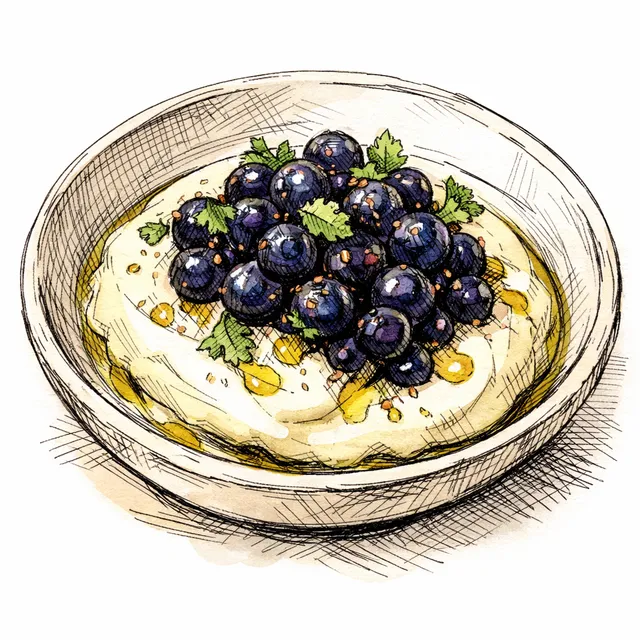
Cold-Set Olive Oil Cream: A Summer Rebellion
Summer in a fine-dining kitchen is a lesson in endurance. I remember sweating over a stove in a 100-degree pastry station, wishing for a dessert that didn't demand an oven. That's where the inspiration for this Cold-Set Olive Oil Cream began. It's a quiet rebellion against summer baking.
This recipe is special to me because it relies entirely on the raw chemistry of citrus and dairy. No gelatin. No heat. Just acid thickening fat.
Why this works
The magic is in the temperature. Cold heavy cream meets fresh lemon juice. The acid alters the protein structure, setting the dairy into a velvet-like pudding. Grassy olive oil and earthy crushed coriander seed provide the one-contrast upgrades here. They take standard summer blueberries and turn them into a restaurant-level focal point without overcrowding the plate. Contrast is the secret ingredient.
Make it yours
Want to swap the fruit? Go ahead. Macerated strawberries with a pinch of black pepper or peaches with fresh thyme work brilliantly. Just weigh your heavy cream—precision is freedom, and we need the exact fat ratio for the citrus to do its job.
Let it chill completely. Future you deserves a perfect texture.
Featured Recipe
Cold-Set Olive Oil Cream with Coriander-Macerated Blueberries
A dessert shouldn't require a hot oven in the middle of summer. This relies entirely on the raw chemistry of citrus and dairy to cold-set a rich, velvety cream without an ounce of gelatin. Grassy olive oil and earthy coriander provide the one-contrast upgrades that turn simple blueberries into a restaurant-level focal point.
Save a copy to your collection for editing
Timeline
Ingredients
- 450 g Heavy cream(Minimum 36% fat. Do not use half-and-half; we need the fat for the chemical set.)
- 135 g Caster sugar(Divided use (120g for cream, 15g for berries).)
- 70 g Lemon juice(Freshly squeezed only. Divided use (60g for cream, 10g for berries).)
- 10 g Lemon zest(From about 2 large lemons, zested with a microplane.)
- 30 g Extra virgin olive oil(Choose a grassy, peppery profile.)
- 250 g Fresh blueberries(Washed and thoroughly dried.)
- 2 g Toasted ground coriander(Toasted whole seeds ground fresh yields the best floral aroma.)
- 50 g Toasted hazelnuts(Skins removed, roughly chopped.)
- 10 g Dark muscovado sugar(Can substitute dark brown sugar.)
- 2 g Flaky sea salt(Maldon preferred.)
- 15 g caster sugar(Mentioned in step 5 but not in the ingredient list.)
Instructions
- 1
Set a medium saucepan on your scale and weigh in 450g heavy cream, 120g caster sugar, and 10g lemon zest. Place over medium heat. Stir gently until the sugar dissolves. Once it reaches a rapid simmer, set a timer and let it boil for exactly 3 minutes. This reduces the water content slightly and prepares the dairy to bind.
5 min
Tip: Watch the pot closely. Heavy cream loves to boil over in the blink of an eye. Lower the heat slightly if it threatens to crest the rim.
- 2
Remove the saucepan from the heat. Immediately whisk in 60g lemon juice and 30g extra virgin olive oil. The mixture will visibly thicken in seconds as the acid reacts with the casein in the cream. Whisk until perfectly smooth and emulsified.
2 min
Tip: Do not skip the whisking. You want the olive oil fully integrated before the mixture cools.
- 3
Strain the warm mixture through a fine-mesh sieve into a measuring jug with a spout. Use a spatula to press the zest into the mesh, extracting the residual lemon oils. Divide the liquid evenly among 4 chilled glasses or ceramic ramekins. Place them in the refrigerator.
5 min
Tip: Wipe the rims before chilling. Clean edges matter.
- 4
While the cream begins to set, prepare the crunch. In a small bowl, toss the chopped 50g toasted hazelnuts with 10g dark muscovado sugar and 2g flaky sea salt. Rub the muscovado into the nuts with your fingers to ensure it distributes evenly without clumping. Set aside at room temperature.
3 min
Tip: This is our two-texture rule in action: the crunch breaks up the richness of the cream.
- 5
In another bowl, combine the 250g fresh blueberries, 15g caster sugar, 10g lemon juice, and 2g toasted ground coriander. Stir well to coat. Cover with painter's tape to label, and let it sit at room temperature for at least 30 minutes. The osmotic pressure will pull the juices from the berries, creating a glossy, floral syrup.
3 min
Tip: Coriander isn't here to make it savory. It shares flavor compounds with blueberries and amplifies their floral notes.
- 6
After at least 2 hours, check the cream. It should be fully set and firm to a gentle shake. Spoon the macerated blueberries and their accumulated syrup generously over each portion. Finish with a heavy pinch of the hazelnut crunch right before serving.
2 min
Tip: Do not add the crunch until the exact moment of serving to preserve the snap.
Chef's Notes
Why this works: We are relying on the casein in heavy cream reacting to the citric acid in the lemon juice. It sets perfectly without gelatin. The olive oil adds a grassy finish that bridges the dairy and the blueberries. Weigh your ingredients—don't guess the lemon juice. The ratio of acid to fat is what sets this cream. Precision is freedom. Let it chill completely. Future you deserves a perfectly firm spoon-drag.

Theo Glass
Modern desserts, minimal fuss, maximum contrast.
Theo Glass—known as “The Minimalist Sweet Tooth”—is a calm, detail-obsessed pastry coach who left the white-tablecloth intensity of fine dining for the reality (and joy) of home kitchens. After years of building plated desserts with tweezers and timers, he realized the real magic wasn’t complicated garnish work—it was contrast, clarity, and control. Theo’s mission now is to help everyday bakers make desserts that feel modern and restaurant-level without turning their kitchen into a war zone. His style is precision with restraint: olive oil cakes that stay plush for days, tahini brownies that walk the line between nutty and bittersweet, miso custards that taste like “caramel’s smarter cousin,” and citrus-forward sorbets that pop without needing an ice-cream machine. Theo teaches fundamentals (emulsions, temperature, texture, salinity) in plain language, with steps that are clean, paced, and confidence-building. If you’ve ever said “I want to mix it up” but don’t want extra dishes, obscure tools, or chaos, Theo’s your person. He’ll show you how to mix it up the minimalist way: a smarter ingredient swap, a sharper contrast, and a clear path to repeatable results.