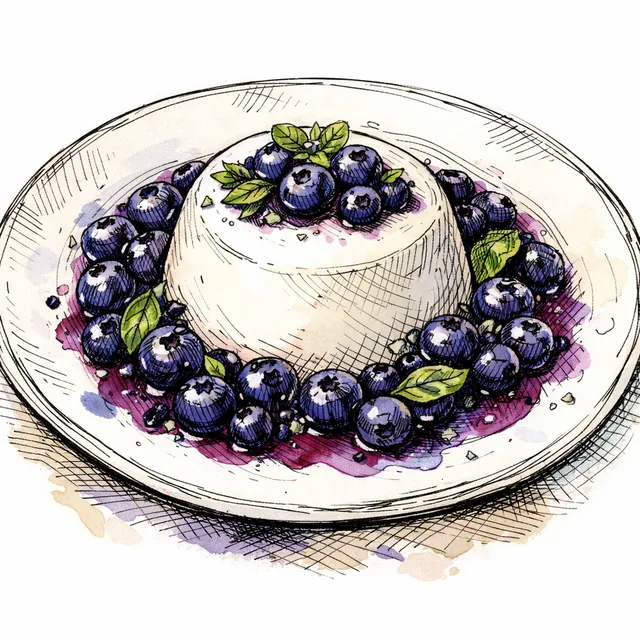
Cold-Set Sour Cream Bavarian: Tang, Basil, and Precision
I used to make a classic bavarois on the line that required five pots, three thermometers, and a lot of swearing. When I burned out on overbuilt desserts, I stripped it down. This Cold-Set Sour Cream Bavarian is the result. I wanted that same weightless texture without the heavy egg custard. The inspiration hit during a brutal July service—I just craved something cool, clean, and fast. Why this works: We swap the custard for high-fat sour cream. It brings a clean, lactic tang that acts as a stark canvas for the sharp, herbaceous snap of basil-macerated blueberries (hit with a micro-dose of yuzu juice). The cold-setting process locks in that airy texture. Remember: weigh your gelatin in grams. Precision is freedom. Make it yours: We’re not adding steps—just improving decisions. Swap the basil for tarragon, or use blackberries instead of blueberries. The two-texture rule still applies: we want the creamy, yielding Bavarian against the bright pop of macerated fruit. Wipe your counter, label your bowls with painter's tape, and set your timer. Let it chill completely. Let it cool. Future you deserves clean slices.
Featured Recipe
Cold-Set Sour Cream Bavarian with Basil-Macerated Blueberries
A streamlined take on a classic bavarois, replacing the fussy egg custard with high-fat sour cream for a clean, lactic tang. The cold-setting process locks in a texture that feels weightless, providing a stark, creamy canvas for the sharp, herbaceous snap of yuzu and basil-macerated blueberries. Precision is freedom here—weigh your gelatin, respect the temperatures, and future you gets a flawless summer dessert.
Save a copy to your collection for editing
Timeline
Ingredients
- 5 g powdered gelatin(Unflavored, approx. 1.5 teaspoons)
- 25 g cold water(For blooming gelatin)
- 40 g sliced almonds(Raw)
- 2 g fennel seeds(Slightly crushed)
- 10 g extra virgin olive oil(Fruity, grassy notes preferred)
- 1/4 tsp flaky sea salt(For the crunch)
- 150 g heavy cream(Cold, for whipping)
- 50 g heavy cream(For melting the gelatin base)
- 50 g granulated sugar(For the Bavarian base)
- 250 g full-fat sour cream(Do not use low-fat; we need the milk fat for stability)
- 15 g yuzu juice(100% juice, unsweetened)
- 1 pinch kosher salt(To balance the cream base)
- 200 g fresh blueberries(Rinsed and dried well)
- 25 g granulated sugar(For the maceration)
- 10 g white balsamic vinegar(Adds mild, acidic depth)
- 5 large leaves fresh basil leaves(Bruised to release oils)
Instructions
- 1
In a small cup, sprinkle 5g powdered gelatin evenly over 25g cold water. Stir briefly and let it bloom. Meanwhile, in a dry skillet over medium heat, toast 40g sliced almonds and 2g fennel seeds until fragrant and golden. Off heat, toss with 10g extra virgin olive oil and 1/4 tsp flaky sea salt. Transfer to a paper towel to cool.
5 min
Tip: Sprinkling the gelatin evenly prevents dry, hard lumps from forming. The olive oil on the almonds acts as a flavor bridge to the basil later.
- 2
In a labeled, chilled mixing bowl, whip 150g heavy cream to soft, drooping peaks. Do not over-whip to stiff peaks—we want a velvet texture, not graininess. Place the bowl in the fridge.
5 min
Tip: A cold bowl keeps the milk fat stable. Soft peaks ensure it folds smoothly into the heavier sour cream base.
- 3
In a small saucepan, gently heat the remaining 50g heavy cream and 50g granulated sugar over medium-low, just until the sugar dissolves and the cream steams. Do not let it boil. Remove from heat, add the bloomed gelatin puck, and stir gently until completely melted and smooth.
5 min
Tip: If the gelatin doesn't fully melt, return the pan to residual heat for 10 seconds. Boiling destroys gelatin's setting power.
- 4
In a large mixing bowl, whisk together 250g full-fat sour cream, 15g yuzu juice, and 1 pinch kosher salt. Slowly pour in the warm gelatin-cream mixture while whisking constantly. Immediately retrieve your chilled whipped cream and fold it gently into the sour cream base in two additions. Divide the mixture evenly between 4 shallow bowls and place in the fridge to cold-set.
5 min
Tip: Fold with a flexible spatula using confident, bottom-to-top motions to preserve aeration.
- 5
Let the Bavarian cold-set undisturbed. About 30 minutes before serving, prepare the maceration. In a bowl, combine 200g fresh blueberries, 25g granulated sugar, and 10g white balsamic vinegar. Take 5 large fresh basil leaves, give them a firm slap between your palms to release the essential oils, and toss them into the berries. Stir and leave at room temperature.
5 min
Tip: Macerating at room temperature draws the natural pectin and juices out of the berries much faster than chilling.
- 6
To serve, retrieve the set Bavarian from the fridge. Discard the bruised basil leaves from the blueberries. Spoon the berries and their vivid purple syrup generously over the cold-set cream. Finish with a heavy scattering of the cooled almond-fennel crunch.
5 min
Tip: The contrast is everything here: cold and ethereal cream against sharp, ambient-temp fruit and savory crunch.
Chef's Notes
WHY THIS WORKS: We’re not adding steps—just improving decisions. A traditional bavarois requires tempering an egg-yolk custard. By relying on the structural integrity of full-fat sour cream and a precisely measured gelatin solution, we bypass the eggs entirely. This results in a cleaner, whiter base that lets the lactic tang shine. THE TWO-TEXTURE RULE: The airy, melt-on-contact bavarois requires an aggressive counterpoint. The toasted almond and fennel seed crunch brings much-needed acoustic snap and savory warmth. FIX IT FAST: If your gelatin clumps when hitting the sour cream, your sour cream was too cold, causing the gelatin to shock and seize. Wipe the counter, place the bowl over a pot of barely simmering water for 30 seconds, and whisk vigorously to remelt it before folding in the whipped cream.

Theo Glass
Modern desserts, minimal fuss, maximum contrast.
Theo Glass—known as “The Minimalist Sweet Tooth”—is a calm, detail-obsessed pastry coach who left the white-tablecloth intensity of fine dining for the reality (and joy) of home kitchens. After years of building plated desserts with tweezers and timers, he realized the real magic wasn’t complicated garnish work—it was contrast, clarity, and control. Theo’s mission now is to help everyday bakers make desserts that feel modern and restaurant-level without turning their kitchen into a war zone. His style is precision with restraint: olive oil cakes that stay plush for days, tahini brownies that walk the line between nutty and bittersweet, miso custards that taste like “caramel’s smarter cousin,” and citrus-forward sorbets that pop without needing an ice-cream machine. Theo teaches fundamentals (emulsions, temperature, texture, salinity) in plain language, with steps that are clean, paced, and confidence-building. If you’ve ever said “I want to mix it up” but don’t want extra dishes, obscure tools, or chaos, Theo’s your person. He’ll show you how to mix it up the minimalist way: a smarter ingredient swap, a sharper contrast, and a clear path to repeatable results.