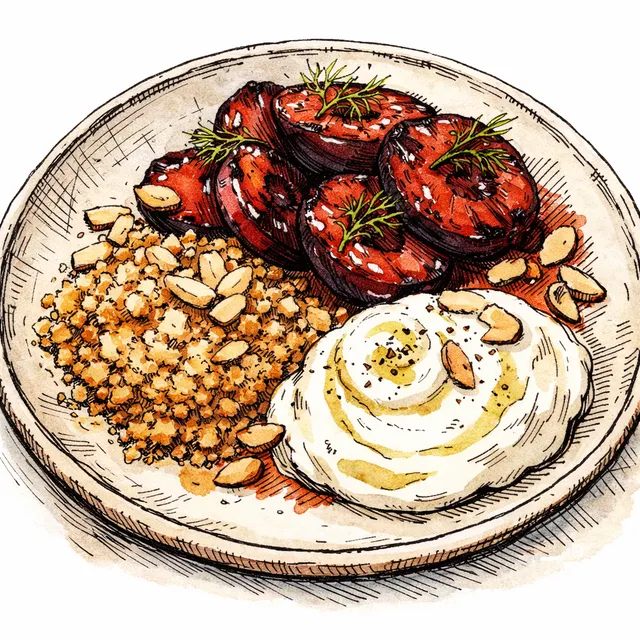
High-Heat Roasted Plums with Fennel-Almond Sand & Cold Labneh
I developed this dish during my last year in fine dining. I was burned out on tweezers, spun sugar, and overbuilt plates. I wanted dessert to taste like actual food. I remember standing in a stifling prep kitchen in August, staring at a crate of softening plums, realizing the best thing I could do was get out of their way. That is the soul of this recipe. What makes it special is the restraint. We are not adding steps—just improving decisions. ### Why this worksContrast is the secret ingredient. We blast the plums at high heat (230C) so the edges char before the centers collapse into mush. Precision is freedom. You get blistering hot, jammy fruit against cold, salted labneh. The fennel-almond sand—weighed precisely in grams and bound with fruity olive oil—brings the necessary crunch. Two textures, a massive temperature gap, and one savory spike. ### Fix it fastDon't have fennel seed? Swap in toasted black sesame or a pinch of coriander. No labneh? Strained Greek yogurt works. Just remember to chill the dairy fully and let the roasted plums rest for two minutes before plating. Let it cool. Future you deserves clean flavors.
Featured Recipe
High-Heat Roasted Plums with Fennel-Almond Sand & Cold Labneh
Summer minimalism demands respect for the fruit. We blast plums at high heat to char their edges before their centers collapse into mush, then anchor them with cold, salted labneh and a crisp olive oil sand. Contrast is the secret ingredient here—temperature, texture, and a single savory spike of fennel.
Save a copy to your collection for editing
Timeline
Ingredients
- 500 g Plums(Firm but ripe, halved and pitted. About 5-6 plums.)
- 30 g Turbinado sugar(For roasting the plums.)
- 2 g Fennel seeds(Lightly crushed in a mortar or under a heavy pan.)
- 70 g Fruity extra-virgin olive oil(Divided use: 40g for sand, 15g for plums, 15g for labneh.)
- 60 g Almond flour
- 30 g All-purpose flour
- 30 g Granulated sugar(For the almond sand.)
- 4 g Flaky sea salt(Divided use: 2g for sand, 1g for plums, 1g for labneh.)
- 200 g Cold labneh(Must be very cold. Full-fat Greek yogurt works in a pinch.)
- 1 Lemon(Zest only. Medium size.)
- 1 lemon lemon zest(zest of)
Instructions
- 1
Preheat your oven to 450°F (230°C). High heat is mandatory; we want to roast, not bake. Wipe down your counter, line two rimmed baking sheets with parchment paper, and organize your ingredients. Label your prep bowls with painter's tape if you're multitasking. Set a timer to ensure the oven is fully heated.
10 min
Tip: An oven thermometer is your best friend here. If it's not truly 450°F, the fruit will steam instead of char.
- 2
In a medium bowl, whisk together the 60g almond flour, 30g all-purpose flour, 30g granulated sugar, and 2g flaky sea salt. Drizzle in 40g fruity extra-virgin olive oil and rub the mixture between your fingers until it clumps like wet sand. Scatter evenly onto the first prepared baking sheet.
5 min
Tip: Don't over-mix into a paste. You want irregular pebbles for maximum texture contrast.
- 3
Place the halved and pitted 500g plums into a large bowl. Gently toss them with 15g fruity extra-virgin olive oil, 30g turbinado sugar, 2g fennel seeds, and 1g flaky sea salt. Arrange them cut-side up on the second baking sheet, leaving an inch of space between each.
5 min
Tip: Keeping them cut-side up traps the juices inside the plum cavity, creating a natural syrup.
- 4
Place both baking sheets in the oven. The sand will roast fast—check it at 8 minutes and remove when golden brown. Let the plums roast for 12-15 minutes total, pulling them when the edges are blistered and the fruit has softened but still holds its structure.
15 min
Tip: Watch the sand closely. Almond flour goes from toasted to burnt in about 45 seconds.
- 5
While the oven does the work, prepare the cold base. In a small bowl, whisk the 200g cold labneh with the zest of 1 lemon, 1g flaky sea salt, and the remaining 15g fruity extra-virgin olive oil. Immediately return this bowl to the refrigerator.
3 min
Tip: Temperature management is critical. Keep the labneh chilled until the exact moment of plating.
- 6
Once the almond sand is out of the oven, leave it alone on the baking sheet to cool. It crisps as the temperature drops. Future you deserves that crunch.
10 min
Tip: Do not stir the sand while it's hot, or you'll break up the clumps.
- 7
Remove the labneh from the fridge and swoosh a generous spoonful onto each plate. Place 2-3 warm roasted plum halves over the cold labneh. Scrape any syrupy pan juices over the fruit, and finish with a heavy scattering of the cooled fennel-almond sand. Serve immediately.
5 min
Tip: We are not adding steps—just improving decisions. The shock of warm fruit against cold dairy is the entire point of this dessert.
Chef's Notes
Why this works: Fruit baked at 350°F turns to mush. Roasting at 450°F shocks the exterior, caramelizing the sugars while preserving the cell structure inside. The cold labneh protects the warm fruit from getting lost, and the fennel seed provides a single, sharp savory note to cut the sweetness. Precision is freedom: weigh your flour, don't guess the oven temp, and don't pull the labneh out of the fridge until minute 35.

Theo Glass
Modern desserts, minimal fuss, maximum contrast.
Theo Glass—known as “The Minimalist Sweet Tooth”—is a calm, detail-obsessed pastry coach who left the white-tablecloth intensity of fine dining for the reality (and joy) of home kitchens. After years of building plated desserts with tweezers and timers, he realized the real magic wasn’t complicated garnish work—it was contrast, clarity, and control. Theo’s mission now is to help everyday bakers make desserts that feel modern and restaurant-level without turning their kitchen into a war zone. His style is precision with restraint: olive oil cakes that stay plush for days, tahini brownies that walk the line between nutty and bittersweet, miso custards that taste like “caramel’s smarter cousin,” and citrus-forward sorbets that pop without needing an ice-cream machine. Theo teaches fundamentals (emulsions, temperature, texture, salinity) in plain language, with steps that are clean, paced, and confidence-building. If you’ve ever said “I want to mix it up” but don’t want extra dishes, obscure tools, or chaos, Theo’s your person. He’ll show you how to mix it up the minimalist way: a smarter ingredient swap, a sharper contrast, and a clear path to repeatable results.