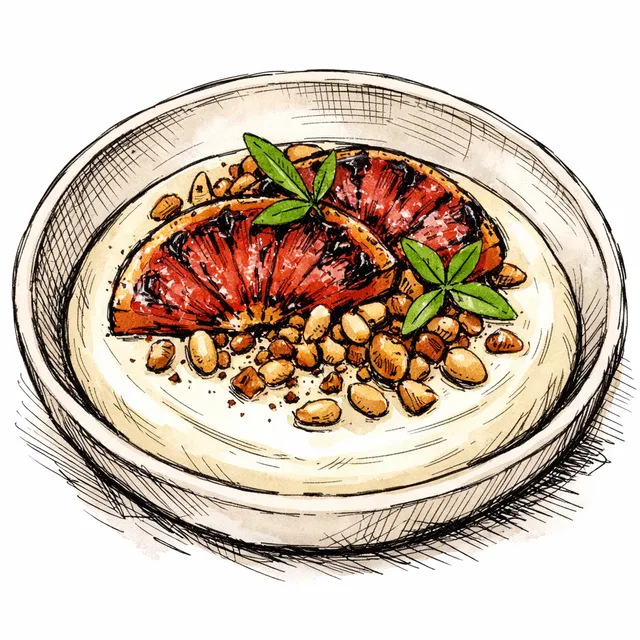
Cold-Infused Lemon Verbena Cream with Charred Grapefruit & Salted Pine Nut Crunch
Most desserts shout. This one whispers. The inspiration for this cold-infused lemon verbena cream came from a stifling afternoon in an old restaurant kitchen where the air conditioning had flatlined. Desperate for relief, I bruised some verbena leaves into heavy cream and let the fridge do the heavy lifting. Precision is freedom, and letting cold infuse clean, bright aromatics without muddying them with heat is a masterclass in patience. Paired with flash-charred pink grapefruit for a hit of pleasant bitterness and a salty pine nut crunch, it hits the two-texture rule effortlessly. Contrast is the secret ingredient. Make it your own by swapping verbena for lemon thyme or geranium if your garden dictates. Let it chill. Future you deserves clean slices and zero stress.
Featured Recipe
Cold-Infused Lemon Verbena Cream with Charred Grapefruit & Salted Pine Nut Crunch
A silky, cold-steeped lemon verbena custard set lightly with gelatin, paired with flash-charred pink grapefruit and a salty, caramelized pine nut crunch. Clean herbal notes meet bright citrus bitterness in a quiet study of temperature and texture.
Save a copy to your collection for editing
Timeline
Ingredients
- 15 g Fresh lemon verbena leaves(washed and thoroughly dried)
- 300 g Heavy cream(36% fat content)
- 150 g Whole milk
- 65 g Granulated sugar(divided)
- 4 g Sheet gelatin(gold strength, 2 sheets)
- 2 large Pink grapefruit(peeled and segmented)
- 45 g Pine nuts(raw)
- 15 g Fruity extra virgin olive oil(high quality for finishing)
- 2 g Flaky sea salt(Maldon or similar)
- 20 g granulated sugar(mentioned in step 5, not in ingredient list)
Instructions
- 1
Gently bruise 15 g fresh lemon verbena leaves between your palms to release their aromatic oils. Pour 300 g heavy cream and 150 g whole milk into a medium glass container, submerge the bruised leaves, cover tightly, and refrigerate for 8 hours or overnight.
10 min
Tip: Cold steeping extracts pure, bright citrus notes without extracting the harsh bitterness that comes from heating herbal greens.
- 2
Submerge 4 g sheet gelatin in a bowl of ice water and let it bloom until soft and pliable.
5 min
Tip: Always bloom gelatin in ice-cold water so it hydrates evenly without dissolving prematurely.
- 3
Strain the cold verbena infusion through a fine-mesh sieve into a clean bowl, pressing lightly on the leaves with a spatula to extract maximum oil, then discard the leaves. Strain 100 g heavy cream of the cold infused cream mixture into a small saucepan with 45 g granulated sugar and heat gently over low heat until the sugar dissolves and the cream registers 60°C (140°F).
5 min
Tip: We only warm a fraction of the liquid to dissolve the gelatin, preserving the raw freshness of the rest of the cold cream.
- 4
Squeeze excess water from the softened 4 g sheet gelatin, whisk it into the warm cream mixture until fully melted, then pour this back into the remaining cold verbena cream and stir thoroughly. Divide evenly among 4 shallow dessert bowls and refrigerate until set.
180 min
Tip: Shallow bowls allow for faster, more uniform cooling and set a cleaner line for plating.
- 5
In a small skillet over medium heat, toast 45 g pine nuts dry until light golden brown. Sprinkle with 20 g granulated sugar and 1 g flaky sea salt, stirring constantly until the sugar melts and coats the nuts in a dark amber caramel. Transfer onto parchment paper, cool completely, and chop coarsely.
10 min
Tip: Keep the nuts moving constantly; pine nuts burn in seconds once caramelization starts.
- 6
Place the segments from 2 large pink grapefruit on a paper-towel-lined plate and pat completely dry. Heat an ungreased cast-iron skillet over high heat until smoking, then lay the grapefruit segments flat for 30 seconds until lightly charred on one side. Transfer immediately to a cold plate.
5 min
Tip: Drying the grapefruit surface is essential for a quick, clean char without mushiness.
- 7
To serve, arrange the charred grapefruit segments over each chilled verbena cream bowl, sprinkle with the chopped pine nut crunch, drizzle with 15 g fruity extra virgin olive oil, and finish with the remaining 1 g flaky sea salt.
5 min
Tip: Assemble right before serving so the pine nut crunch retains its snap against the silky cream.
Chef's Notes
Why this works: Cold-infusing herbs into high-fat dairy captures volatile essential oils without drawing out tannin or vegetal bitterness. The unheated herbal cream provides a velvety backdrop for the bitter-sweet acid of charred pink grapefruit and the savory crunch of caramelized pine nuts. Fix it fast: If your cream sets with small air bubbles, pass a kitchen torch lightly over the surface before chilling to pop them for a glass-smooth finish. Precision is freedom.

Theo Glass
Modern desserts, minimal fuss, maximum contrast.
Theo Glass—known as “The Minimalist Sweet Tooth”—is a calm, detail-obsessed pastry coach who left the white-tablecloth intensity of fine dining for the reality (and joy) of home kitchens. After years of building plated desserts with tweezers and timers, he realized the real magic wasn’t complicated garnish work—it was contrast, clarity, and control. Theo’s mission now is to help everyday bakers make desserts that feel modern and restaurant-level without turning their kitchen into a war zone. His style is precision with restraint: olive oil cakes that stay plush for days, tahini brownies that walk the line between nutty and bittersweet, miso custards that taste like “caramel’s smarter cousin,” and citrus-forward sorbets that pop without needing an ice-cream machine. Theo teaches fundamentals (emulsions, temperature, texture, salinity) in plain language, with steps that are clean, paced, and confidence-building. If you’ve ever said “I want to mix it up” but don’t want extra dishes, obscure tools, or chaos, Theo’s your person. He’ll show you how to mix it up the minimalist way: a smarter ingredient swap, a sharper contrast, and a clear path to repeatable results.