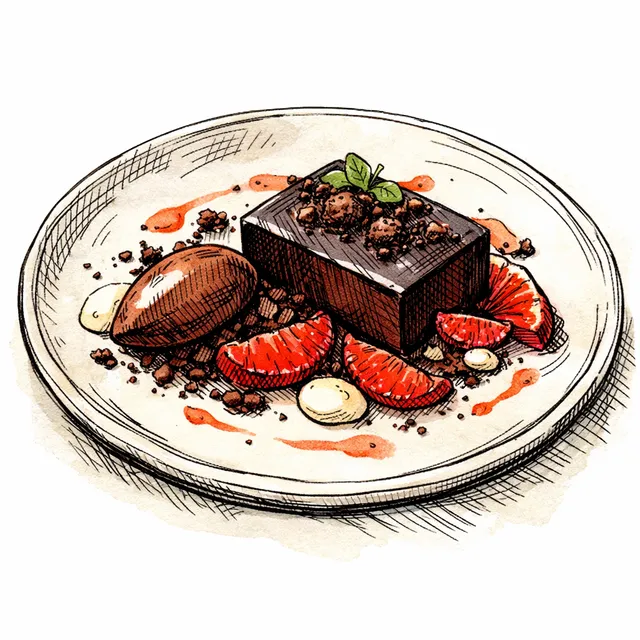
The Water-Ganache Revelation: Blood Orange Pavé
Why this works. Emulsifying chocolate with pure fruit juice instead of dairy isn't a parlor trick; it's a structural upgrade. Years ago, in a cramped fine-dining kitchen, I ran out of cream mid-service. Desperate, I emulsified dark chocolate with hot citrus juice. The result changed how I think about fat. Without heavy cream coating your palate, the chocolate's bitterness and the sharp blood orange hit with startling clarity. The payoff. This dense, silky water-ganache rests on a highly textured rye and cocoa-nib base, hitting my two-texture rule perfectly. Smooth meets crunch. It is minimalist modernism in a pan. This recipe is deeply special to me because it proves my core philosophy: we're not adding steps, just improving decisions. Contrast is the secret ingredient. Fix it fast. Temperature is everything here. Warm your juice to exactly 40°C (104°F) before whisking. Precision is freedom. If the emulsion looks greasy, a spoonful of warm water and brisk agitation will save it. Make it yours. Swap blood orange for yuzu or passionfruit. Just keep the liquid weight in grams identical. Set a timer, weigh your cocoa nibs, and respect the chill time. Let it cool. Future you deserves clean slices.
Featured Recipe
Emulsified Dark Chocolate & Blood Orange Pavé
Emulsifying chocolate with pure fruit juice instead of dairy isn't a parlor trick; it's a structural upgrade. Without heavy cream coating the palate, the bitter dark chocolate and sharp blood orange hit with startling clarity. This dense, silky water-ganache rests on a highly textured rye and cocoa-nib base, hitting my two-texture rule perfectly.
Save a copy to your collection for editing
Timeline
Ingredients
- 60 g Rye flour(Toasted for 5 minutes if you have the time)
- 40 g Cocoa nibs(Finely crushed)
- 30 g Light brown sugar
- 2 g Kosher salt(Divided use)
- 45 g Unsalted butter(Melted)
- 280 g Dark chocolate (70-72%)(High quality fèves or finely chopped)
- 220 g Fresh blood orange juice(Strained, from about 3-4 oranges)
- 10 g Fresh blood orange zest(Microplaned before juicing)
- 15 g Light corn syrup or glucose(Provides elasticity and prevents cracking)
- 15 g Fruity olive oil
- 1 pinch Flaky sea salt(For finishing)
Instructions
- 1
Preheat oven to 350°F (175°C). Line an 8x4-inch loaf pan with foil, leaving an overhang. Secure the foil flaps to the outside of the pan with a piece of painter's tape. In a bowl, mix 60g rye flour, 40g cocoa nibs, 30g light brown sugar, 1g kosher salt, and 45g melted unsalted butter until it resembles wet sand. Press evenly into the bottom of the prepared pan.
10 min
Tip: Use the flat bottom of a measuring cup to compress the base. An uncompressed base will crumble when you slice the final dessert.
- 2
Bake the base for 10 minutes until fragrant and slightly darkened. Remove from the oven and let it cool completely in the pan.
10 min
Tip: Passive step: Let the base cool while you prepare the emulsion. A warm base will heat the bottom of your ganache and alter the setting time.
- 3
While the base bakes, prepare your emulsion station. Place 280g dark chocolate (70-72%), 10g fresh blood orange zest, and 15g fruity olive oil into a tall, narrow jug (a deli container or the cup that came with your immersion blender is perfect).
5 min
Tip: A narrow container is crucial. If the container is too wide, the blender blade will incorporate air, turning your dense pavé into a porous mousse.
- 4
In a small saucepan, bring 220g fresh blood orange juice, 15g light corn syrup or glucose, and the remaining 1g kosher salt to a rolling simmer. Immediately pour the hot liquid over the chocolate mixture. Let it sit undisturbed for 1 minute.
5 min
Tip: The glucose is non-negotiable here—it adds flexibility to the emulsion so your dessert cuts cleanly without splintering.
- 5
Submerge your immersion blender into the jug, tilting it slightly to let trapped air escape from the bell. Keep the blade completely submerged and blend on medium speed until the mixture is incredibly glossy and cohesive. Tap the jug on the counter to force out any stray bubbles.
3 min
Tip: Fix it fast: If the mixture looks split or grainy, the temperature dropped too quickly. Add a splash of boiling water (about 10g) and blend again until it binds.
- 6
Pour the warm emulsion over the cooled rye-nib base. Tap the loaf pan firmly on the counter a few times to level the top. Cover tightly with plastic wrap (ensure it doesn't touch the surface) and refrigerate until completely firm.
120 min
Tip: Let it cool. Future you deserves clean slices. Rushing the set will ruin the texture.
- 7
To serve, use the foil overhang to gently lift the pavé out of the pan. Run a sharp chef's knife under hot tap water, wipe it completely dry, and slice into thick slabs. Re-warm and wipe the blade between every single cut. Garnish with 1 pinch flaky sea salt.
5 min
Tip: Serve cold. As it warms, the emulsion softens dramatically and releases the volatile orange oils.
Chef's Notes
Why this works: Water ganache removes dairy from the equation entirely. Milk fat mutes flavor and coats the tongue. By shearing pure dark chocolate with hot blood orange juice, we create an emulsion that acts like a ganache but hits the palate like a piece of fruit—bright, sharp, and immediate. The rye and nib base provides the essential bitter-crunch contrast.

Theo Glass
Modern desserts, minimal fuss, maximum contrast.
Theo Glass—known as “The Minimalist Sweet Tooth”—is a calm, detail-obsessed pastry coach who left the white-tablecloth intensity of fine dining for the reality (and joy) of home kitchens. After years of building plated desserts with tweezers and timers, he realized the real magic wasn’t complicated garnish work—it was contrast, clarity, and control. Theo’s mission now is to help everyday bakers make desserts that feel modern and restaurant-level without turning their kitchen into a war zone. His style is precision with restraint: olive oil cakes that stay plush for days, tahini brownies that walk the line between nutty and bittersweet, miso custards that taste like “caramel’s smarter cousin,” and citrus-forward sorbets that pop without needing an ice-cream machine. Theo teaches fundamentals (emulsions, temperature, texture, salinity) in plain language, with steps that are clean, paced, and confidence-building. If you’ve ever said “I want to mix it up” but don’t want extra dishes, obscure tools, or chaos, Theo’s your person. He’ll show you how to mix it up the minimalist way: a smarter ingredient swap, a sharper contrast, and a clear path to repeatable results.