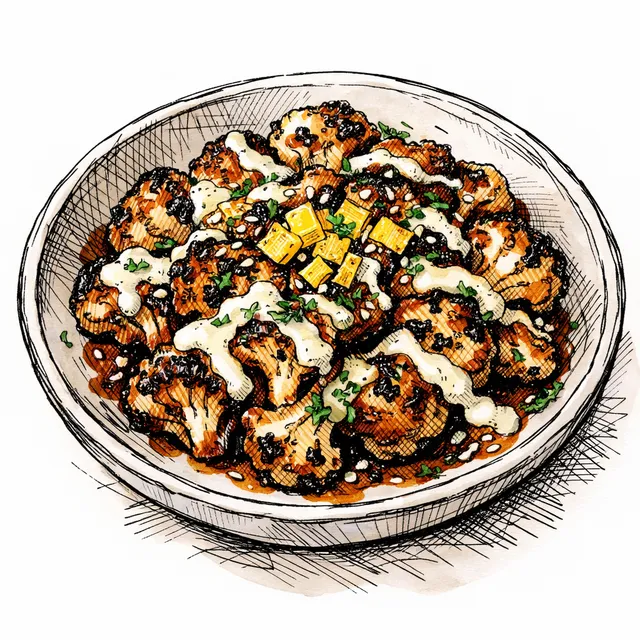
Cast-Iron Charred Cauliflower with Date-Sumac Glaze and Preserved Lemon Tahini
I am obsessed with what happens to cauliflower when you push it right to the edge of burnt. Growing up in Tel Aviv, I vividly remember wandering the Carmel Market and smelling that intoxicating, smoky char of vegetables blistering over open flames. When I moved to a tiny flat in London, I did not have an outdoor grill, so my heavy cast-iron skillet became my best friend. That is exactly where the inspiration for this dish was born. We are skipping the gentle oven roast today and going straight for a brutal, high-heat cast-iron sear. Why? Because that intense, aggressive heat transforms humble florets into crispy, deeply caramelized bites with the incredible texture contrasts I crave. Tossed in a sticky, tart date-sumac glaze and piled over a sharp, velvety pool of preserved lemon tahini, this mezze plate vanishes first at every dinner party I host. It is so special to me because it proves that a vegetable can completely steal the show without meat. Want to make it your own? Throw in a handful of toasted pine nuts for crunch, or swap the date syrup for pomegranate molasses if you prefer a sharper tang. Remember, more herbs is always the answer, so do not be shy-bury the whole beautiful plate under fresh mint, dill, and parsley before serving!
Featured Recipe
Cast-Iron Charred Cauliflower with Date-Sumac Glaze & Preserved Lemon Tahini
I am obsessed with what happens to cauliflower when you push it right to the edge of burnt. We're skipping the gentle oven roast today and going straight for a brutal, high-heat cast-iron char that transforms the humble florets into crispy, deeply caramelized bites. Tossed in a sticky, tart date-sumac glaze and piled over a sharp, velvety pool of preserved lemon tahini, this is the mezze plate that will vanish first at your table.
Save a copy to your collection for editing
Timeline
Ingredients
- 1 large head cauliflower(Cut into medium, flat-sided florets)
- 3 tbsp neutral oil(Avocado or grapeseed oil work best for high heat)
- 1/2 cup raw tahini(Use a high-quality, runny brand)
- 1/4 cup ice water(Essential for fluffy tahini)
- 2 tbsp preserved lemon rind(Flesh removed, rinsed, and finely minced)
- 1 clove garlic(Finely grated)
- 2 tbsp fresh lemon juice(Divided use)
- 3 tbsp date syrup (silan)(Can substitute with pomegranate molasses if needed, but add a pinch of sugar)
- 1 tbsp sumac(Ground)
- 1/2 cup fresh mint leaves(Roughly torn)
- 1/2 cup fresh dill(Roughly chopped)
- 1/3 cup roasted pistachios(Roughly chopped for crunch)
- 1 pinch flaky sea salt(For finishing)
Instructions
- 1
Trim and cut 1 large head cauliflower into medium florets. Make sure to cut them so they have at least one flat side—this flat surface is crucial for maximizing contact with the hot pan to get that aggressive char.
5 min
Tip: Save the leaves! You can throw them in the pan too—they get incredibly crispy.
- 2
Place a large cast-iron skillet over high heat. Let it get screaming hot. Add 3 tbsp neutral oil. Once shimmering, carefully add the prepared 1 large head cauliflower, flat sides down. Press them into the pan lightly, then leave them completely alone.
8 min
Tip: Do not poke, do not toss. Let the heat do its job. We want them scorched, not gently browned.
- 3
While the cauliflower chars, make your tahini base. In a medium bowl, whisk together 1/2 cup raw tahini, 1/4 cup ice water, 2 tbsp finely chopped preserved lemon rind, 1 clove garlic, and 1 tbsp fresh lemon juice. It will seize up at first, but keep whisking until it turns into a pale, velvety cloud.
5 min
Tip: If the tahini is too thick, add another splash of ice water until it falls in ribbons from your whisk.
- 4
In a small bowl, whisk together 3 tbsp date syrup (silan), 1 tbsp sumac, and the remaining 1 tbsp fresh lemon juice to create your sticky glaze.
2 min
Tip: Sumac adds a gorgeous tartness that cuts right through the sweet date syrup.
- 5
Check the cauliflower. It should have a deep, nearly blackened crust on the bottom. Toss the florets to char the other sides. Cook until tender-crisp.
5 min
Tip: A little bit of black is exactly what we want. It brings out a smoky bitterness that balances the sweet glaze perfectly.
- 6
Remove the skillet from the heat. Immediately pour the date-sumac glaze over the hot cauliflower. Toss vigorously. The residual heat of the pan will thicken the glaze, making it sticky and coating every single floret without burning the sugars.
2 min
Tip: Doing this off the heat prevents the date syrup from instantly scorching into a bitter mess.
- 7
To serve, create a generous swoosh of the preserved lemon tahini on a large, beautiful platter. Pile the hot, sticky cauliflower high in the center. Shower everything with a massive handful of 1/2 cup fresh mint leaves and 1/2 cup fresh dill. Finish with 1/3 cup roasted pistachios and 1 pinch flaky sea salt.
3 min
Tip: Always pile high, never flat. We want height and drama on the plate.
Chef's Notes
You have to trust the process with the cast iron. The instinct for most home cooks is to continuously stir vegetables so they don't burn. Here, we *want* them to burn just a little. That char is a flavor all on its own, providing a bitter contrast to the sweet date syrup and the rich, fatty tahini. Make sure your preserved lemons are rinsed well before mincing so the brine doesn't overpower the delicate tahini.

Yael Mizrahi
Bold flavors, beautiful plates
Born in Tel Aviv to a Moroccan mother and Iraqi father, I grew up speaking the language of spice. My kitchen was always full of cumin, preserved lemons, and the sound of multiple conversations happening at once. I moved to London at 22, cooked my way through the city's best restaurants, and discovered that the whole Mediterranean was my playground. Now I create dishes that celebrate the entire region—from Marrakech to Athens, with plenty of stops in between.