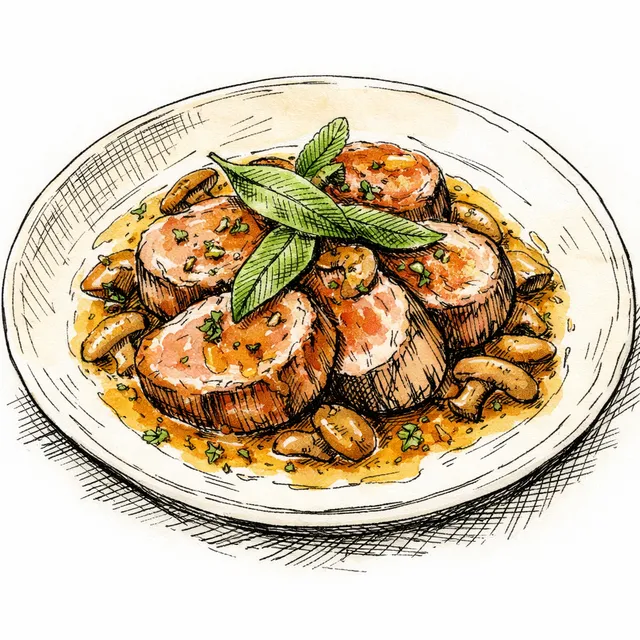
The Piedmontese Cladding: Pan-Roasted Pork Tenderloin with Sage and Vermouth
Growing up, I watched my grandmother in her Piedmontese kitchen, tending to slow-roasting meats for hours. Today, amidst the relentless pace of Milanese life, I simply do not have that kind of time. I needed a shortcut that preserved that old-world structural integrity of flavor. In architecture, cladding protects a structure while defining its aesthetic. This recipe applies the exact same principle. A tight wrap of thinly sliced pancetta and broad, fresh sage leaves acts as an edible facade for a lean pork tenderloin. As it pan-roasts, this savory exterior bastes the meat, ensuring perfect moisture retention. It is a brilliant structural trick that saves you hours. Deglazing the pan with a generous splash of dry vermouth creates a load-bearing foundation for the quick pan-sauce, effortlessly bringing that sophisticated Northern Italian elegance to a busy Wednesday night. Remember, let the ingredients do the heavy lifting. To make this your own, treat the herb layer as a flexible design element: swap the sage for a robust rosemary compound butter rubbed underneath the pancetta, or perhaps add a decorative scatter of crushed juniper berries. Weeknight cooking should feel like an escape, not a chore.
Featured Recipe
The Piedmontese Cladding: Pan-Roasted Pork Tenderloin with Sage and Vermouth
In architecture, cladding protects a structure from the elements while defining its entire aesthetic. Here, a tight wrap of thinly sliced pancetta and fresh sage acts as an edible facade for lean pork tenderloin, basting the meat as it pan-roasts to ensure perfect structural integrity and moisture. A rapid vermouth pan-sauce finishes the dish, delivering effortless Northern Italian elegance for a busy weeknight.
Save a copy to your collection for editing
Timeline
Ingredients
- 1 lb pork tenderloin(Trimmed of silver skin)
- 4 oz thinly sliced pancetta(Sliced paper-thin at the deli counter)
- 6 whole fresh sage leaves(Plus a few extra for garnish)
- 1 tsp black pepper(Freshly ground; no salt needed due to the pancetta)
- 1 tbsp olive oil(Just enough to lubricate the pan)
- 1/2 cup dry vermouth(A high-quality brand, the secret to a fast Northern Italian glaze)
- 1/2 cup premium chicken brodo(Store-bought is perfectly fine if it's high quality)
- 3 tbsp cold unsalted butter(Cubed, crucial for the final emulsion)
Instructions
- 1
Preheat your oven to 400°F (200°C). On a cutting board, arrange 4 oz thinly sliced pancetta in slightly overlapping rows to create a rectangular sheet. Scatter 6 whole fresh sage leaves evenly across the meat. Place the 1 lb pork tenderloin in the center, season generously with 1 tsp black pepper, and tightly roll the pancetta around the pork. This structural cladding will protect the lean meat from drying out.
5 min
Tip: Make sure the pancetta ends overlap underneath the pork so it doesn't unroll in the pan. The pancetta brings enough salinity, so omit additional salt.
- 2
Heat 1 tbsp olive oil in a large, heavy-bottomed, oven-safe skillet over medium-high heat. Carefully place the wrapped pork into the skillet, seam-side down. Sear the pork, gently rotating every minute or two, until the pancetta is rendered, golden, and crisped on all sides.
6 min
Tip: Don't rush the sear; rendering the fat from the pancetta is what builds the load-bearing foundation of flavor for your pan sauce.
- 3
Transfer the skillet directly into the preheated oven. Pan-roast the pork until an instant-read thermometer inserted into the thickest part reads 140°F (60°C).
12 min
Tip: The ambient heat of the oven ensures an even cook, while the pancetta continues to baste the tenderloin.
- 4
While the pork is roasting, measure out your liquid elements: 1/2 cup dry vermouth and 1/2 cup premium chicken brodo. Cube your 3 tbsp cold unsalted butter and place it back in the refrigerator. Mise en place is like laying down your blueprints before pouring concrete.
3 min
Tip: Keeping the butter ice-cold is essential for forcing a stable emulsion later.
- 5
Remove the skillet from the oven (remember the handle will be scorching hot). Use tongs to transfer the pork to a cutting board to rest. Place the skillet back on the stove over medium heat. Immediately pour in the 1/2 cup dry vermouth, using a wooden spoon to scrape up all the browned pancetta bits—the foundation of your sauce. Let it reduce by half.
3 min
Tip: The pork needs at least 5 minutes of resting time to allow the internal juices to redistribute. Let the meat rest while you build the sauce.
- 6
Pour in the 1/2 cup premium chicken brodo and let the mixture simmer vigorously for another 2 minutes until slightly thickened. Turn off the heat completely. Drop in the chilled 3 tbsp cold unsalted butter and swirl the pan continuously until the butter melts and binds with the liquids into a glossy, velvety emulsion. Slice the rested pork into thick medallions and spoon the sauce over the top.
4 min
Tip: Never boil the sauce once the butter is added, or the emulsion will break and separate into a greasy mess.
Chef's Notes
Let the ingredients do the heavy lifting! Wrapping a lean cut like pork tenderloin in fatty pancetta is a brilliant shortcut to slow-roasted flavor on a Tuesday night schedule. Serve this alongside a simple bowl of soft polenta or a crisp arugula salad dressed merely with lemon and olive oil.

Elena Rossi
Effortless Northern Italian elegance for busy modern weeknights.
Milan-born Elena Rossi, her true passion was always simmering on the stove. Raised on the rich, comforting flavors of her grandmother's Piedmontese kitchen, Elena found herself constantly reimagining those time-intensive classics for her own demanding, fast-paced lifestyle. Today, Elena is the voice behind a beloved culinary movement that proves authentic Italian food does not require spending eight hours stirring a pot. She beautifully merges the precision of her design background with the soul of Northern Italian cooking, offering busy home cooks a stylish, stress-free approach to dinner. Whether she is utilizing a pressure cooker for a Tuesday night osso buco or elevating a high-quality store-bought brodo with fresh herbs, Elena empowers her readers to cook with confidence. Her recipes are a testament to the idea that practicality and elegance can perfectly coexist on the modern dinner table.