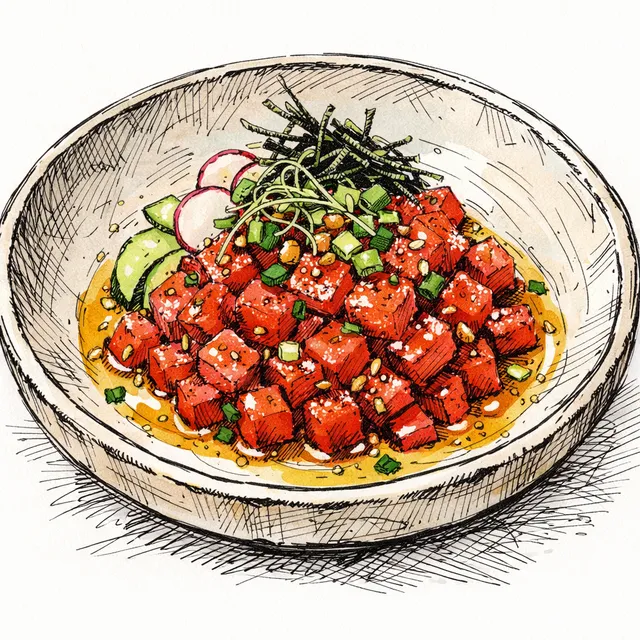
The Great Watermelon Illusion: Shio Koji Tartare with Gochujang & Yuzu
Featured Recipe
Shio Koji Macerated Watermelon Tartare with Gochujang & Yuzu
People always think I am serving them spicy ahi tuna until they take a bite. By quick-curing finely diced watermelon with shio koji and sea salt, we trigger a rapid osmotic reaction that draws out excess water. The result? A dense, meaty texture with deeply concentrated sweetness that perfectly balances a fiery, savory gochujang and yuzu dressing.
Save a copy to your collection for editing
Timeline
Ingredients
- 3 cups Watermelon(Finely diced (brunoise), seeds removed)
- 2 tbsp Shio Koji(Liquid or paste works)
- 1 tsp Flaky sea salt(Maldon or similar)
- 1.5 tbsp Gochujang(Korean fermented chili paste)
- 1 tbsp Yuzu juice(Substitute fresh lime juice if you must)
- 1 tbsp Toasted sesame oil(Premium quality makes a difference here)
- 1 tsp Shiro shoyu(White soy sauce (preserves the red color of the melon))
- 1 small Shallot(Very finely minced)
- 4 leaves Fresh shiso leaves(Chiffonade (thinly sliced))
- 1 tbsp Toasted sesame seeds(White or black)
- 4 sheets Nori sheets(Cut into 2-inch squares for serving)
Instructions
- 1
Toss 3 cups watermelon with 2 tbsp shio koji and 1 tsp flaky sea salt in a bowl. Transfer the mixture to a fine-mesh strainer set over a second bowl. Let it cure undisturbed for 15 minutes to draw out the water.
15 min
Tip: Do not skip the strainer setup. The watermelon will release a surprising amount of liquid, which you can save for a cocktail later.
- 2
While the melon cures, whisk together 1.5 tbsp gochujang, 1 tbsp yuzu juice, 1 tbsp toasted sesame oil, and 1 tsp shiro shoyu in a medium mixing bowl until smooth and emulsified.
3 min
Tip: Gochujang can be thick; keep whisking until the sesame oil is fully incorporated.
- 3
Prep your aromatics by very finely mincing 1 small shallot and slicing 4 leaves fresh shiso leaves into fine ribbons (chiffonade). Set aside for assembly.
3 min
Tip: A sharp knife is crucial for the shiso so you slice it rather than bruise it, preserving its bright herbaceous oils.
- 4
Briefly wave 4 sheets nori sheets over a gas burner or toast in a dry skillet for a few seconds until crisp. Cut them into 2-inch squares. If your 1 tbsp toasted sesame seeds need refreshing, toast them now for 1 minute.
2 min
Tip: Toasting nori just before serving restores its shattering crunch.
- 5
Press down gently on the cured watermelon to expel the last drops of liquid. Transfer the drained watermelon and the minced shallot into the bowl with the gochujang dressing. Fold gently until everything is evenly coated.
2 min
Tip: Be gentle here. You want to coat the cubes without smashing them into a puree.
- 6
Serve the tartare immediately in a chilled bowl set on ice, alongside the nori squares. Garnish generously with the shiso ribbons and toasted sesame seeds.
2 min
Tip: Serving this ice-cold enhances the illusion of raw tuna and keeps the flavors incredibly refreshing.
Chef's Notes
Why this works: Let's geek out about osmosis for a second. Watermelon is 92% water. When you hit it with salt and shio koji (which is packed with enzymes), it draws that water out rapidly. This collapses the spongy cell walls of the fruit, transforming the texture from crisp and watery to surprisingly dense and meaty. The shio koji also imparts a savory, fermented baseline that bridges the gap between the sweet melon and the Korean gochujang's fermented chili heat. You get all the luxurious mouthfeel of a raw fish preparation with a totally unexpected flavor bomb.

Kenji Nakamura
Where Japanese precision meets global flavors
I trained in Tokyo for eight years, mastering the discipline of washoku—traditional Japanese cuisine. But I got restless. So I cooked my way through Southeast Asia, spent a year in Mexico City, and fell hard for the food of Peru. Now I see connections between cuisines that others miss: the umami in dashi and fish sauce, the heat in shishito and Szechuan peppercorns, the way Japanese technique can unlock flavors from any tradition. I'm always fermenting something.